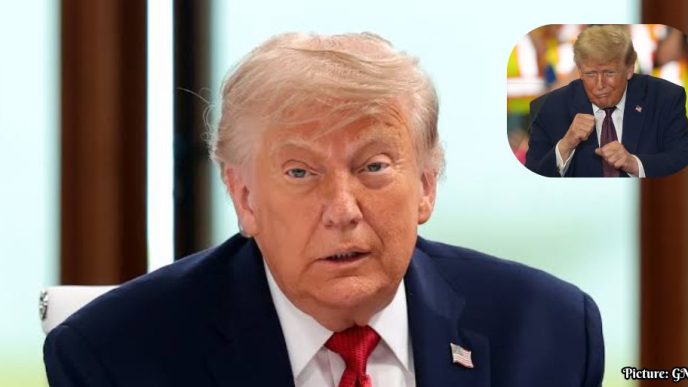
A recent CNN poll reveals that former President Donald Trump has reached an 83% approval rating among Republican voters, marking the highest level of intra-party support for any president in the 21st century. However, independent voter sentiment appears more divided, reflecting a potential vulnerability for Trump as he heads into the midterms.
In a significant political finding, a CNN poll published this week indicates that former President Donald Trump has garnered an 83% approval rating among Republicans, the highest of any president this century. This number surpasses the approval ratings of both former Presidents Barack Obama and George W. Bush, who recorded 76% and 78% approval, respectively, during their presidencies. This data highlights Trump’s continued stronghold over the Republican base, even as other indicators suggest a more complicated electoral landscape.
The timing of this poll is particularly noteworthy as it coincides with recent assessments of independent voter sentiment regarding economic management. A separate survey conducted by PolitixPlus indicates that 59% of independent voters currently prefer the economic policies of President Joe Biden over those of Trump. The survey also revealed a stark division among party lines, with both Democrats and Republicans evenly split—50/50—on which leader better manages economic policy.
Challenges Among Independent Voters
The PolitixPlus poll underscores a potential vulnerability for Trump, as independents have shown increasing dissatisfaction with his performance, particularly during his second term. According to an analysis by AP-NORC, this dissatisfaction is especially pronounced among independents lacking a college degree. As the 2024 election approaches, the shifting allegiances of independent voters could pose significant challenges for Trump and the Republican Party, particularly given that midterm elections frequently act as a referendum on the sitting administration.
Furthermore, the AP-NORC analysis reveals that Trump’s support has diminished among specific demographic groups that previously leaned in his favor, including Black and Hispanic independents. This decline could complicate the Republican Party’s strategy as it seeks to retain its electoral base while appealing to a broader audience.
Public Perception and Polling Insights
A separate YouGov poll provides insight into the broader public perception of Trump. In this survey, 52% of respondents described him as “dangerous,” while 49% labeled him “corrupt.” Additionally, 45% characterized him as a “racist,” and many respondents noted that they find him “out-of-touch.” Despite this, there were also positive descriptors attributed to Trump, particularly among Republican respondents—45% described him as “honest,” 40% as “inspiring,” and 38% as “intelligent.” This division in perception illustrates the polarized views surrounding Trump’s presidency.
Despite his strong approval rating among Republicans, Trump’s overall net approval rating has declined to negative 24%. This figure is lower than his standing at a comparable point during his first term and also trails behind President Biden’s approval rating at this stage of his presidency. Such metrics are critical for understanding the potential risks facing Trump as he prepares for the upcoming midterm elections and the 2024 presidential race.
Controversies and Administration Challenges
Trump’s second term has been marked by several controversies that have drawn public scrutiny. His administration has faced criticism over various issues, including the pace of releasing files related to Jeffrey Epstein, contentious immigration policies, and ongoing military engagement with Iran, all of which have contributed to rising living costs domestically and internationally.
In terms of immigration, a recent poll indicates that 54% of Americans disapprove of Trump’s handling of immigration issues, while only 39% expressed approval. Similarly, on matters concerning race relations, 54% disapproved of his approach, whereas just 32% approved. These figures suggest that key issues are eroding Trump’s support among broader demographics.
Crime has emerged as a relative strong point for Trump, with 41% of respondents approving of his handling of the issue compared to 49% who disapproved. Trump has highlighted this aspect in his recent communications, particularly on social media, where he claimed that under the leadership of his appointed U.S. attorney general, homicides in major U.S. cities have reached their lowest levels since 1900. Available records support his claim, showing a more than 20% decline in homicides in 2025 compared to the previous year, marking the largest single-year percentage decrease on record in the U.S.
Implications for Upcoming Elections
As Trump navigates the various challenges of his second term, the implications of these polling trends and public perceptions will be crucial as he prepares for the upcoming midterm elections and the 2024 presidential race. The Republican Party must address the concerns of independent voters and adapt to demographic shifts to maintain its electoral viability in the years to come. The mixed sentiments reflected in the polling suggest that while Trump retains solid support among Republican voters, broader electoral challenges loom on the horizon.