The Supreme Court has ruled that President Trump’s executive order to restrict birthright citizenship is unconstitutional, upholding the long-standing interpretation of the 14th Amendment.
WASHINGTON — In a decisive legal ruling, the Supreme Court on Tuesday declared former President Donald Trump’s attempt to limit birthright citizenship for individuals born on U.S. soil as unlawful. The court’s decision, which was reached by a 6-3 vote, found that Trump’s executive order, issued on January 20, 2025, contravened the Constitution’s 14th Amendment, which has been interpreted to grant citizenship to nearly everyone born in the United States.
This ruling represents a significant setback for Trump, marking the third notable loss for him in recent months. Earlier this year, the Supreme Court ruled against him in a case that invalidated his tariffs and a separate decision that prevented him from immediately dismissing Federal Reserve Board member Lisa Cook. Despite the court’s conservative majority, bolstered by three justices appointed by Trump himself, the ruling reflects ongoing judicial resistance to his administration’s policies regarding immigration and citizenship.
Understanding the 14th Amendment
The 14th Amendment, ratified in 1868 during the Reconstruction Era, was designed to ensure that all individuals born in the United States, particularly formerly enslaved individuals, were granted equal protection under the law. The citizenship clause of the amendment states: “All persons born or naturalized in the United States, and subject to the jurisdiction thereof, are citizens of the United States.” For over a century, this clause has been interpreted as applying to nearly all individuals born in the U.S., with limited exceptions, such as the children of foreign diplomats.
Trump’s executive order sought to fundamentally alter this interpretation by proposing that birthright citizenship should apply only to children whose parents are U.S. citizens or permanent residents. Consequently, individuals born to temporary visitors or undocumented immigrants would not receive citizenship at birth. Legal experts criticized this move as a radical reinterpretation of constitutional history, which has consistently recognized the citizenship rights of those born within U.S. borders.
Judicial Challenges and Responses
The executive order faced immediate pushback in the form of legal challenges from a coalition of liberal states and civil rights organizations, including the American Civil Liberties Union (ACLU). These groups contended that the executive order would adversely affect countless individuals and families, and they successfully challenged it in multiple courts. Every court that reviewed the case ruled against the Trump administration, consistently upholding the constitutional protections enshrined in the 14th Amendment.
The Supreme Court’s decision to hear the case stemmed from a lawsuit in New Hampshire, where the ACLU represented individual plaintiffs, including infants who would have been impacted by the executive order. The court’s acceptance of the case underscored the significance of the issue and its constitutional ramifications.
Implications of the Supreme Court’s Decision
The Supreme Court’s ruling reaffirms the longstanding interpretation of birthright citizenship and serves as a broader rejection of attempts to undermine established legal precedents. Legal experts suggest that this decision could have extensive implications for future immigration policy and the rights of individuals born in the United States, as it reinforces the notion that citizenship cannot be arbitrarily denied based on parental status.
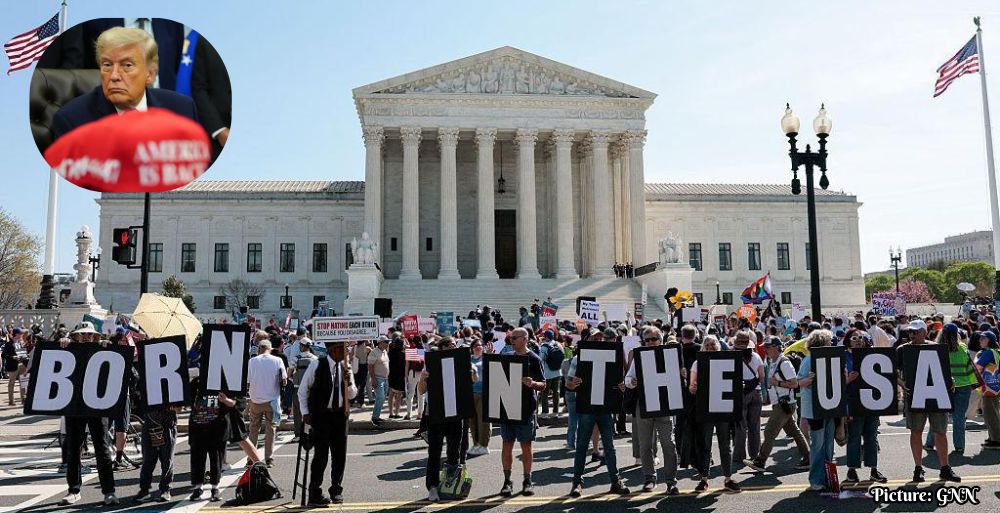
Advocates for immigration rights and civil liberties have expressed their relief and satisfaction with the ruling. Prominent figures, such as Chef José Andrés, who has been an outspoken advocate for immigrant rights, participated in a rally on April 1 to raise awareness about the importance of protecting birthright citizenship. Andrés emphasized the need for continued advocacy in the face of challenges to immigrant rights, illustrating the public’s engagement with this pivotal issue.
Historical Context of Birthright Citizenship
The historical context surrounding the 14th Amendment and birthright citizenship is crucial for understanding its implications. The amendment was ratified in the aftermath of the Civil War, a time when the United States grappled with integrating formerly enslaved individuals into society as full citizens. The landmark Supreme Court case of United States v. Wong Kim Ark in 1898 established that a child born in the U.S. to foreign parents is a U.S. citizen, solidifying the principle of birthright citizenship and reinforcing the amendment’s protections.
In contrast, Trump’s proposed changes would have initiated a significant shift in how citizenship is defined and granted, potentially disenfranchising millions of individuals born in the U.S. The courts’ consistent rulings against this reinterpretation indicate a robust defense of constitutional rights against executive overreach.
Conclusion
The Supreme Court’s ruling not only upholds the constitutional framework surrounding birthright citizenship but also reinforces the judiciary’s role in protecting individual rights against attempts to alter fundamental legal principles. As the political landscape continues to evolve, the decision serves as a reminder of the importance of the 14th Amendment and the enduring nature of its protections. This case highlights the ongoing debate over immigration policy and citizenship rights in the United States, ensuring that the conversation surrounding these critical issues remains at the forefront of American political discourse.
This is a developing story, and updates will be provided as more information becomes available.