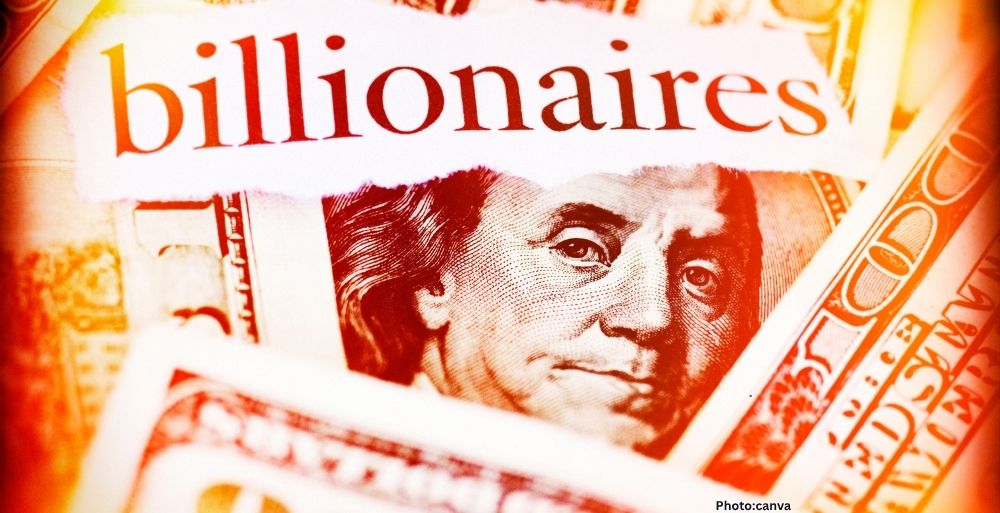
The number of billionaires worldwide has surged by 13% to a total of 3,302, reflecting a significant rise in their wealth, driven primarily by advancements in artificial intelligence and strong equity market performance.
A recent report issued by UBS, a prominent Swiss investment bank, has revealed a notable increase in the global billionaire population, which has risen by 13% to reach a record high of 3,302 individuals as of April 2023. This growth is accompanied by a substantial average increase in billionaire wealth of 25% over the past year, significantly outpacing the 10.8% rise in average personal wealth across the globe during the same period. The findings underscore a widening wealth gap and highlight the financial dynamics influenced by emerging technologies.
Factors Driving Wealth Accumulation
The UBS report indicates that a total of 18 billionaires have accumulated fortunes ranging from $50 billion to $100 billion, while another 19 individuals boast net worths exceeding $100 billion. Among these ultra-wealthy individuals, 15 are based in the United States, showcasing the country’s leading role in wealth generation. James Mazeau, an economist at UBS, attributed the significant increase in wealth to the booming artificial intelligence sector, stating, “Most [billionaire] wealth is tied to listed companies. So part of the rise is due to equity markets.” He elaborated that the AI boom is a major factor propelling equity markets, particularly in nations with robust participation in stock trading.
Rise of the Millionaire Class
The UBS findings also reveal a corresponding expansion in the global millionaire population, which surpassed 57.5 million in the preceding year. This increase can largely be ascribed to rising stock market values and the relatively weakened U.S. dollar over the reporting period. In the United States alone, more than 440,000 individuals achieved millionaire status for the first time in 2022, contributing to nearly half of the global growth in millionaires. The United Kingdom also saw a significant influx, with over 43,000 new millionaires emerging last year.
Growing Wealth Inequality
Despite the remarkable growth in wealth among billionaires, the report raises alarms regarding escalating wealth inequality. The World Inequality Report from the previous year highlighted that fewer than 60,000 individuals—representing merely 0.001% of the global population—hold three times as much wealth as the bottom half of humanity. This stark disparity has intensified calls from various sectors for political leaders to implement tax reforms targeting the ultra-wealthy, amidst concerns that the richest individuals are consolidating not only economic but also political power.
Leading Figures in Wealth
As of 2023, Elon Musk, the CEO of Tesla and SpaceX, is recognized as the world’s richest individual, with an estimated net worth of approximately $1 trillion, according to the Forbes rich list. Following Musk, Larry Page and Sergey Brin, co-founders of Google, rank second and third with respective net worths of $289 billion and $266.6 billion. In the UK, the Hinduja family has been identified as the wealthiest, with a net worth of £35 billion. The family’s financial prominence continues following the death of Gopichand Hinduja, who had diverse business interests in oil, banking, and real estate.
Recent Trends Among UK Billionaires
The Sunday Times rich list reported a decline in the number of billionaires in the UK, indicating that there were 156 billionaires in 2022, down from 165 the previous year. This decline marks the most significant decrease in the list’s 37-year history. Reports have surfaced regarding the migration of wealthy individuals from the UK, a trend attributed by many wealth advisors to the government’s recent abolition of the non-domicile tax regime. However, Paul Donovan, chief economist at UBS, cautioned against overestimating this trend. He remarked, “It is a relatively low number overall, and some of them subsequently went back. But what you’re not seeing is them shutting their businesses and moving their businesses. The economic activity that is generated by the wealth holders tends not to follow them into tax exile.” He emphasized that the perception of wealthy individuals being ready to flee at the first sign of tax increases is largely exaggerated.
Broader Implications
The current trends highlight the ongoing discourse surrounding wealth distribution and taxation strategies in response to the growing economic divide. As billionaires continue to amass wealth at unprecedented rates, the implications for policy-making and socio-economic structures become increasingly significant. The calls for increased taxation on the wealthy are likely to gain momentum, particularly as public sentiment grows around the need for equitable wealth distribution. Policymakers may be compelled to address these disparities through legislative efforts aimed at taxing the super-rich more effectively, thereby ensuring a fairer allocation of resources.
In conclusion, the latest findings from UBS provide a compelling snapshot of the current state of wealth among the world’s richest individuals. As the billionaire class expands amid a thriving AI market, the implications for economic inequality and potential policy responses warrant careful examination and ongoing public discourse.