
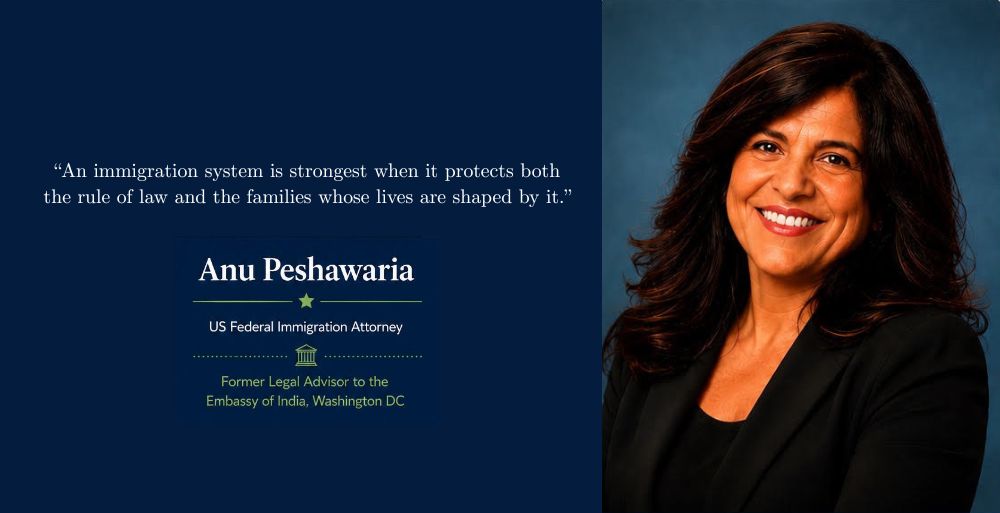
An immigration system is strongest when it protects both the rule of law and the families whose lives are shaped by it.
Family reunification has long been one of the foundational principles of U.S. immigration law. Yet, despite this commitment, countless U.S. citizens and lawful permanent residents continue to face prolonged separation from their spouses, children, and other close family members because of inadmissibility bars, lengthy processing delays, and limited avenues for discretionary relief.
As a U.S. immigration attorney, I have seen firsthand how immigration laws affect families whose lives are caught between legal requirements and humanitarian realities. While immigration enforcement is essential to maintaining the integrity of the system, preserving family unity should remain an equally important objective.
Under current immigration law, individuals who have accrued unlawful presence may face three-year, ten-year, or even permanent bars to reentering the United States. Although hardship waivers exist, applicants must demonstrate “extreme hardship” to a qualifying U.S. citizen or lawful permanent resident relative—a legal standard that is often difficult to satisfy. In many situations, immigration judges and the Department of Homeland Security have only limited authority to prevent prolonged family separation.
The proposed Dignity Act of 2025 seeks to address some of these longstanding challenges. Among its family unity provisions, the legislation would expand discretionary authority in appropriate hardship cases, broaden eligibility for certain waivers, and allow qualifying individuals to seek advance permission to reapply for admission.
One of the proposal’s most notable provisions is the creation of a temporary Family Purposes Visa, which would allow close relatives to travel to the United States for significant family events such as weddings, funerals, reunions, and other important life occasions without creating a pathway to permanent immigration.
Supporters argue that these reforms would reduce unnecessary family separation while maintaining case-by-case review and preserving the integrity of the immigration system. Critics, however, caution that broader discretionary authority must be implemented carefully to ensure consistency and avoid undermining immigration enforcement.
It is important to note that the Dignity Act remains a proposed piece of legislation and has not been enacted into law. Nevertheless, its provisions have renewed an important national conversation about whether America’s immigration system can better balance enforcement with compassion.
In my view, immigration policy should continue to uphold the rule of law while recognizing that strong families are also in the national interest. The legal system should provide reasonable mechanisms to address genuine hardship without compromising its integrity.
An immigration system is strongest when it protects both the rule of law and the families whose lives are shaped by it.