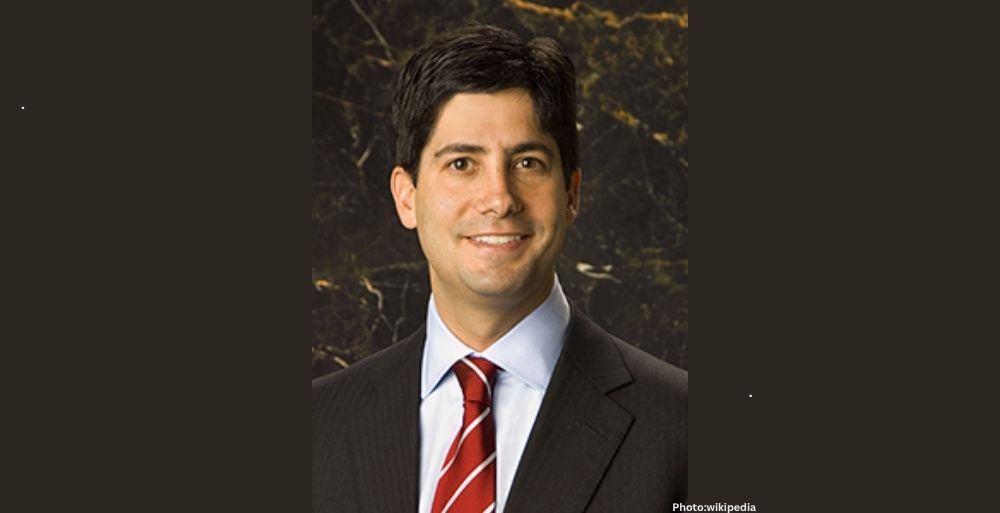
The Senate has confirmed Kevin Warsh as the chair of the Federal Reserve, a role that grants him significant authority over U.S. monetary policy and interest rates, succeeding Jerome Powell amid a politically charged environment.
On Wednesday, the United States Senate voted 54-45 to confirm Kevin Warsh as the new chair of the Federal Reserve, a pivotal appointment that comes at a crucial time for U.S. economic policy. Warsh, who will replace Jerome Powell, assumes leadership of the central bank during a period marked by ongoing economic challenges, including inflationary pressures and the recovery from the COVID-19 pandemic.
Vote Breakdown and Legislative Dynamics
The confirmation vote exhibited a notable instance of bipartisan collaboration, with Democratic Senator John Fetterman of Pennsylvania aligning with the Republican majority to support Warsh’s nomination. This alignment is particularly noteworthy given the current polarized political climate in Congress. The confirmation process itself was fraught with complications, stemming from a protracted standoff involving Senator Thom Tillis (R-N.C.). Tillis had initially delayed Warsh’s nomination in the Senate Banking Committee over concerns regarding the Justice Department’s investigation into Powell. Ultimately, the nomination was allowed to proceed after federal prosecutors concluded their inquiries, clearing the way for Warsh’s ascension.
Warsh’s Experience and Assurances
Kevin Warsh’s professional background includes a tenure as a member of the Federal Reserve’s Board of Governors from 2006 to 2011, during which he experienced firsthand the intricate dynamics of central banking amid the financial crisis. His previous service provides him with critical insights into monetary policy and economic stability. During his confirmation hearings, Warsh sought to alleviate concerns from lawmakers regarding his independence, explicitly stating that he had not brokered any agreements with President Trump over interest rate policies, an assertion aimed at reinforcing his commitment to a nonpartisan approach at the Fed.
Monetary Policy Implications
As the new chair, Warsh’s leadership will significantly shape the Federal Reserve’s monetary policy strategy, particularly regarding interest rates that impact borrowing costs and economic expansion. The Fed’s decisions will be vital as the nation grapples with post-pandemic recovery and rising inflation, which has sparked ongoing debates about the appropriate balance between stimulating growth and controlling price increases. Warsh’s policy direction will be scrutinized, especially in light of the Fed’s dual mandate to maximize employment while ensuring price stability.
Moreover, Warsh’s past experiences and relationships within the financial sector raise questions about how he might approach issues related to market regulation and oversight. Analysts and policymakers alike are keenly observing how Warsh will address the challenges of maintaining economic stability and addressing systemic inequalities exacerbated by the pandemic.
Political Context and Future Challenges
Warsh’s confirmation comes against a backdrop of significant political maneuvering. His nomination had met skepticism from some Democrats who were concerned about his previous critiques of the Federal Reserve’s policies and his connections to Wall Street. Nonetheless, proponents of his nomination contended that his extensive experience and understanding of the financial landscape position him favorably for this critical role. The current split in the Senate reflects broader challenges in governance, as partisan divisions continue to complicate legislative processes.
As Warsh steps into this influential position, he will confront multiple challenges, including the Fed’s response to rising inflation, which has increasingly become a focal point of economic discourse. The timing and magnitude of potential interest rate adjustments will be closely monitored by economists and lawmakers as the Fed navigates its role in supporting economic recovery while managing inflationary threats.
Additionally, Warsh’s approach to the Federal Reserve’s regulatory framework will be pivotal in addressing ongoing concerns regarding financial market stability. Stakeholders are particularly interested in how his leadership might influence the Fed’s stance on large financial institutions and their systemic risks.
Looking Ahead: The Path Forward
The implications of Warsh’s leadership extend beyond immediate monetary policy decisions. His tenure will likely shape the Federal Reserve’s long-term strategies in addressing economic inequality and ensuring that the benefits of economic recovery are equitably distributed across different sectors of society. The balance he strikes between fostering growth and safeguarding financial stability will be critical as the United States continues to emerge from the disruptions caused by the pandemic.
In summary, Kevin Warsh’s confirmation as chair of the Federal Reserve signifies a pivotal shift in U.S. monetary policy leadership. His ability to navigate the complexities of economic management while maintaining the Fed’s independence will be essential as he undertakes this influential role amid a challenging economic landscape.