This series, Raising Rainbows, is my way of moving the conversations beyond the diagnosis to some of the most extraordinary stories that are hidden inside ordinary homes, in the quiet resilience of loving families teaching the world how to love more inclusively.
What does it mean to raise a child beyond labels, diagnoses, and society’s expectations? In this heartfelt conversation, Dr. Anjali Bala Chandra and Simon Vivian Hoyle invite readers into their family’s journey with Dexter, sharing how love, neurodiversity, resilience, and everyday moments of joy have reshaped the way they see the world, and perhaps how we might see it too.
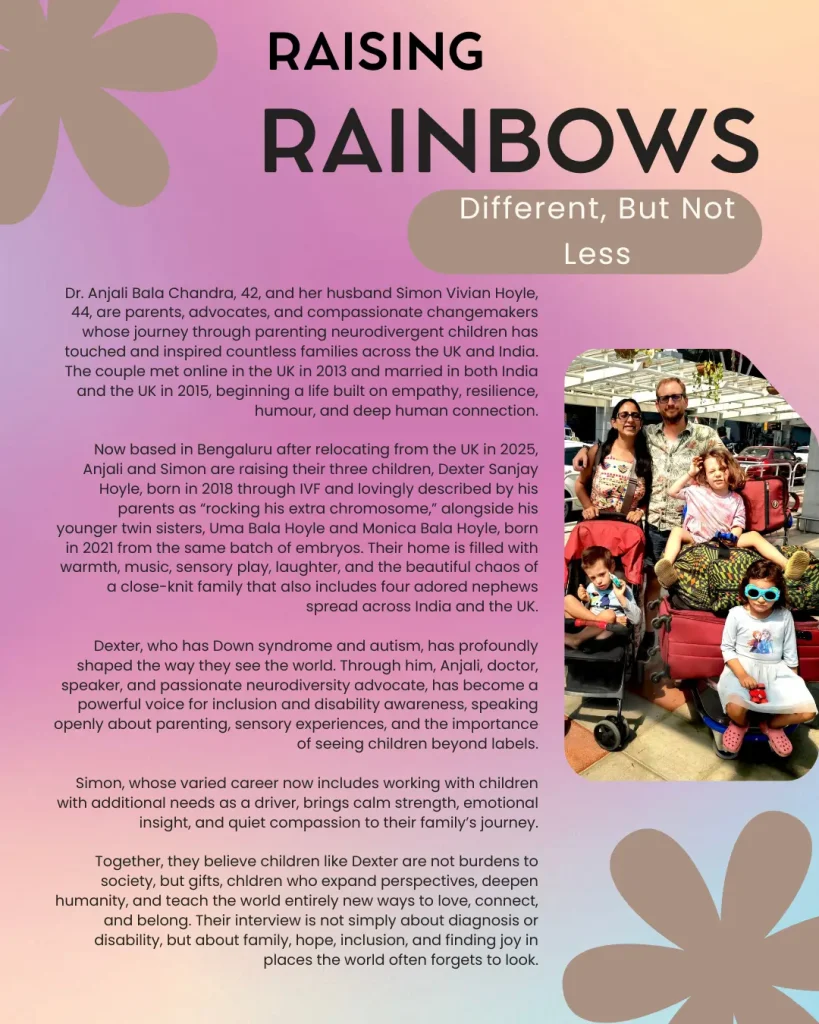
Ancy: Tell us about your child beyond the diagnosis. What makes him laugh, light up, or feel happiest?
Anjali: Our Dexter Dude loves sensory seeking. He really enjoys water in many formats: messy play with water in a tray, watching the rain drops on a window pane or in puddles, watching how water flows in a bottle, rivers and seas. He loves music, musical toys, songs – one which his cousins created when he was born, Shotgun by George Ezra, Thunder by Imagine dragons as well as rhythmic music such as nursery rhymes and Hindu bhajans. His latest pleasure is holding his neck with the palm of his hand while he vocalises or sings. He enjoys the vibrations. His favourite person is his Nani-ji, maternal grandmother. His face lights up when he sees people he loves. Dexter loves auto rickshaw rides – the wind on his face, the bumpy roads for him are pure joy. He loves rocking or circular motion of objects and himself. He has impressive core strength as he can rock on his bottom with his legs and upper body raised.
Simon: Beyond any diagnosis, our child is full of personality, humour, and curiosity. They light up when listening to music, being around people they trust, and celebrating the little things most people rush past. His laugh is contagious, especially when being tickled.
Ancy: What is something people misunderstand most about children on the spectrum or with Down syndrome?
Anjali: With Down Syndrome, people assume they are always happy and naive. In reality Dexter gets upset, has tantrums in his own way and becomes upset when we are explaining he has done something wrong. Generally with kids on the spectrum – firstly there’s a belief that it doesn’t exist and it’s a modem problem which has been created. Rather than understanding that people on the spectrum are differently wired in their brains hence experience the world differently and think in a different manner. Also children with Autism or other neuro-diversities, when they are distressed and sometimes lashing out, some people think that it’s just bad behaviour which can be “fixed” with correct parenting.
Simon: One of the biggest misunderstandings is that children with Down Syndrome or Autism are defined by limitations. People often focus on what they may struggle with instead of recognising their intelligence, emotional depth, humour, creativity, and individuality. Every child is different, and no diagnosis can fully describe who they are.
Ancy: What moment with your child changed your understanding of love, patience, or humanity?
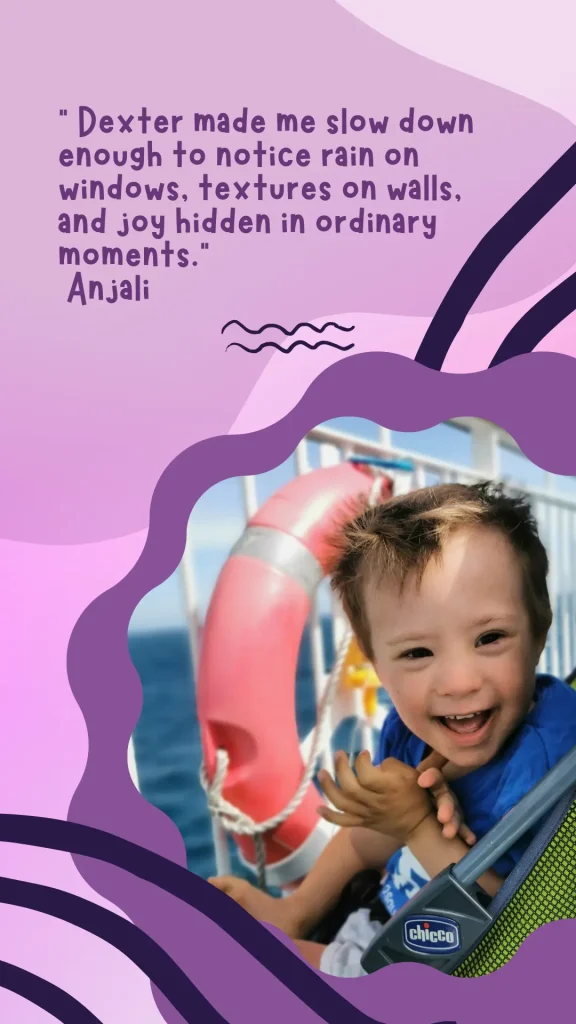
Anjali: Rather than 1 specific moment, it’s many moments. We feel that Dexter is the most mindful person in most situations. He has an innate ability to focus on important things which bring him joy. People with Down Syndrome are born with “inner peace” while many neuro-typical people strive for this throughout their lives. Dexter has made me see the world differently – I now also touch walls, fences and interesting surfaces. I also notice more the sparkling statues in a temple or on someone’s jewellery. On some level I believe he knows he’s different because he interacts differently with people with different needs – visible and invisible additional needs. His pace of life has slowed me down a little so I am learning to enjoy the present much more rather than continually planning our future or remembering the past.
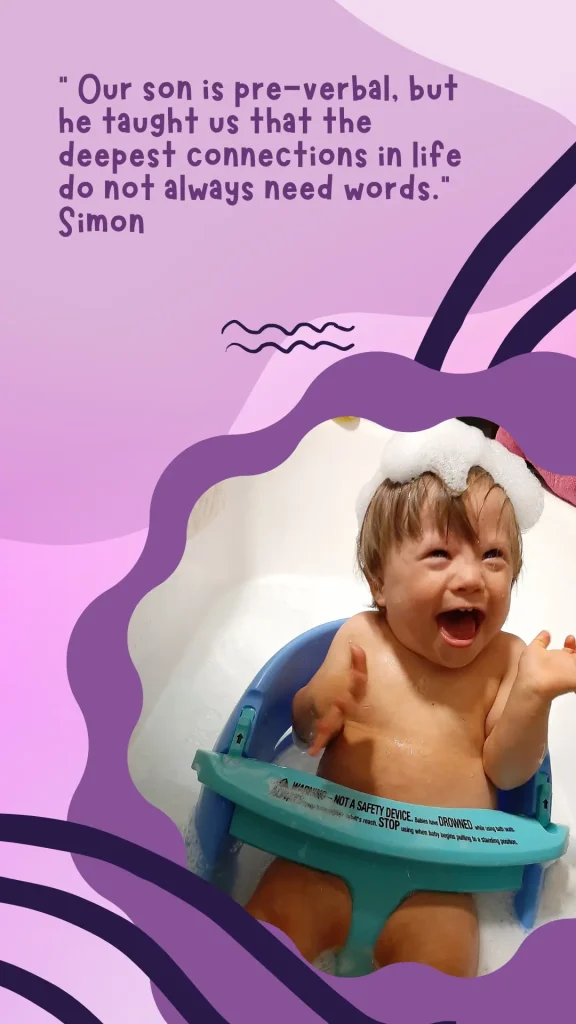
Simon: Our son is pre-verbal. The moments that change our understanding of love was realising how deep a connection can exist without words. There are moments when a simple hug, a look, or a small achievement carries more meaning than anything else. Parenting our child has taught us patience, empathy, and how powerful unconditional love truly is.
Ancy: What are your child’s biggest strengths that the world often overlooks?
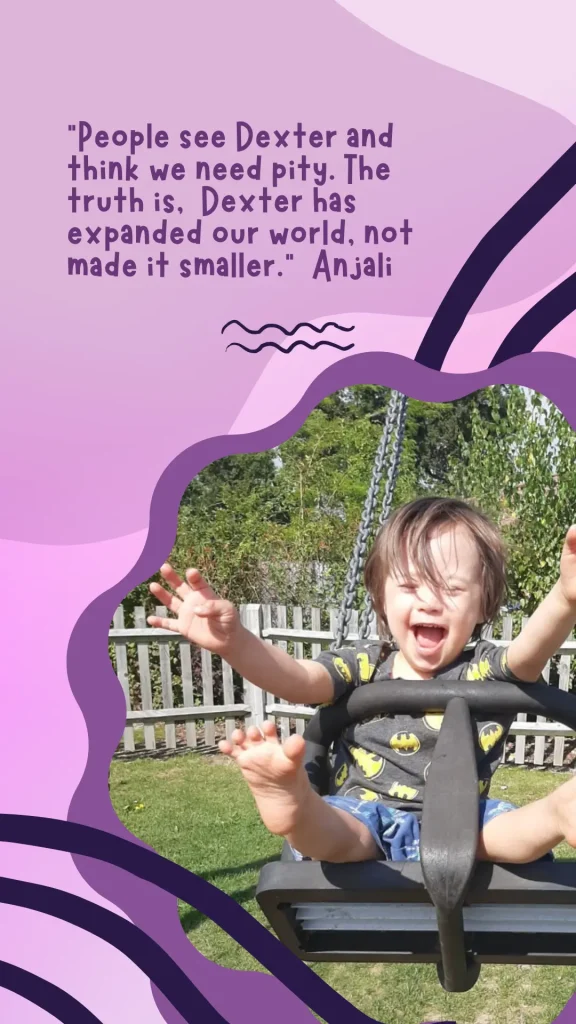
Anjali: Dexter’s ability to bring joy. People see Dexter, they see he’s different, they want to offer us pity. However Dexter has enriched our lives. He has made all of us better people because we have a better understanding about seeing the world in a different light. Dexter doesn’t have cynicism and rarely negativity. He focuses on the positive things in life. We could all do with being more like Dexter.
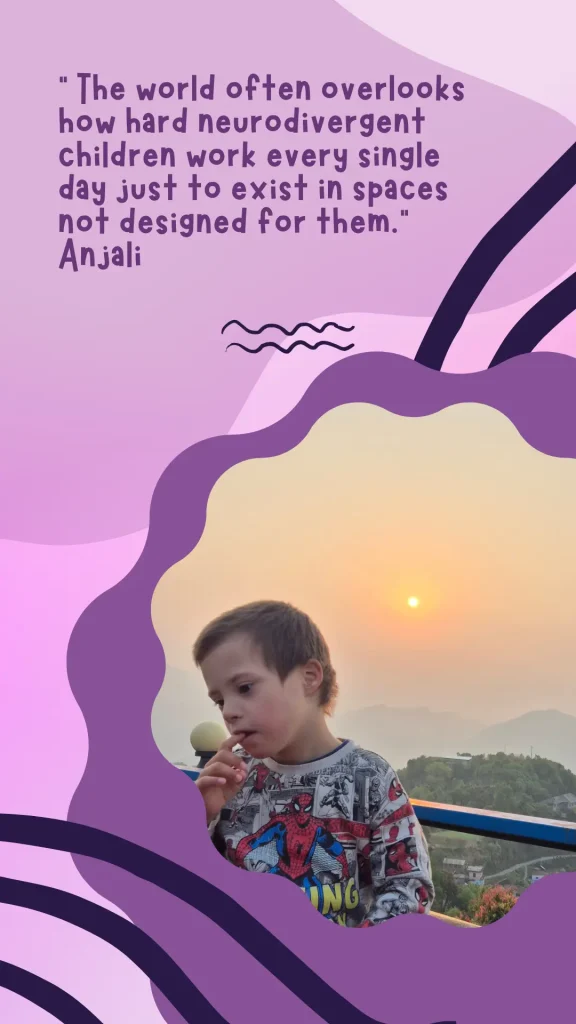
Simon: Our sons biggest strengths are his memory for places and routines. Also his ability to mindfully immerse himself into any activity that takes his interest. The world sometimes overlooks how hard they work every single day just to navigate environments not designed for them.
Ancy: What does a “good day” look like in your home?
Anjali: Dexter waking up at the right time, not too early and not so tired that we have to wake him up. Dexter loves breakfast and eats plenty. We go swimming or play sensory games at home. His younger twin sisters have started including him in their games. Try to introduce new skills and he is receptive as he is in the right mood and head space to learn. He usually attends Kalpavriksha Academy where he has many learning opportunities through daily repetitive therapies by experienced staff. Lunch time appetite depends on how much he has been doing physically and energy levels. At dinner time we play an aarti bhajan which he likes to listen to while he eats. Calming down with less exciting toys and then putting himself to sleep in his bedroom.
Simon: A good day in our home looks like any other home. Everyone feels calm, connected, and safe. There are smiles, small wins, fewer battles, and moments where our children feel confident and understood. Sometimes a good day is just getting through routines peacefully and ending the day with laughter.
Ancy: What emotions did you experience when you first received the diagnosis?
Anjali: Sadness and worry. I was 17 weeks pregnant when we found out our baby had 97% chance of having Down Syndrome. Part of me wished I didn’t know so I could happily, obliviously, enjoy the pregnancy. We already had an IVF journey with an emotional and physical rollercoaster to have a successful pregnancy. However due to the pre-natal diagnosis, we met 2 families from Portsmouth Down Syndrome Association before Dexter even came into the world. We were grieving for the child we had imagined we were going to have. The unknown of parenting can be daunting. Adding an extra chromosome added to those fears and concerns about what our future looked like. With regards to Dexter’s Autism diagnosis I felt a bit blindsided and confused. I’m a doctor however I missed that our son could have Autism. I thought his sensory challenges, being pre-verbal and other aspects were due to Down Syndrome. However now it’s obvious that Dexter is a child who has Autism who also happens to be rocking an extra chromosome. Many of his challenges are linked to his Autism rather than Down Syndrome. I also felt some jealously of parents with children who only have Down Syndrome. However I’m learning to accept and appreciate how Dexter’s challenges can sometimes be blessings in disguise.
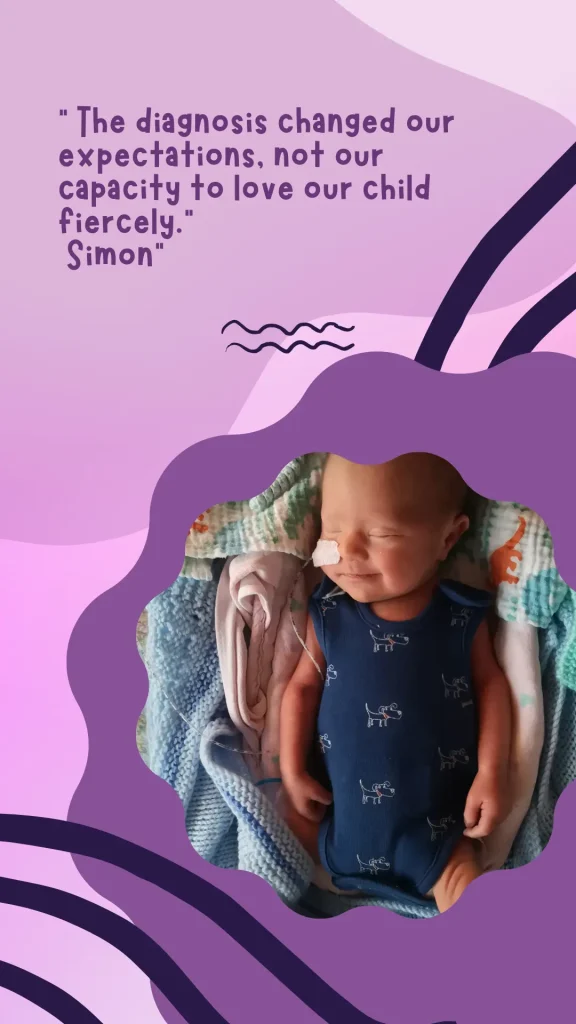
Simon: When we first received the diagnosis, we felt shock, fear, grief, confusion, and worry about the future. Alongside that came fierce love and protectiveness. Over time, those emotions have evolved into acceptance, advocacy, and pride.
Ancy: What helped you cope during the hardest seasons?
Anjali: “It takes a village to raise a child”. For us the UK charity Portsmouth Down Syndrome Association has been an integral part of that village. Also when raising an extraordinary child then that village needs to bigger, more robust and resilient. We are part of social media networks of parents around the world raising children with additional needs. Our family and close friends are essential to our “village”. They give us time for self care by looking after our children. All our children are showered with love from our extended families. Like us they’re also learning how to accept the joy which Dexter offers to the world.
Simon: We’re not sure what would be considered the hardest seasons. But What’s helped us over the years is support from people and parents who understand the journey. Another massive support in our lives is a charity called Portsmouth Down Syndrome Association.
Ancy: What kind of support did you wish existed for parents earlier?
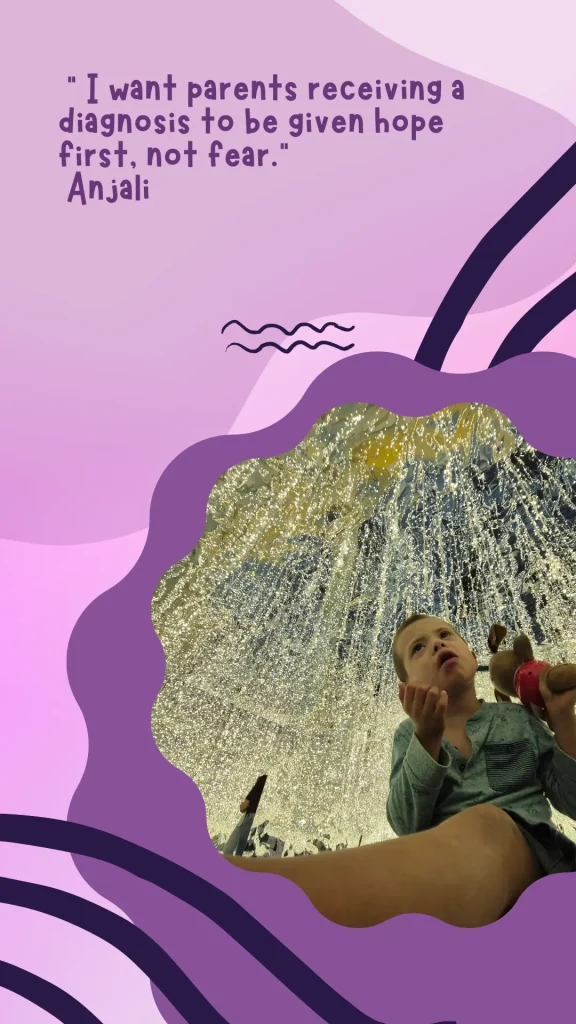
Anjali: I wish all pregnant women receiving a pre-natal diagnosis like me, are given the information in a manner which is positive and filled with hope. Rather than negativity, offer of abortions and a bleak picture of their future. New parents or people receiving a diagnosis would definitely benefit from peer support of parents who understand and have already done the same journey or going through it at the same time. This can be virtually through social media platforms or video conferencing however face to face, in person is ideal. Rather than focusing on the possible health problems, instead to focus on helpful therapies. All parents grow with their children. More focus on what our children can and are doing rather than what they aren’t. Babies need the same as all babies – love and milk. Also to remember to play and have fun with your child. Not every interaction needs to be a learning situation. So having safe spaces for parents to take their children for fun and not feel judged and instead feel supported.
Simon: Support can massively vary depending on where you live. We wish there was a more well rounded support system globally. Families need guidance, reassurance, practical advice, financial support, and communities where they do not feel isolated or judged.
Ancy: How has parenting your child changed you as a person?
Anjali: Dexter has made me see the world in a more sensory way. His tenacity to continue repeatedly to acquire a new skill is inspiring. I’ve become more determined as a person because of him. Also I’m passionate about advocating for Dexter’s needs and to make sure he has the same opportunities as his neuro-typical peers. Consequently I’ve learnt lots about differently abled people and provided neuro-diversity training to many different audiences in UK and India. So my confidence with public speaking has increased in both English and Hindi. Now advocating for our daughters, myself, our family, my patients or anyone who needs support is much easier because of the new skills I’ve acquired.
Simon: Parenting our son has made us more patient, compassionate, and aware of how differently people experience the world. It has changed our priorities. We celebrate progress over perfection and value kindness far more deeply than we once did.
Ancy: What sacrifices do families like yours quietly make that people rarely see?
Anjali: We’ve been blessed to have support with Dexter from before he was born. So it doesn’t feel like we’ve made many sacrifices. There are more appointments for healthcare and therapy. It is much harder to find childcare or kids clubs in the school summer holidays so more research is needed. The long forms to justify getting the correct financial and educational support are onerous and heartbreaking. We have to focus on Dexter’s inabilities for some forms. The legal educational plans are reviewed annually hence I know some families where parents have given up working to be able to do all the paperwork as well as to look after their children because the provisions are not in place.
Simon: All families make sacrifices for their children, quietly or not. The only thing we have really sacrificed is our sleep. In reality we have adjusted our lives and focus in our time, finances, sleep, relationships, and personal freedom. Many parents become advocates, therapists, educators, and carers all at once. Much of that invisible work happens behind closed doors without the need or want for recognition. In our opinion this is the definition of being a parent.
Ancy: What sacrifices do families like yours quietly make that people rarely see?
Anjali: We’ve been blessed to have support with Dexter from before he was born. So it doesn’t feel like we’ve made many sacrifices.
There are more appointments for healthcare and therapy. It is much harder to find childcare or kids clubs in the school summer holidays so more research is needed. The long forms to justify getting the correct financial and educational support are onerous and heartbreaking.
We have to focus on Dexter’s inabilities for some forms. The legal educational plans are reviewed annually hence I know some families where parents have given up working to be able to do all the paperwork as well as to look after their children because the provisions are not in place.
Simon: All families make sacrifices for their children, quietly or not. The only thing we have really sacrificed is our sleep. In reality we have adjusted our lives and focus in our time, finances, sleep, relationships, and personal freedom. Many parents become advocates, therapists, educators, and carers all at once. Much of that invisible work happens behind closed doors without the need or want for recognition. In our opinion this is the definition of being a parent.
Ancy: What are the biggest day-to-day challenges your family faces, emotionally, financially, socially, or educationally?
Anjali: Similar to other families managing emotions can be difficult. With Dexter it’s also harder as he is pre-verbal hence communicates in different manners. So understanding him and his needs or thoughts can be more challenging. For Dexter compared to his neuro-typical peers, he needs to be emotionally regulated and in the right head space to learn. Financially we’re lucky that we can afford, when needed, private therapy despite my husband having to work reduced hours to care for Dexter. Also planning for Dexter’s future includes considering his earning capacity and care needs which might be expensive.
Simon: The biggest challenges can include emotional exhaustion, navigating complex support service systems, financial pressure from therapies or support needs and educational battles.
Ancy: How do you balance therapies, school, work, marriage, siblings, and your own mental health?
Anjali: It’s taken time to learn how to juggle and balance. Also the juggling act changes with time. As a couple we divide the kids needs and play to our strengths. My husband is artistic and creative whereas I’m better with words. At least twice per year we go away overnight without the kids, with support from family and babysitters. Whenever we manage to have couple time we try our best not to talk about the kids and life admin. Our girls are demanding. They are just as special as Dexter and they love celebrating his achievements. However we do our best to also celebrate their achievements. When we can we do activities with them which might not suit Dexter’s skill set but they’ll enjoy. With regards to our mental wellbeing, we’ve both had therapy which has been integral for me to adapt and learn new coping strategies, not just for parenting but life in general. We both exercise and have become much physically fitter since becoming parents. Exercise is excellent mentally and mostly it’s kid free exercising. Personally I’ve lost 30kg since becoming a parent.
Simon: Balance is something we constantly work on rather than fully achieve. Routines, teamwork, accepting help, and learning to lower unrealistic expectations have helped. We try to protect time for siblings, relationships, and mental health, even if imperfectly.
Ancy: Raising a child with additional needs can sometimes shift family dynamics in invisible ways. How do you openly talk about autism, Down syndrome, and neuro-diversity at home while also making sure your daughters feel emotionally seen, included, and free to enjoy a joyful childhood of their own?
Anjali and Simon: We waited for our girls to take the lead before discussing Dexter’s diagnoses. One day when they were about 2.5yrs, we were in the car leaving our house. We were going away for the weekend so we all said “bye house”. That’s when one of them observed that Dexter doesn’t speak words. So then we explained that Dexter had Down Syndrome. Like how some flowers have 5 petals but Dexter has 6. His extra “petal” contributes to him currently being pre-verbal. We also have 2 story books written for children about Down Syndrome. We’ve read these books to them many times. They happily tell people Dexter has “Down Syndrome and Autism” in their silly song like voice. Hearing them say the words in their innocent childish manner makes the labels feel even less of an issue. To them it’s like describing someone’s eye or hair colour. It’s nothing scary, it’s just a part of him. When they’re loud and screeching, which is a daily occurrence, we highlight that it’s hurting their throats but also hurting ours and Dexter’s ears. They know some of their behaviours Dexter dislikes but they’re also only 4 years old. So we are mindful about how much we expect from them. We try to allow them the same freedom which we give Dexter to be themselves. We rarely ask them to help with Dexter, we allow it to be their choice so it’s not a chore but a pleasure. Whenever practical, we accept parties where they’ve been invited and do activities without Dexter to celebrate their skills. They have sleepovers at their grandparent’s house so they have time with them without Dexter. They’ve met many other children with DS so they understand that Dexter being double blessed with Autism as well is what makes him different to other children who only have DS. As much as possible we continue to say “yes” to opportunities for them so they can develop and live their best lives as well.
Ancy: Dexter shares such a special bond with his sisters. What are some of the funniest, sweetest, or most emotional moments between them that outsiders may never fully see , and how has growing up with Dexter shaped the kind of sisters they are becoming?
Anjali & Simon: Dexter’s sisters are his biggest fans. They get so excited when he does something new. When they were 10 months old they were playing peekaboo and without trying, they taught their older brother Dexter how to play peekaboo. When he had a walking frame they loved pushing him. They enjoy feeding him and keeping an eye on him in case he gets himself into danger. A more recent beautiful development is that they’re now playing together. They enjoy tickling him. On a trampoline they jump higher to make it more bouncy hence more fun for Dexter. Now Dexter actively joins them and tries to become involved in their games rather than observing. When they’re creating imaginary games then they’ve started including Dexter as characters in their games. They do not see DS or autism as labels. They just see Dexter and know that’s a part of him and contributes to some of his difficulties and his joys. They are already more broadminded and accepting of people who are differently abled, than many adults. They understand Dexter’s sounds and many times they’re able to think of toys or ways to calm him down when he’s OS. They see and accept Dexter for who he is. This is not a conscious effort for them, it just comes naturally because Dexter has been in their lives since before they were born.

Ancy: What practical routines, tools, or habits genuinely help your child thrive?
Anjali: Dexter loves music. So there are certain songs which we all dance with him or enjoy during mealtimes. Food, we can never have too many snacks. Better to have too much than run out when out and about. We started makaton language when Dexter was 6 weeks old. Our girls know how to sign. As a family this is vital to help Dexter to understand us and for us to understand him. Lastly saying “yes”. We never assume that Dexter won’t enjoy or cope with any activities or situations. We are willing to try anything once and persevere.
Simon: Consistency, visual routines, patience, positive reinforcement, sensory friendly environments, and celebrating small achievements genuinely help our son thrive. Predictability creates safety and confidence.
Ancy: What has inclusion looked like in schools, playgrounds, birthday parties, or public spaces?
Anjali: A willingness to meet Dexter, learn to play, interact or be with him. A desire to learn more. A curious rather than judgemental attitude. In schools to have high expectations of Dexter rather than low. Being able to adapt their teaching styles to suit Dexter’s sensory needs and a willingness to listen and learn from the experts. Again Portsmouth Down Syndrome Association has been amazing because every school term they sent an expert in Down Syndrome to Dexter’s school to support them to help Dexter to develop. In playgrounds, children who want to play with him rather than be scared by his differences. We introduce him to children and we love it when they join in by playing in the same manner as him. The fear arises from the adults around those children. It arises from lack of understanding and education about differently abled people. In public places, rather than staring, we prefer people to ask questions. Inclusivity is just thinking about how to make things accessible for everyone – ramps at entrances, easy to read, large font sized signs, large toilets with space for pushchairs or wheelchairs. It’s not complicated it just needs to be considered when places are being designed. Birthday parties, play dates – we’re lucky that Dexter is a popular boy hence is regularly invited to events. Allowing Dexter to stim, vocalise and be himself without judgement demonstrates inclusivity. Making attempts to include Dexter is key. In Hinduism there is a phrase “children are representations of God”. So allowing Dexter to be Dexter is all we need.
Simon: Inclusion has always been mixed. Some schools, teachers, and communities go above and beyond. Others can still make children feel like outsiders. But things are improving all the time. True inclusion is not just allowing a child into a space, but making sure they are genuinely welcomed and valued.
Ancy: What changes in public infrastructure or services would make daily life easier for your child?
Anjali: Thinking about access – ramps, people in place to help if there are many stairs. Toilets which have large spaces for pushchairs and wheelchairs. More people to understand simple sign language or makaton so they can communicate with Dexter. Restaurants with play areas are great. Disability discounts or free carer tickets is helpful. Disabled parking spaces where possible. A willingness to listen to us explaining Dexter’s needs then adapting where possible so he can be included. Hence allowing us to take in food for Dexter or take Dexter’s pushchair with us are some examples.
Simon: Better access to therapies, shorter waiting lists, sensory friendly public spaces, inclusive playgrounds, accessible transport, trained staff and stronger educational support would make daily life much easier for many families
Ancy: What laws, policies, or systems do you wish more people understood or fought for?
Anjali: The Down Syndrome Act was passed in England in 2022. This is still somewhat in it’s infancy but it would be great for people to be aware of it as it’s the first of it’s kind around the world. It would be truly inclusive if other countries decided to create a similar legal provision for people with Down Syndrome and neurodiversity. #don’t screen us out, due to medical advances many more pregnant women know their baby might have DS. Sadly in Iceland there is a 100% abortion rate for babies with DS. In UK, babies diagnosed with DS can be terminated up to the end of the pregnancy unlike many other conditions where the cut off is much earlier in pregnancy. This is archaic and needs to be changed. The Autism Act was passed in England in 2009 and we are seeing the benefits. The raised awareness, more funding are amongst many other improvements. It’s England’s first disability specific law. Also, the assisted dying laws have been debated and changes considered which could possibly increase people with disabilities dying prematurely due to inappropriate care or understanding.
Simon: The charity we support in the UK has been a major corner stone towards helping to improve laws and policies in the UK. We wish more people understood how critical disability rights, early intervention services, educational support plans, respite care, and healthcare access are. Families often have to fight constantly for support that should already exist.
Ancy: What does “equal rights” truly mean for your child in education, healthcare, employment, and society?
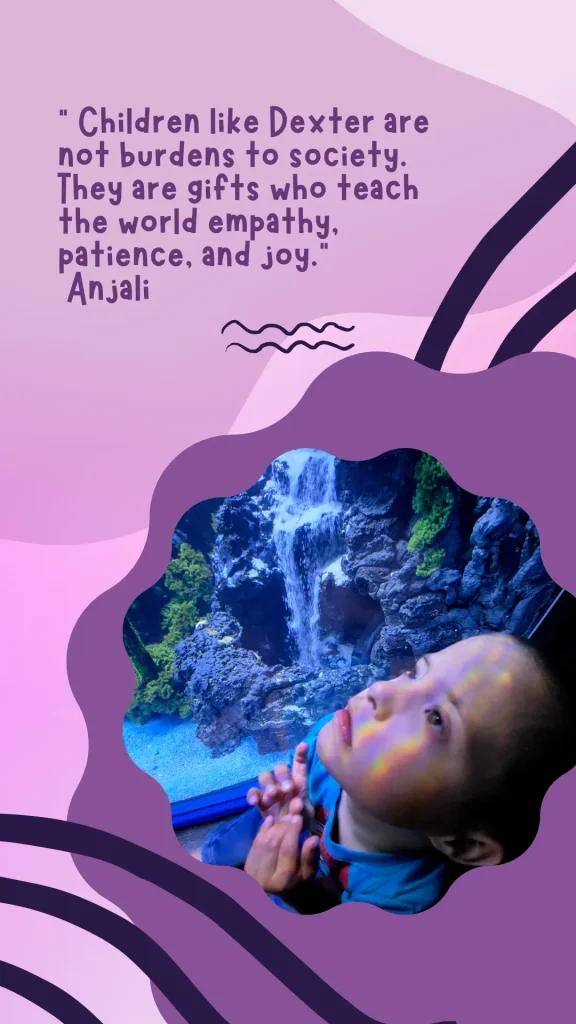
Anjali: This means that Dexter has access to the same opportunities as his neuro-typical peers and sisters. In education having facilities which help him learn and develop to his best ability. In healthcare, professionals being aware of diagnostic overshadowing and how conditions can present differently in people with neurodiversity. Ideally everyone should have training about how to manage illnesses and learn how to communicate differently to patients who may not have the words to describe their symptoms and needs. We want employers to be open minded. To see the potential that people who are differently abled can still be valuable to their teams and companies. Many people with Down Syndrome and neuro-diversity are contributing to society by working, teaching and advocating for themselves and others. Dexter and those like him are not a burden to society. They are an asset. Our world would be a boring place and progress and change much more slowly without people like Dexter.
Simon: Equal rights means our child being treated with dignity and having genuine opportunities and not token gestures. It means access to quality education, healthcare, friendships, independence, and community life without discrimination or exclusion.
Ancy: If you could speak directly to policymakers, educators, or society in one room, what would you say?
Anjali: Please fund the resources and provisions our children and young people need. In the long run this will result in people who can contribute to society and boost the economy. People with Down Syndrome and neuro-diversity are outliving their parents. They need proper social infrastructure so they are able to live happy and fulfilling lives. Our Dexter deserves the opportunity to live his best life. We shouldn’t have to fight for this. It’s his human right.
Simon: If we could speak directly to policymakers and educators we would ask them to stop seeing disability as a burden and start building systems around inclusion, accessibility, and respect. Listen to families. Invest in support and create environments where differences are accommodated instead of seen as obstacles.
Ancy: What dreams do you have for your child’s future, not society’s expectations, but yours?
Anjali: We want Dexter to be happy, have friends, have a life partner and a family if he desires. We want him to have employment which he enjoys and finds fulfilling. We want him to feel like an asset rather than a burden to those around him. We want his sisters, cousins and friends to enjoy Dexter’s company. We want him to feel like he can achieve all the dreams he has and there is no ceiling or restrictions. We want him to be proud of himself and celebrate his extra chromosome rather than be embarrassed by it. We also have similar dreams for our daughters and nephews. However currently theirs feels more achievable and we want this to change.
Simon: Our dreams for our son are happiness, safety, meaningful relationships, confidence, independence where possible, and a life where they feel accepted exactly as they are. We want our son to experience long life, joy, purpose, and belonging.
Ancy: In the hardest moments, what keeps your family emotionally connected instead of exhausted, and when you imagine Dexter and his sisters as adults one day, what kind of relationship and world do you hope they will share together?
Anjali & Simon: Parenting is relentless and can be emotionally draining. We rely on support from our families, friends, the charity Portsmouth Down Syndrome Association and others to help us. We are not afraid to ask for help because we know that time away from our children is crucial for our emotional wellbeing and our marriage. To be able to spend time together as a couple rather than parents. The charity and other organisations create fun events which caters to our whole family. These are wonderful and creates wonderful loving memories where we can all have fun. In the future, we hope having Dexter as a brother will never feel like a burden or a restriction on their own lives, dreams and ambitions. We hope they will feel like they’re kinder, more compassionate and broadminded people because of Dexter. We hope they’ll want to spend time with Dexter, enjoy his company, maybe go on holidays together. It would be wonderful if they all chose to live geographically close to each other. Also their partners or families to be accepting of Dexter and they are all part of a big happy family. None of us can predict the future but we can try to plan and prepare. We will see what the future holds however we are filled with hope that all our children’s futures are bright. Filled with love, laughter and joy. Not despite Dexter’s labels but because of them.
Ancy: What is something people misunderstand most about children on the spectrum or with Down syndrome?
Anjali: Your life has changed because you’re a parent. That’s the biggest change. The diagnosis doesn’t define your child and the unrequited love they will have for you. Educating yourself and surrounding yourself with positive people will help relieve the fear. It may be a different parenting journey than you imagined but it’s still beautiful. Be honest and communicate your thoughts and emotions with those who love you and your child. The negative people in your life, you can educate. However you may need to step away from them if they continue with judgement rather than acceptance. Your broadminded attitude will help others understand your child. Words matter and children listen so to be mindful about the words we use. It may feel daunting and scary but there’s a “village” out there somewhere. Find those people, whether it’s virtually or in real life. They can help be your anchors and make you feel more grounded and capable. You’ll be brilliant parents. You have the ability to raise your child and like any other parents, you will grow with your children and learn as they grow.
Simon: To all parents just beginning this journey: It is okay to feel afraid. The future may not look how you imagined, but that does not mean it cannot still be beautiful. Your child will teach you things about love, resilience, and humanity you never expected. You do not need to have all the answers immediately. Just take it one day at a time.
Ancy: “What do you wish the world would stop assuming about your child?”
Anjali: We do not need pity. Our son does not bring us sadness, he brings us joy. He hasn’t stopped our lives or made our worlds smaller. The opposite – we’ve met amazing people with neuro-diversity, we’ve had opportunities which would not have arisen if it wasn’t for Dexter. He has made us braver and bolder. He gave us the courage to move countries. He has opened up the world for us. We love our son and we’re grateful that he has made us better people. Our lives and our families would be incomplete without Dexter.
Simon: We wish the world would stop assuming that our child’s diagnosis defines their potential, intelligence, or happiness. Our son is not “less than” because they learn differently or experience the world differently. They are thoughtful, loving, capable, funny, and determined in ways many people never take the time to see. I also wish people would stop assuming that a life with disability is automatically a tragic one.
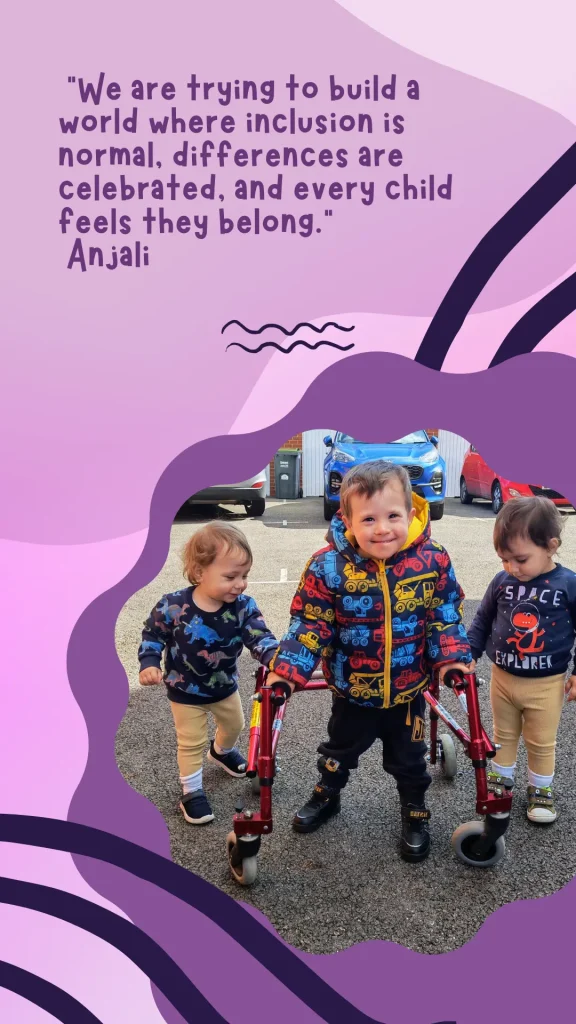
Ancy: Finally, what kind of world are you trying to help build for your child?
Anjali: We’re trying to build a world which is kinder and more openminded. Where inclusivity is the norm. Being different and diversity is celebrated. Since our parent’s generation, acceptance has definitely improved but there’s plenty more room for progress. We want the world to see Dexter. See beyond his Down Syndrome and Autism. There’s so much more to him than those labels. We want a world which is curious to find out more about Dexter.
Simon: We hope to help build a world where inclusion is normal, differences are respected, support is accessible, and every child is valued equally. A world where our child does not have to prove their worth in order to belong.
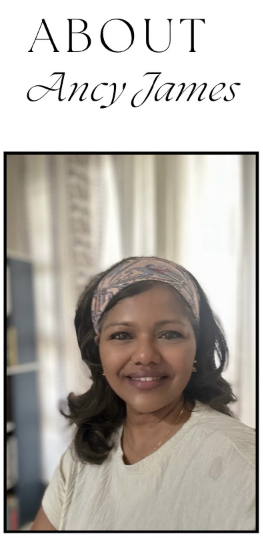
Ancy James is a writer, creative entrepreneur, and former television professional at NDTV with over 17 years of experience, where storytelling, human connection, and meaningful conversations formed the foundation of her work. Based in Bengaluru, she now channels that experience into independent creative ventures, writing, and long-form human-interest storytelling that centres compassion, resilience, and real life.
As the creator of the “Raising Rainbows” interview series, Ancy brings together her background in journalism with her deeply personal belief that some of the world’s most powerful stories are often the quietest ones. Through intimate conversations with families raising neuro-divergent and differently abled children, she hopes to create a body of work that is honest, hopeful, and transformative.
What began as interviews soon became friendships. Listening to parents speak about love, grief, advocacy, inclusion, and joy reshaped her understanding of humanity itself. Her writing aims not to sensationalise disability, but to humanise it, moving beyond labels and inviting readers to see the beauty, individuality, and dignity within every child and family.
Alongside her work as a writer, Ancy also runs her own creative business in Bengaluru, balancing entrepreneurship, motherhood, creativity, and advocacy with warmth and authenticity. Her voice is deeply rooted in empathy, humour, and emotional honesty, qualities that shine through both in her storytelling and in the communities she hopes to build through her work.
Through “Raising Rainbows,” Ancy hopes to use the power of storytelling as a catalyst for awareness, inclusion, and change, creating conversations that help families feel seen, understood, and celebrated.