A two-hour meeting hosted by Secretary of State Marco Rubio marks a pivotal moment in U.S.-Middle East diplomacy, as Israeli and Lebanese officials agree to pursue peace negotiations amid ongoing conflict in the region.
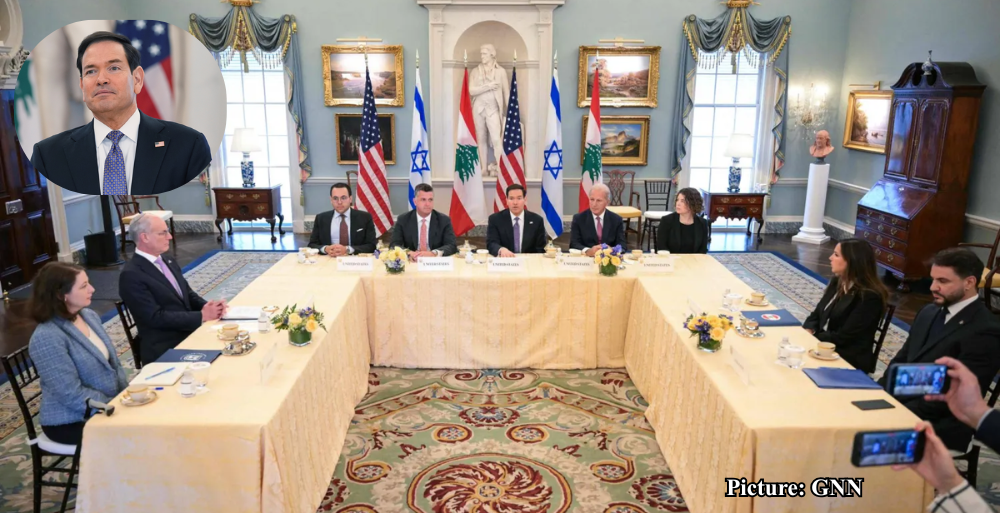
In a significant diplomatic development, Secretary of State Marco Rubio hosted a meeting on Tuesday with the Israeli and Lebanese ambassadors to the United States, marking the highest-level engagement between the two countries since 1993. The two-hour meeting took place against the backdrop of a widespread ground invasion by Israel in southern Lebanon, which has been ongoing due to hostilities with the militant group Hezbollah.
This engagement follows recent pressure from President Trump on Israeli Prime Minister Benjamin Netanyahu to de-escalate military actions in the region. The discussions aimed to facilitate direct talks regarding a peace agreement and to promote stability in Lebanon, which has been severely affected by the ongoing conflict.
Context of the Meeting
According to a joint statement released at the conclusion of the meeting, the primary objectives included isolating Hezbollah, urging the group to disarm, and reinforcing the sovereignty of the Lebanese government. This aligns with broader U.S. strategic interests in the region, which seek to prevent Iranian influence from extending through proxy groups like Hezbollah.
Lebanese Ambassador Nada Hamadeh emphasized during the meeting the urgent need for a ceasefire and the complete implementation of the cessation of hostilities agreement established in November 2024. She highlighted the humanitarian crisis in Lebanon, exacerbated by ongoing military actions, and called for immediate measures to alleviate the dire conditions faced by civilians.
The current humanitarian situation in Lebanon is alarming, with reports indicating widespread displacement, food shortages, and significant infrastructure damage due to recent conflicts. The United Nations has warned that millions are in need of urgent humanitarian assistance, underscoring the critical need for a diplomatic resolution.
Israeli Position and Response
In contrast to the Lebanese ambassador’s calls for a ceasefire, Israeli Ambassador Yechiel Leiter emphasized Israel’s determination to continue military operations against Hezbollah. He reiterated the Israeli perspective that disarming Hezbollah is essential for Lebanon’s long-term stability and security. “We discovered today that we are on the same side of the equation — that is the most positive thing we could have come away with. We are both united in liberating Lebanon from the occupation power called Hezbollah,” Leiter stated after the meeting.
The Israeli stance reflects a broader security strategy aimed at undermining Hezbollah’s military capabilities, which Israel views as a direct threat to its national security. Hezbollah has been engaged in armed conflict with Israel for decades, and its influence in Lebanon complicates any potential for peace.
The U.S. government reaffirmed its support for Israel’s right to defend itself against Hezbollah’s ongoing attacks. A statement from the State Department noted that any agreement to cease hostilities must be negotiated directly between Israel and Lebanon, facilitated by the U.S. This approach aims to distance U.S. involvement from any perceived influence exerted by Iranian or Pakistani mediators who have suggested that a ceasefire in Iran could extend to Lebanon.
Historical Significance and Future Outlook
This meeting represents a significant diplomatic milestone, as it is the first high-level engagement between Israeli and Lebanese officials in nearly three decades. The last major diplomatic effort occurred in 1993, when the Oslo Accords were signed, leading to an era of renewed negotiations between Israel and its Arab neighbors.
During the meeting, discussions also touched on a “long-term vision” for relations between Israel and Lebanon, focusing on practical steps toward achieving lasting peace. This includes delineating borders, establishing a security agreement, and ultimately signing a comprehensive peace treaty. The joint statement concluded with hopes that these discussions could extend beyond the framework of the 2024 agreement, indicating ambitious aspirations for regional stability and cooperation.
The involvement of the U.S. in facilitating these talks is part of a broader strategy to counteract Iranian influence in the Levant and to foster diplomatic relations that could stabilize the region. Should these negotiations succeed, they could have far-reaching implications not only for Israel and Lebanon but also for the overall geopolitical landscape of the Middle East.
Challenges Ahead
As both parties prepare for further negotiations, several challenges remain. The ongoing military operations by Israel in southern Lebanon and the complex dynamics involving Hezbollah complicate the likelihood of a swift resolution. Moreover, the historical mistrust between the two nations and their conflicting narratives pose significant obstacles to meaningful dialogue.
Additionally, the role of external actors such as Iran, which supports Hezbollah, and regional powers with vested interests in Lebanon’s stability will also influence the outcome of these negotiations. The U.S. has signaled its intent to remain actively involved in the peace process, but the efficacy of its mediation efforts will depend on the willingness of both parties to engage in good faith.
As the situation unfolds, the international community will closely monitor these discussions, recognizing that any breakthrough could represent a pivotal shift in Middle Eastern diplomacy and security.