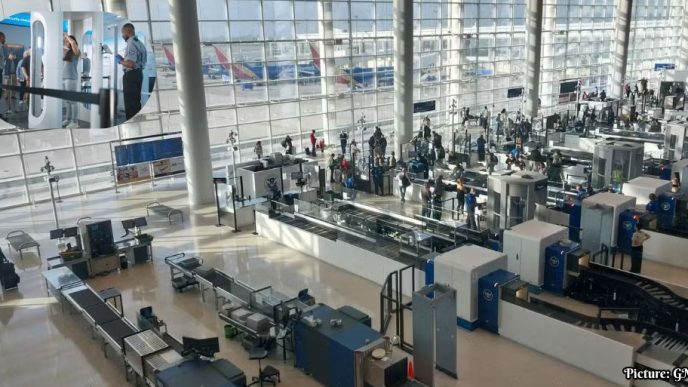

As summer travel approaches, the TSA has updated its guidance, allowing medical marijuana in carry-on bags and checked luggage, while emphasizing the need for travelers to understand varying state laws and airline policies.
On May 1, 2023, the Transportation Security Administration (TSA) revised its regulations regarding the transport of medical marijuana, allowing it to be included in both carry-on bags and checked luggage for air travelers. This change marks a significant shift in the agency’s approach to cannabis, which remains federally prohibited despite its legal status in many states. The TSA’s updated guidance is particularly relevant as the summer travel season approaches, prompting many travelers to prepare for flights.
New Guidelines Under Federal Law
The TSA’s announcement clarifies that the allowance pertains specifically to medical marijuana, with recreational cannabis still classified as illegal under federal law. According to the TSA, its screening procedures are primarily aimed at identifying threats to aviation security rather than enforcing drug laws. However, if TSA officers identify illegal substances during security checks, they are obligated to notify local law enforcement.
The TSA’s guidelines state: “TSA’s screening procedures are focused on security and are designed to detect potential threats to aviation and passengers. Accordingly, TSA security officers do not search for illegal drugs, but if any illegal substance or evidence of criminal activity is discovered during security screening, TSA will refer the matter to a law enforcement officer.” Notably, the final decision on whether an item is permitted rests solely with the TSA officer at the checkpoint.
Implications of the Updated Rule
Legal experts have weighed in on the implications of this updated guideline, noting that while it represents a step toward normalizing the use of medical marijuana, it still carries inherent risks for travelers. Experts recommend that individuals carry appropriate medical documentation and keep marijuana products in their original packaging. Travelers are also advised to check both the airline policies and the laws of their departure and destination states before flying.
Cameron Clarke, cofounder and CEO of Sunderstorm/KANHA, expressed optimism about the TSA’s updated guidance, stating, “The TSA’s updated guidance is a meaningful early step in the long-overdue federal reckoning with cannabis. It is one of the first tangible signs that the government is beginning to treat cannabis as a legitimate plant medicine with real therapeutic value.” This sentiment reflects a growing acceptance of medical marijuana in various sectors of society.
Varying State Laws and Airline Policies
Despite the TSA’s revisions, travelers must navigate a complex web of state laws and airline policies that can differ significantly. For instance, California allows individuals aged 21 and older to possess up to 28.5 grams of marijuana for personal use, and the Los Angeles Airport Police Division has updated its policies accordingly. However, the TSA’s jurisdiction is federal, which complicates matters for travelers.
Airlines such as Delta have stated that while they recognize varying state laws regarding marijuana, federal law prohibits the transportation of marijuana. Delta’s policy notes, “Although Delta Air Lines is aware of various state laws that allow recreational or medical marijuana possession, the TSA has stated that possession of marijuana, even medical marijuana, is illegal under federal law and that it will refer passengers traveling with marijuana to law enforcement authorities.” This highlights the need for travelers to be well-informed about their airline’s policies regarding cannabis.
Expert Recommendations for Travelers
Experts advise travelers to take several precautions to ensure a smooth experience when flying with medical marijuana. Recommendations include:
- Reviewing the laws of both the departure and destination states.
- Confirming whether the destination state recognizes out-of-state medical marijuana cards.
- Checking the airline’s cannabis policy before traveling.
- Carrying a medical marijuana ID card or prescription documentation.
- Keeping products in their original packaging whenever possible.
- Bringing only what is necessary for the duration of the trip.
- Remembering that TSA officers have the final say on what is permitted through security checkpoints.
Despite the TSA’s updated stance, some states, like Texas, do not recognize out-of-state medical cards, meaning that possessing cannabis can still lead to legal issues. Jonathan Robbins, chair of cannabis practice at Akerman LLP, stated, “Safe is a relative term. I would say that it is safer, but not entirely risk-free. Always travel with your medical marijuana ID card and keep marijuana products in their original packaging with receipts. Limit traveling with cannabis to flights from medical states to medical states whenever possible.”
As the legal landscape surrounding cannabis continues to evolve, air travelers must remain vigilant and informed about regulations that can affect their journeys. The TSA’s updated guidance may provide some clarity for medical marijuana patients, but the potential for legal complications remains, underscoring the importance of thorough preparation before air travel.