U.S. Secretary of State Marco Rubio hosted a pivotal meeting between Israeli and Lebanese ambassadors, aimed at fostering peace negotiations amidst ongoing military conflict and humanitarian crises.
In a significant diplomatic initiative, U.S. Secretary of State Marco Rubio convened a two-hour meeting on Tuesday with the ambassadors of Israel and Lebanon in Washington, D.C. This engagement represents the highest-level dialogue between the two nations since 1993, occurring in the context of heightened military action in southern Lebanon amid tensions with Hezbollah.
The meeting was facilitated after President Trump urged Israeli Prime Minister Benjamin Netanyahu to de-escalate military operations, setting the stage for this unprecedented direct interaction. During the discussions, both sides expressed a commitment to further peace negotiations, indicating a potential thaw in their historically fraught relationship.
Background of the Conflict
The current situation between Israel and Lebanon has deteriorated sharply due to the ongoing conflict involving Hezbollah, a militant group based in Lebanon. Israel’s military operations have included extensive airstrikes and ground incursions, prompting international concern regarding the humanitarian impact on Lebanese civilians. The U.S., alongside Israeli and Lebanese officials, has emphasized that the primary goal of the meeting was to isolate Hezbollah, compel its disarmament, and reinforce the authority of the Lebanese government within its territory.
According to a joint statement issued at the conclusion of the meeting, the Israeli and Lebanese representatives agreed to pursue peace negotiations “at a mutually agreed time and venue.” This commitment signifies a willingness to address the long-standing issues affecting both nations and could potentially lead to a resolution of the conflict.
Statements from Key Participants
Lebanese Ambassador Nada Hamadeh articulated the urgent need for a ceasefire and the full implementation of a cessation of hostilities agreement established in November 2024. She highlighted the dire humanitarian crisis that has arisen due to ongoing military actions, stressing the necessity for concrete measures to alleviate the suffering of the Lebanese population.
In contrast, Israeli Ambassador Yechiel Leiter reaffirmed Israel’s determination to continue military actions against Hezbollah. He asserted the importance of disarming the organization and expressed Israel’s readiness to collaborate with the Lebanese government to achieve that goal. “We discovered today that we are on the same side of the equation — that is the most positive thing we could have come away with. We are both united in liberating Lebanon from the occupation power called Hezbollah,” Leiter remarked to reporters following the meeting.
U.S. Position and Broader Implications
The U.S. government reiterated its support for Israel’s right to defend itself against ongoing attacks from Hezbollah. A statement from the U.S. emphasized that any agreement to cease hostilities must be established directly between the Israeli and Lebanese governments, mediated by the U.S., rather than through external influences, particularly from Iran.
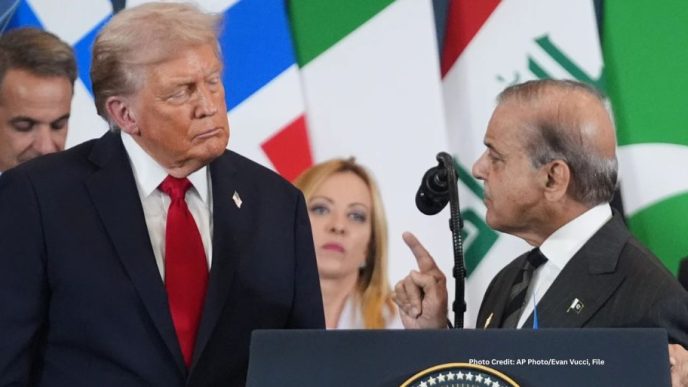
This position comes in the wake of claims from Iranian and Pakistani officials suggesting that a ceasefire recently negotiated in Iran should also apply to Lebanon. Both Israel and the U.S. have dismissed these assertions, with Israeli military operations continuing shortly after the ceasefire announcement.
Historical Context of Israeli-Lebanese Relations
The relationship between Israel and Lebanon has been characterized by conflict and hostility for decades, particularly since the Lebanese Civil War and the subsequent Israeli invasions of Lebanon in the 1980s. The rise of Hezbollah, which has positioned itself as both a political party and a military force in Lebanon, has further complicated diplomatic relations. Efforts for peace have been sporadic and often thwarted by renewed violence or political instability.
The last notable attempt at dialogue between the two nations occurred in the early 1990s, culminating in a series of negotiations that ultimately failed to yield lasting peace. As a result, the recent meeting represents a significant step forward in diplomatic efforts, potentially paving the way for more comprehensive discussions about security, border delineation, and a long-term peace treaty.
Next Steps and Future Outlook
During the talks, Ambassador Leiter indicated that the parties discussed a vision for future cooperation, including the delineation of borders and security agreements that could precede a full peace accord. The U.S. expressed its hope that these discussions could extend beyond the framework of the 2024 agreement and contribute to a more comprehensive resolution to the ongoing conflict.
This diplomatic engagement underscores the complexities of Middle Eastern geopolitics and the challenges facing U.S. foreign policy in the region. Should negotiations progress in a constructive manner, they may redefine the relationship between Israel and Lebanon, potentially leading to greater stability in a region long marked by discord.
The outcomes of these talks remain uncertain, but the commitment from both sides to engage in dialogue is a positive development in a historically tense relationship. The international community will be closely monitoring these developments as they unfold, hoping for a peaceful resolution that addresses the underlying issues contributing to the conflict.