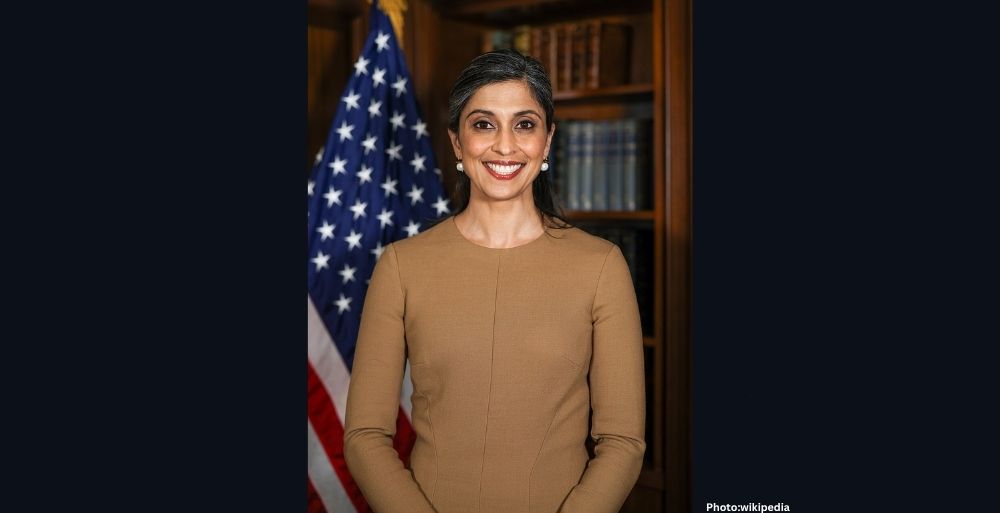
Second Lady of the United States Usha Vance has officially launched the second annual White House Summer Reading Challenge, transitioning the initiative from a localized pilot program into a comprehensive nationwide campaign aimed at curbing the seasonal decline in childhood literacy. In an exclusive television interview with ABC News Anchor Linsey Davis, Vance outlined a multi-tiered expansion strategy involving broad public-private partnerships, a digital tracking framework, and incentive packages designed to engage students from kindergarten through eighth grade. The executive branch literacy push arrives amid ongoing nationwide concern regarding stagnant post-pandemic reading proficiency metrics, with federal data indicating that nearly 70% of American fourth and eighth graders fall below proficient literacy standards.
WASHINGTON — Second Lady of the United States Usha Vance on Monday announced the formal launch of her second annual nationwide Summer Reading Challenge, introducing an expanded public education campaign designed to elevate foundational childhood literacy and systematically mitigate the phenomenon known to educators as “summer slide.”
The announcement, detailed during an exclusive broadcast interview with ABC News anchor Linsey Davis on ABC News Live Prime, marks a significant scaling up of the program from its initial rollout. What began as a rapidly assembled pilot project has transformed into a coordinated national operation involving institutional partnerships with public school districts, municipal libraries, and civic organizations across all 50 states and multiple U.S. territories.
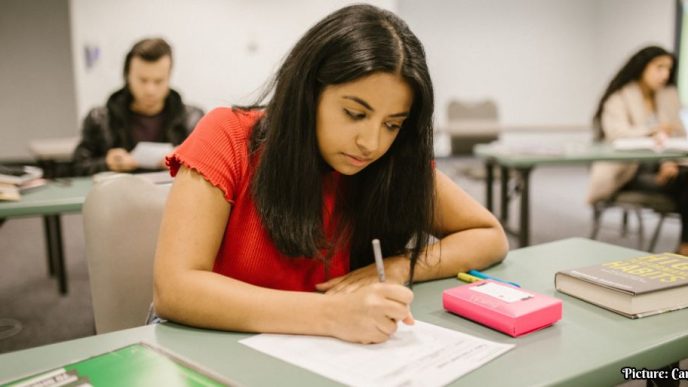
The programmatic framework of the 2026 challenge invites students ranging from kindergarten through eighth grade (K–8) to read 12 self-selected books between June 1 and September 4, 2026. By removing rigid genre or curricular restrictions, the initiative seeks to foster autonomous engagement with written texts during the protracted summer recess, a period during which standard academic instruction is absent.
Scaling the Initiative: From Pilot to National Program
Reflecting on the origins of the project, the Second Lady acknowledged that the inaugural iteration was conceived under tight operational timelines as the administration sought actionable, non-regulatory mechanisms to address systemic domestic education gaps.
“It is the second one. Last year it was an idea that we had really at the last minute as we were thinking about ways to enhance childhood literacy and get kids reading over the summer and sort of stave off some of the summer learning loss that traditionally happens every year,” Vance stated during the interview, speaking from a reception room within the White House complex. “So we did a little pilot program and it was a success beyond what we had hoped.”
Internal administration data released alongside the Monday launch revealed that the initial pilot program drew more than 20,000 active youth participants spanning every state in the union. Encouraged by the baseline metric, the Office of the Second Lady directed a multi-month expansion strategy ahead of the 2026 cycle.
“This year we’re having a big rollout all over the country,” Vance added, emphasizing the integration of systemic support networks. The expanded architecture includes the introduction of an online state-by-state tracker and a competitive digital leaderboard designed to stimulate participation through localized civic pride.
The Mechanics of Participation and Incentives
The operational design of the challenge emphasizes low-barrier accessibility to minimize administrative friction for working families. To fulfill the challenge criteria, children are instructed to select 12 books of any length, difficulty, or subject matter, shifting the pedagogical focus from mandatory curriculum to reading for pleasure.
“Our summer reading challenge is really simple. All kids have to do is pick up 12 books, anything that they like,” Vance explained, adopting an enthusiastic but pragmatic tone when describing the behavioral strategies used to engage reluctant readers. “If a kid likes reading about squirrels, as one did last year, read 12 books about squirrels. If a kid loves history, read books about history.”
Upon the completion of the reading list, parents or legal guardians are required to log the titles via an official sub-portal hosted on the executive branch website.
“So you read those books, write them down on a log and send them to whitehouse.gov/read and we’ll receive them, send a certificate,” Vance noted.
To incentivize completion across diverse socioeconomic demographics, the administration has updated the award structure. For the 2026 cycle, every participant who successfully logs 12 books will receive a digital certificate of achievement, a personalized letter from the Second Lady, and a limited-edition bookmark themed around the upcoming “America 250” semiquincentennial celebrations marking the 250th anniversary of the founding of the United States.
Furthermore, the submission triggers access to an external fulfillment portal where children can select a physical prize. The primary motivator, however, remains a national lottery system tied to the submissions.
“We’ll also enter all of the kids into a raffle to come visit the White House, come spend some time in D.C., and sort of enjoy all that D.C. has to offer,” Vance said, noting that winners would travel to the nation’s capital with an adult chaperone for a specialized event scheduled for late September.
Data and Deep Context: The Scope of the Literacy Crisis
The introduction of the executive literacy initiative occurs against a backdrop of sobering national educational data. According to the most recent findings compiled by the National Assessment of Educational Progress (NAEP), often referred to as the “Nation’s Report Card,” youth reading proficiency in the United States remains in a critical state.
Statistical indicators from the 2024 assessment cycle revealed that only 31% of American fourth graders were reading at or above the “proficient” benchmark for their developmental level. The figures for eighth graders were similarly constrained, with only 30% demonstrating grade-level proficiency. This leaves approximately 70% of the tested student population performing at “basic” or “below basic” operational levels, a deficit that experts warn impedes subsequent academic achievement and long-term workforce readiness.
This structural deficit is compounding an older, well-documented issue: summer learning loss. Decades of sociological and educational research indicate that without structured cognitive engagement, students drop significant academic ground during the summer vacation.
Data published by the Northwest Evaluation Association (NWEA) and corroborated by White House policy briefings indicates that students lose an average of two to three months of reading progress over the summer months. This decline does not affect all demographics equally; the “summer slide” historically hits low-income households hardest, as these families often lack equal access to paid enrichment programs, books, and literacy materials, thereby widening the achievement gap before the autumn term even begins.
Broader Policy Initiatives and Cultural Outreach
The Summer Reading Challenge represents one component of a broader, multi-channel childhood literacy portfolio managed by the Second Lady’s office. In tandem with the physical book challenge, Vance has leveraged digital media platforms to amplify the message, launching a dedicated podcast titled Storytime with the Second Lady. The audio and video series, distributed via major streaming platforms, features prominent cultural, athletic, and political figures reading classic children’s literature aloud to promote family reading habits.
Earlier in May, Vance conducted a series of regional site visits to promote the initiative ahead of the scholastic recess, including an appearance at the AcadeMir Academy Charter School East in Doral, Florida. During these regional engagements, administration officials emphasized that improving literacy rates requires shifting cultural attitudes toward reading, transforming it from a compulsory institutional task into a self-directed leisure activity.
While critics of executive-led reading initiatives often question the long-term structural efficacy of voluntary programs compared to systemic legislative reform or increased federal education funding, proponents argue that high-visibility platforms like the Office of the Second Lady are uniquely positioned to mobilize nationwide civic infrastructure. By utilizing a zero-cost, high-incentive model, the administration aims to complement existing public school remedial efforts without placing additional regulatory or financial burdens on local municipalities.
The full registration portal, downloadable reading logs, and institutional toolkits for public libraries became fully active on June 1, coincided with the broadcast of Vance’s interview. The submission window will remain open to all eligible domestic participants until the official closing deadline at midnight on September 4, 2026.