Pope Leo XIV emphasized the vital role of Catholic universities in nurturing students’ passion for Christ and the truth, urging educators to adapt to modern challenges while promoting a cohesive understanding of faith and knowledge.
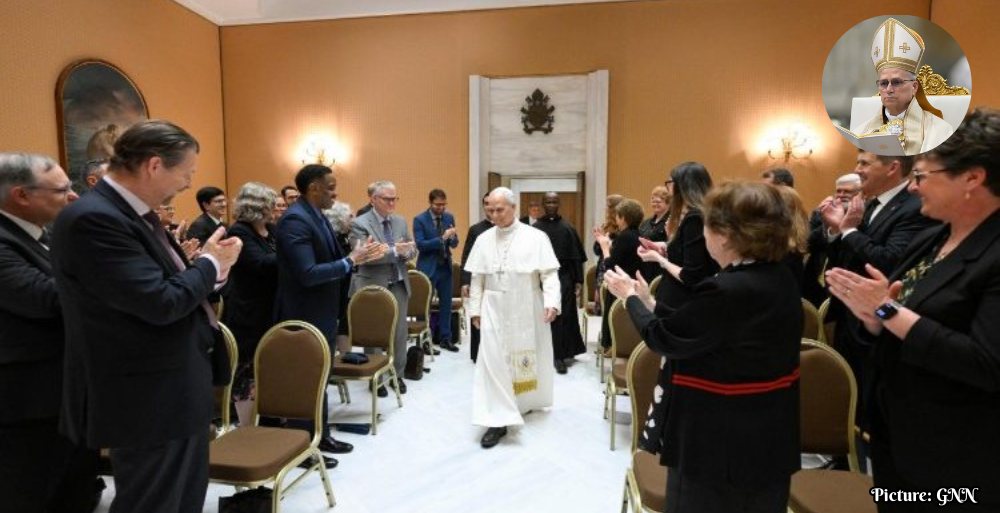
Vatican City — On Wednesday, Pope Leo XIV addressed a delegation from the Association of Catholic Colleges and Universities (ACCU) at the Vatican, emphasizing the dual imperative for Catholic education to foster both academic excellence and a profound connection to Christ, whom he referred to as “the Truth.” The Pope’s remarks were made during a meeting related to their upcoming 2026 Rome seminar, where he outlined the critical responsibilities that Catholic institutions hold in the current fragmented educational landscape.
The Call to Embrace Truth
In his address, Pope Leo XIV articulated a pressing concern: “Unless Catholic education instills in students a true passion for the truth — and not only intellectual truth, but the Truth that is Christ Himself — we can hardly expect people to be willing to put forth the effort required to recognize truth and adapt one’s life accordingly.” This statement underscores the belief that faith and education must not operate in silos but should be intertwined to prepare students for the complexities of modern life.
Pope Leo XIV’s call for a holistic educational approach reflects a longstanding tradition within Catholic educational philosophy that emphasizes the unity of knowledge and faith. He urged leaders of Catholic institutions to create environments where the Christian vision is integrated across all disciplines and interactions. “Your authenticity as true disciples of Christ will certainly assist you in transmitting the living Gospel in such a way that those entrusted to you can truly encounter the Lord and discover in the Catholic faith the unifying vision that Truth alone can provide,” he stated.
Navigating Challenges in Education
The Pope’s address also touched on contemporary challenges facing education, particularly the increasing specialization and fragmentation of knowledge. He noted that while many individuals may be experts in their respective fields, they often lack a comprehensive understanding of life and the interconnectedness of knowledge. This fragmentation, he argued, can leave students disoriented and unprepared to face the moral and ethical dilemmas of the world.
Referring to the recent Encyclical Letter ‘Magnifica humanitas,’ released on May 25, Pope Leo XIV highlighted the need for Catholic education to cultivate a more profound understanding of humanity amid rapid technological advancements. He recognized that while students pursue degrees for career opportunities, they must also be guided to seek and love the truth, reflect on life’s meaning, and appreciate the dignity of every individual.
The Impact of Technology
The explosion of artificial intelligence (AI) and its implications for education formed a significant part of the Pope’s message. He acknowledged the challenges posed by AI in assessing student work and urged educators to creatively adapt their teaching methods to ensure comprehensive human formation. The Pope stated, “The prolific use of artificial intelligence makes it increasingly difficult to evaluate the work of students, requiring educators to adapt their methods creatively to ensure the integral human formation of those in their care, even when this entails more work for teachers.”
He expressed the necessity for Catholic educators to invest significantly in the education of future generations, stating, “It is crucial that young men and women learn to engage positively with new technologies while at the same time developing their God-given skills and capacities to reason, think critically, and commit knowledge to memory.” The Pope’s remarks resonate in a world where technology increasingly influences educational practices and student interactions, emphasizing that this adaptation is essential for preparing students to shape the future responsibly.
A Vision for the Future
Concluding his address, Pope Leo XIV expressed his hope that Catholic institutions would continue to fulfill the Church’s evangelizing mission. He stressed that students should find in these institutions a foundation built on sound doctrine, which he believes is crucial for their personal lives and the future of the nation. By strengthening the integration of faith and education, Catholic universities can play a pivotal role in shaping both individual lives and the broader societal landscape.
The Pope’s address serves as a reminder of the enduring mission of Catholic education and the challenges it faces in an ever-evolving world. As Catholic universities prepare to navigate these complexities, the call for a deeper commitment to integrating faith and learning remains more relevant than ever. The Pope’s insights reflect a broader concern within the Church about the role of education in fostering not just academic achievement, but also moral and spiritual development in an age marked by rapid change.
As Catholic educators consider these themes, they may be called upon to rethink curricula, teaching methodologies, and the overall mission of their institutions. The Pope’s message reinforces the idea that education should not merely focus on vocational training but should also encourage a pursuit of truth that leads students to a deeper understanding of themselves and their place in the world.