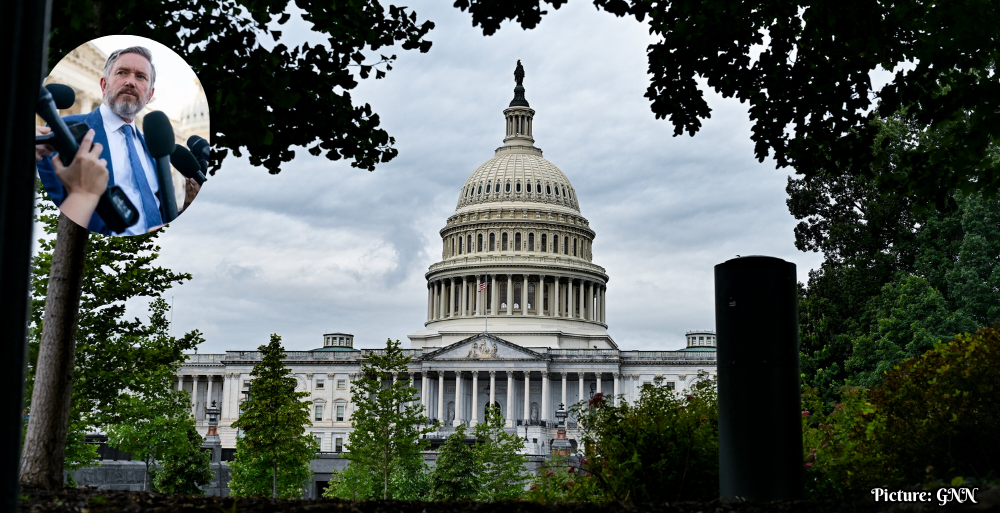
The House of Representatives passed a resolution aimed at ending U.S. military involvement in the Iran War, reflecting growing bipartisan concerns over the conflict’s legality and impact on American citizens.
On Wednesday, September 27, 2026, the House of Representatives passed a resolution that seeks to terminate U.S. military operations in Iran, marking a significant moment in the ongoing debate over the legality and implications of the conflict. The vote ended with a narrow margin of 215-208, with support from four Republican lawmakers—Reps. Thomas Massie (Ky.), Brian Fitzpatrick (Pa.), Tom Barrett (Mich.), and Warren Davidson (Ohio)—joining the unified Democratic caucus in favor of the measure.
This legislative action, while largely symbolic, pushes back against President Donald Trump’s ongoing military operations in Iran, which have sparked constitutional debates regarding war powers. Critics argue that the conflict lacks explicit congressional approval, a standpoint that is increasingly echoed across party lines. Rep. Jared Huffman (D-Calif.) described the resolution as a significant step toward having both chambers of Congress declare the war illegal, asserting, “It’s very powerful. We’re inching closer to having both chambers of Congress declare this an illegal war. That’s huge.”
Context of the Resolution
The resolution is classified as a concurrent measure, which requires approval from both the House and Senate but does not necessitate the President’s signature or veto. This contrasts with the Senate’s own war powers resolution, which is a joint measure and would be subject to presidential approval. The legislative process reflects a broader trend of increasing bipartisan dissatisfaction with the military engagement in Iran, a conflict that has persisted for over three months without a clear resolution.
While the House resolution may not carry the force of law, it establishes a formal stance against the conflict that has ramifications for both domestic and foreign policy. The ongoing military activities have been criticized for contributing to global trade disruptions and rising prices of essential goods, particularly gasoline and groceries, affecting voters across the political spectrum. The American Automobile Association reported that as of Wednesday, the national average gas price was $4.26 per gallon, up significantly from $3.14 a year prior.
Political Implications and Voter Sentiment
The vote illustrates a growing willingness among some Republican lawmakers to diverge from President Trump’s agenda, particularly as the midterm elections approach. GOP leaders, including House Speaker Mike Johnson (R-La.), have maintained that the conflict does not constitute a war, thus not requiring congressional oversight. However, the shift in public sentiment against the war has been notable, particularly among Independent voters, who are increasingly disenchanted with the ongoing military operations. This trend poses potential risks for vulnerable Republicans seeking reelection in the upcoming November midterms.
Economic factors have played a significant role in this shift. The rising costs attributed to the war have led Democrats to articulate their criticisms of Trump’s foreign policy. House Minority Leader Hakeem Jeffries (D-N.Y.) condemned the military engagement, stating, “Donald Trump’s reckless and costly war of choice has cost everyday Americans hundreds, if not thousands of dollars more in increased costs, particularly as it relates to gas prices. This war — this reckless and costly war of choice — needs to end today.”
Legal Context and Future Actions
The resolution, sponsored by Rep. Greg Meeks (D-N.Y.), invokes the War Powers Act of 1973, which allows presidents to initiate military actions without congressional consent for a limited time frame of 60 days, extendable by another 30 days. That statutory window closed in early May, prompting some GOP lawmakers to call for renewed congressional authorization for military actions against Iran.
The White House has dismissed the Meeks resolution on constitutional grounds, characterizing it as an “unconstitutional legislative veto” over executive authority. The administration has also argued that the conflict effectively ended when President Trump called for a ceasefire in early April 2026. A formal statement from the White House claimed, “There are no present hostilities from which to remove U.S. Armed Forces. The hostilities that began on February 28, 2026, have terminated with the ceasefire ordered by the President on April 7, 2026.”
Additional Legislative Developments
In a separate but related legislative move, the House also advanced a bill to provide aid to Ukraine amid its ongoing conflict with Russia. This measure was brought to the floor through a procedural maneuver known as a discharge petition, which garnered the necessary 218 signatures to bypass Republican leadership opposition. The bill’s advancement highlights the growing divisions within the House Republican conference regarding U.S. foreign aid and military support.
The passage of the resolution to end the Iran War and the simultaneous advancement of aid for Ukraine signal a tumultuous period in U.S. foreign policy, as lawmakers grapple with the implications of military engagement abroad and its repercussions at home. As the political landscape shifts and midterm elections approach, both parties are keenly aware of how these issues resonate with voters across the country.