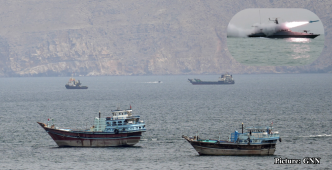

Iranian Ambassador to Pakistan Reza Amiri Moghadam announced Saturday that Tehran remains willing to pursue diplomatic negotiations with the United States under the framework of a June interim deal brokered by Pakistan and Qatar. Speaking at an international security seminar in Islamabad, Moghadam accused Washington of undermining diplomatic channels by rejecting a proposal to reopen the Strait of Hormuz in exchange for ending the U.S. naval blockade on Iranian ports. The envoy also addressed regional security dynamics, stating that Iran will review the newly signed Mecca Joint Defense Agreement between Pakistan, Saudi Arabia, and Turkey, assessing its potential as a stabilizing framework for regional defense cooperation.
ISLAMABAD — Iranian Ambassador to Pakistan Reza Amiri Moghadam reaffirmed Saturday that Tehran remains open to diplomatic engagement with the United States under the framework of a June interim deal brokered by Pakistan and Qatar. However, the Iranian envoy sharply criticized Washington, accusing U.S. President Donald Trump of prolonging the security standoff in the Strait of Hormuz by rejecting Iranian proposals to ease naval restrictions.
Speaking before diplomats, defense analysts, and journalists at a strategic affairs seminar in Islamabad, Ambassador Moghadam detailed recent diplomatic exchanges facilitated through Pakistani channels. According to Moghadam, Iranian officials communicated to Washington that Tehran stood prepared to reopen the Strait of Hormuz to commercial maritime traffic. In exchange, Tehran required the United States to dismantle its naval blockade against Iranian ports. Moghadam reported that President Trump rejected the proposal, insisting that U.S. naval operations along the Iranian coastline would persist.
“Iran has consistently demonstrated its readiness to implement the terms negotiated in June, which aimed to establish a verifiable path toward de-escalation,” Ambassador Moghadam told the room, maintaining a measured demeanor despite the contentious topic. “It is Washington’s insistence on maintaining economic and military pressure that continues to stall progress and threaten global maritime commerce.”
The June Interim Deal and the Strait of Hormuz Standoff
The diplomatic framework in question dates back to June 2026, when intense mediation by Pakistan and Qatar produced an interim agreement designed to resolve the maritime conflict that has choked global oil transport through the Persian Gulf. The primary objectives of the June accord included:
- Restoration of Maritime Transit: Reopening the vital Strait of Hormuz to international shipping without risk of vessel seizure or military obstruction.
- Lifting Naval Restrictions: Terminating the United States Navy’s blockade on Iranian maritime ports to allow commercial and energy exports.
- Broader Nuclear Negotiations: Establishing a structured multilateral forum to address international concerns regarding Iran’s nuclear enrichment activities and regional security commitments.
[ Pakistan & Qatar Mediation ]
              |
              v
     +-----------------+
     | June Interim    |
     | Agreement       |
     +-----------------+
        /           \
       /             \
      v               v
[ Iran Proposal ]   [ U.S. Position ]
Reopen Strait of    Maintain Naval
Hormuz Transit      Blockade on Ports
Ambassador Moghadam emphasized that key Iranian commitments were directly conveyed during high-level diplomatic visits to Tehran by Pakistan’s top military commander, Field Marshal Asim Munir. During those meetings, Iranian officials assured Pakistani leadership that once Washington signaled a willingness to lift the blockade, Iran would immediately restore unhindered transit through the strait.
The Strait of Hormuz remains the world’s most critical oil transit chokepoint, handling approximately 20 percent of global petroleum consumption. The ongoing blockade and associated security risks have inflated global energy prices, driving supply chain bottlenecks across Asia and Europe.
Reviewing the Mecca Joint Defense Agreement
Beyond the bilateral standoff with Washington, Ambassador Moghadam addressed a major shift in Middle Eastern security architecture: the recently established Mecca Joint Defense Agreement. Signed by Pakistan, Saudi Arabia, and Turkey, the tripartite defense pact was drafted following renewed missile and drone attacks launched by Iranian-backed Houthi rebels in Yemen against Saudi infrastructure.
The three signatory nations stated that the accord is designed to strengthen collective deterrence, expand joint military exercises, and facilitate defense-technology sharing. Addressing concerns that the pact might form an anti-Iranian bloc, Moghadam offered a cautious but constructive stance.
“We will study the Mecca Agreement, and if it is good, we will support it,” Ambassador Moghadam stated, framing the accord as a potential instrument for regional solidarity if executed transparently.
| Country | Status on Mecca Agreement | Stated Operational Role |
| Pakistan | Signed & Active | Strictly defensive deterrence; mediator |
| Saudi Arabia | Signed & Active | Border & infrastructure protection |
| Turkey | Submitted to Parliament for Ratification | Collective defense; no troop deployment in Yemen |
| Iran | Under Official Study | Open to supporting if beneficial for regional unity |
Officials from Ankara and Islamabad have taken explicit steps to assure Tehran that the Mecca Agreement does not target Iran or any third-party sovereign nation. Turkish authorities, who have formally submitted the treaty to parliament for ratification, reiterated that the pact rules out sending Turkish troops into Yemen to engage Houthi forces directly. Pakistani defense officials similarly confirmed that their participation remains strictly defensive and focused on territorial protection.
Broader Political Landscape and Diplomatic Roadblocks
The geopolitical tension surrounding the Strait of Hormuz underscores the complex diplomatic balancing act managed by regional actors like Pakistan and Qatar. While Islamabad maintains vital economic and security ties with Gulf Cooperation Council (GCC) states and Turkey, it also shares a lengthy land border with Iran and seeks to prevent a wider military outbreak along its western flank.
For Washington, the Trump administration has maintained that a complete lifting of the naval blockade requires verifiable compliance on both maritime freedom and broader non-proliferation parameters. Iranian leadership, however, insists that military blockades represent an act of economic warfare that must cease before comprehensive diplomatic talks can resume in earnest.
As Field Marshal Asim Munir and Qatari diplomats continue shuttle diplomacy between Tehran, Washington, and regional capitals, Ambassador Moghadam’s statements signal that while formal channels remain frayed, the framework for a negotiated resolution remains intact if both sides can agree on a sequence for lifting sanctions and restoring maritime passage.
Tags: Iran US negotiations, Strait of Hormuz blockade, Reza Amiri Moghadam, Pakistan diplomacy, Donald Trump Iran policy, Mecca Joint Defense Agreement, Field Marshal Asim Munir, Houthi attacks Saudi Arabia, Turkey defense pact, Middle East maritime security