

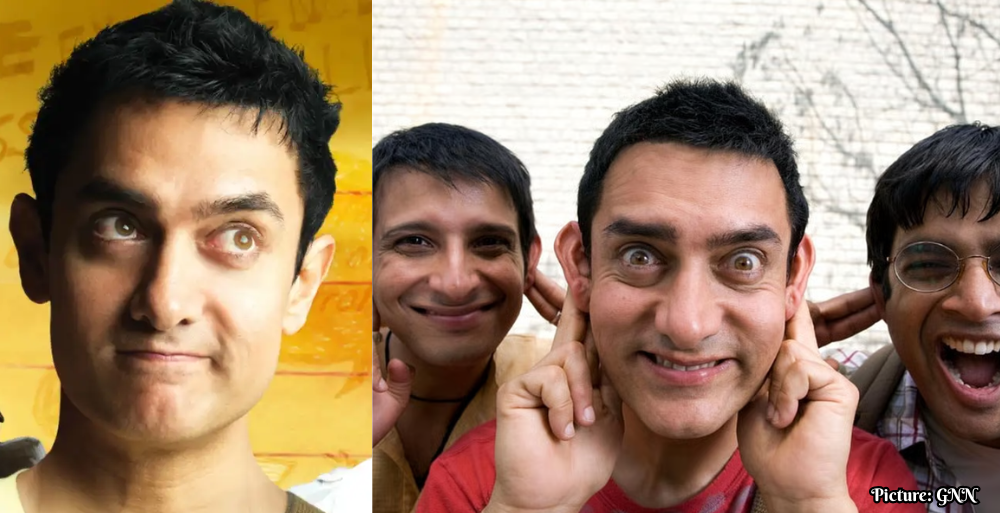
Aamir Khan, a leading figure in Indian cinema, reflects on his career and announces a sequel to “3 Idiots” during the Singapore International Film Festival.
SINGAPORE – Aamir Khan, renowned as one of the most influential actors in modern Indian cinema, participated in an insightful discussion on October 22 at the Singapore International Film Festival (SGIFF). The event, held at Marina Bay Sands, celebrated Khan’s extensive contributions to the film industry and awarded him the Screen Icon Award, recognizing his impact on cinema both in India and internationally.
Khan, 61, is celebrated for his work as an actor, director, and producer in a number of critically acclaimed films, including “Lagaan” (2001), “3 Idiots” (2009), “PK” (2014), and “Dangal” (2016). His dedication to his craft has earned him numerous accolades, including four National Film Awards and nine Filmfare Awards. In recognition of his contributions, the Indian government conferred upon him the Padma Shri in 2003 and the Padma Bhushan in 2010, two of the nation’s highest civilian honors.
The award was presented by Khan’s long-time friend, Hong Kong director Peter Chan, who humorously remarked on Khan’s culinary skills, particularly highlighting his cook’s exceptional aloo paratha. During his acceptance speech, Khan emphasized the collaborative nature of filmmaking, stating, “Film-making is a collective art form,” and dedicated the award to the writers, directors, and crew members he has worked with over the years.
Celebrating Milestones in Cinema
The SGIFF also marks the 25th anniversary of Khan’s iconic film “Lagaan,” which was nominated for an Academy Award and was, at the time of its release, the most expensive Indian film ever made. A screening of “Lagaan” is scheduled for October 23 as part of the festival celebrations.
During a two-hour panel discussion, moderated by local comedian-host Rishi Budhrani, Khan shared exciting news regarding the sequel to his beloved film “3 Idiots.” Director Rajkumar Hirani is currently working on the script, which Khan expects to receive in the coming weeks upon his return to Mumbai.
Reflections on Career Choices
As part of his discussion, Khan reflected on pivotal moments in his career. He recounted a challenging period after his initial success with “Qayamat Se Qayamat Tak” (1988), when he signed onto numerous projects that ultimately did not perform well. This experience led him to prioritize quality over quantity, stating, “I would take on a film only if I loved the script, the director, and the producer.” He recounted a critical moment when he turned down a project from director Mahesh Bhatt, which he felt was not right for him. Khan credited this decision with shaping the trajectory of his career, emphasizing, “Had I compromised that day… I think my entire career would have been a series of compromises.”
Family and Personal Growth
The COVID-19 pandemic served as a significant turning point for Khan, who described himself as a workaholic for three decades. Being confined at home prompted him to reevaluate the time he had spent away from his family, including his three children: Junaid, 33, and Ira, 29, from his first marriage, and Azad, 14, from his second marriage. In July, Khan married wellness entrepreneur Gauri Spratt, further highlighting his commitment to family life.
“It’s okay to work like a madman… But if it goes on for 30 years, your kids have grown up,” Khan reflected emotionally, noting that the pandemic forced him to confront the importance of family time. He also acknowledged the need to disconnect from technology, expressing concern for younger generations who have not experienced moments of boredom, which he believes are essential for creative thought.
Perspectives on Technology and Relationships
Khan addressed contemporary issues in the film industry, specifically the rise of artificial intelligence (AI). He sees AI as a potential tool for storytelling enhancements but expressed concern regarding its impact on skilled laborers within the industry. “Humans will still be needed to judge what works creatively,” he argued, drawing a parallel between the artistry of cooking and the irreplaceable touch of a home-cooked meal.
Reflecting on his international appeal, particularly in China, Khan attributed his popularity to the widespread pirating of “3 Idiots” among Chinese students, while acknowledging that such piracy is not condoned. He remarked, “My popularity in China is thanks to piracy,” suggesting that the emotional resonance of the film transcends cultural boundaries.
Finally, Khan shared insights from his work on the film “Taare Zameen Par” (2007), which focuses on a dyslexic child. He learned valuable lessons about the importance of dignity and trust in relationships, stating, “When you give another person dignity, self-respect, love, trust, faith, and security, then you get those in return.” Khan’s reflections highlight his journey not only as an artist but also as a person committed to growth and understanding, both on and off the screen.