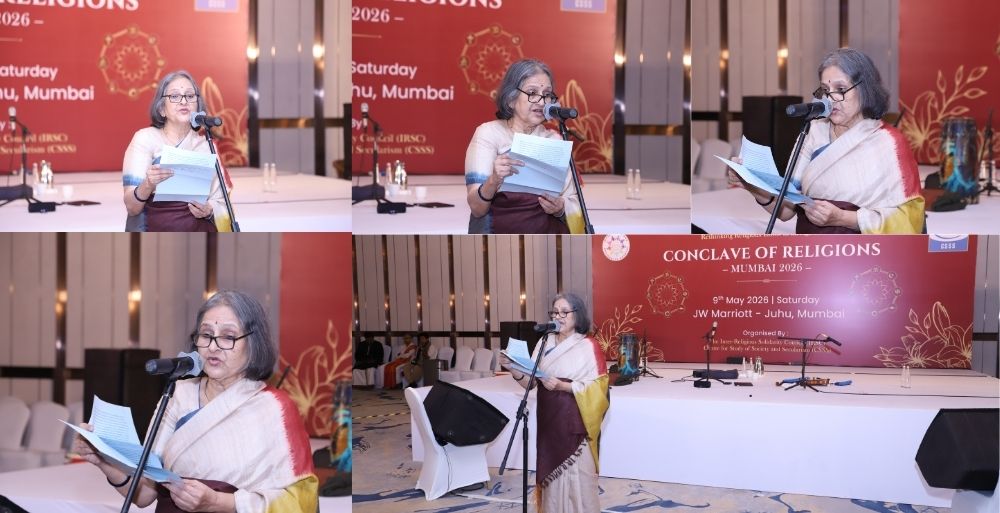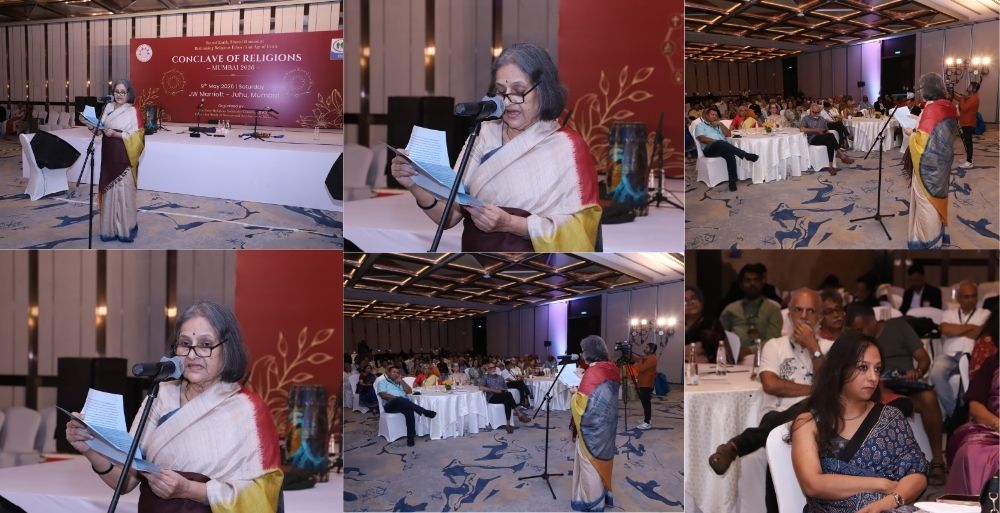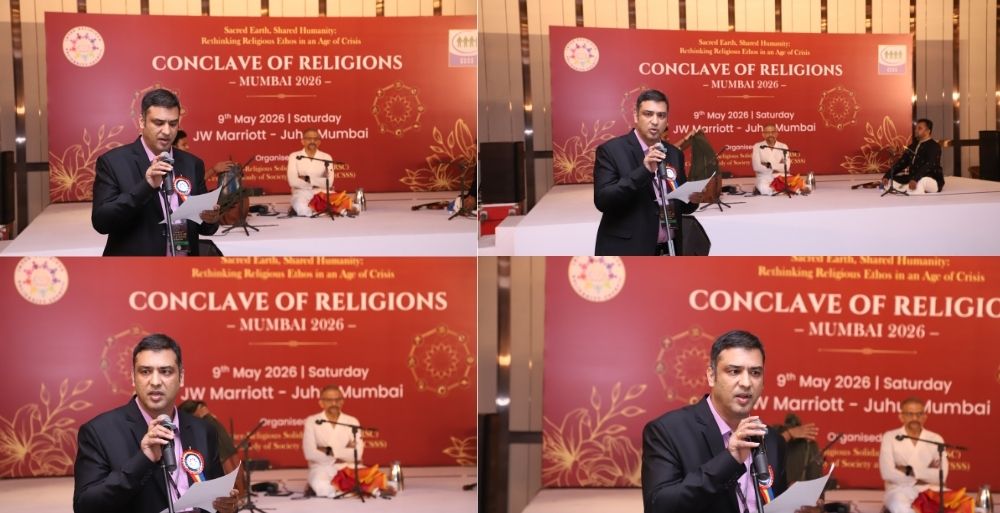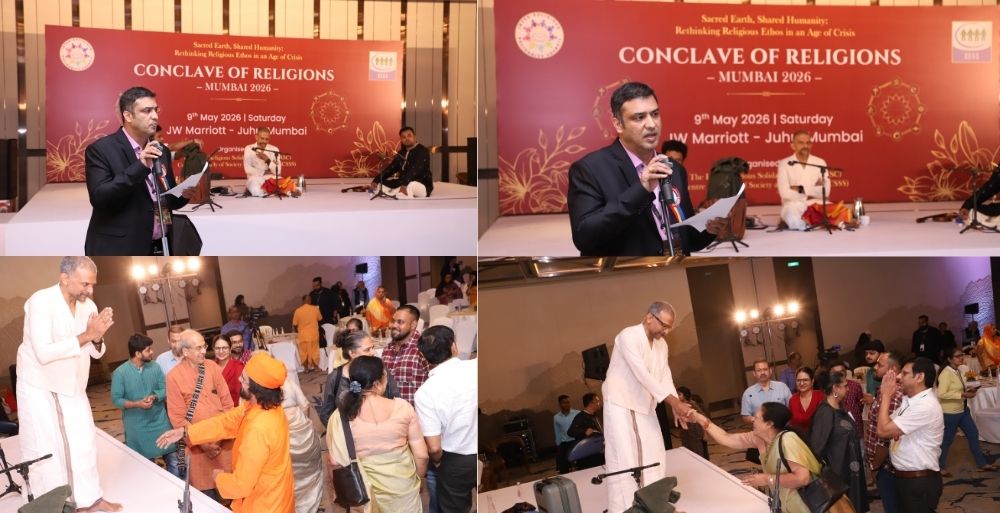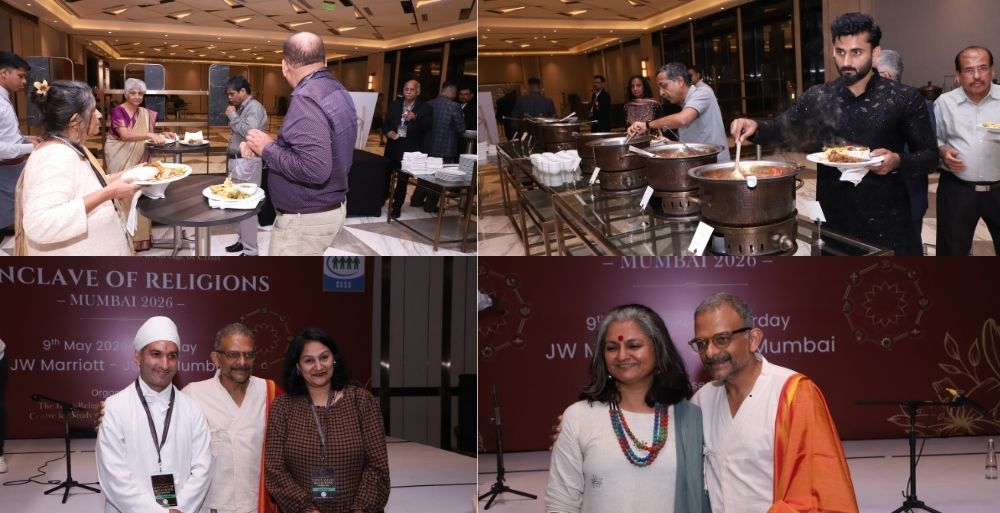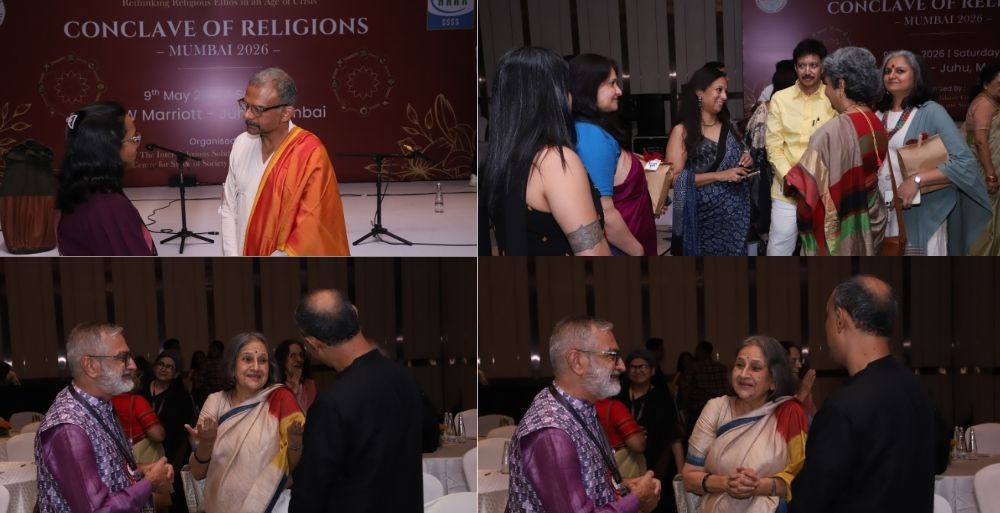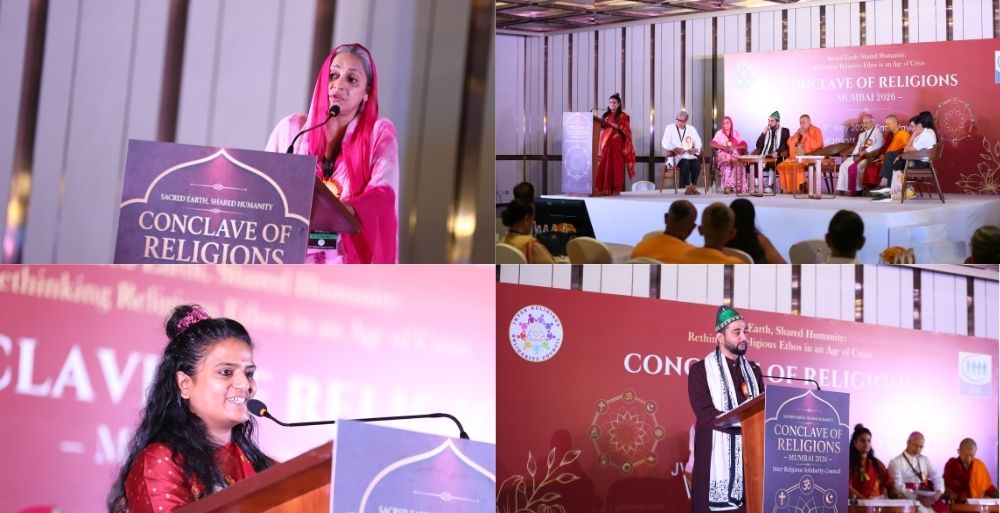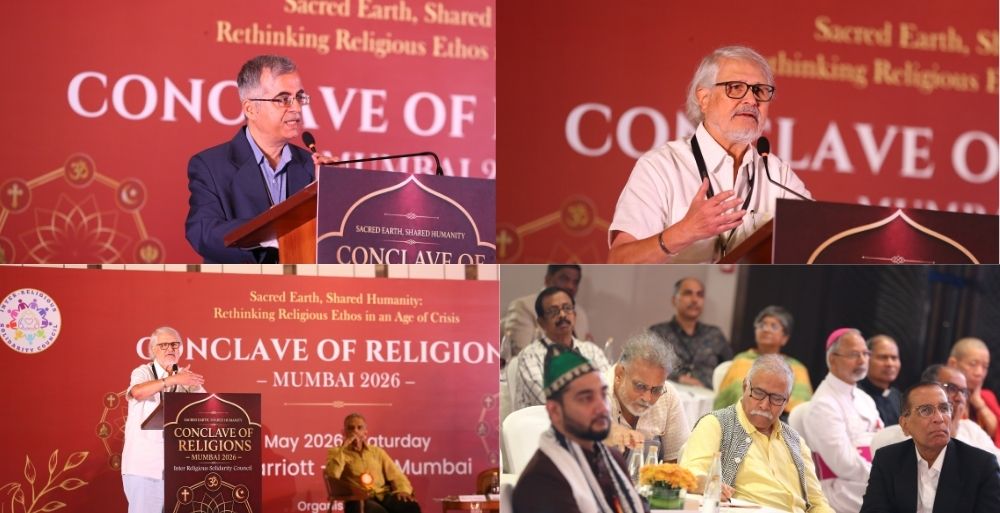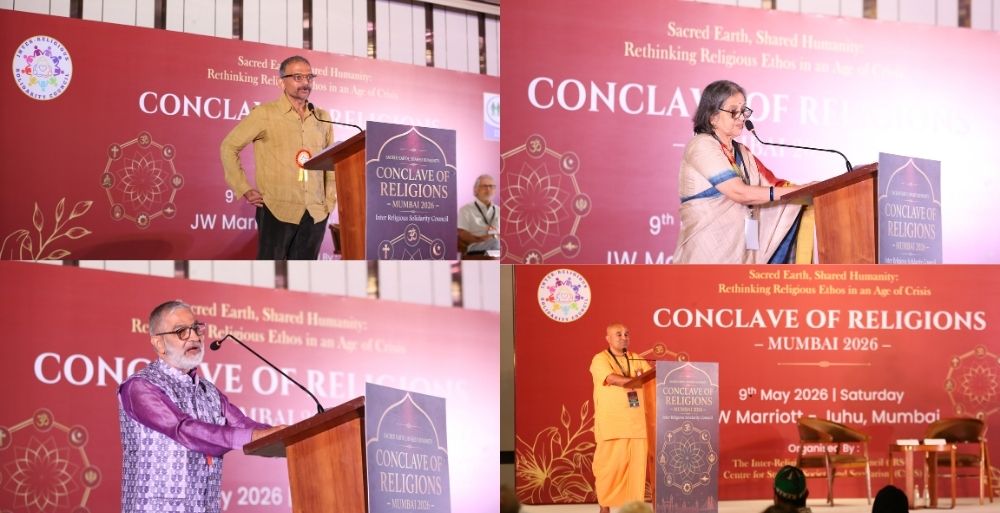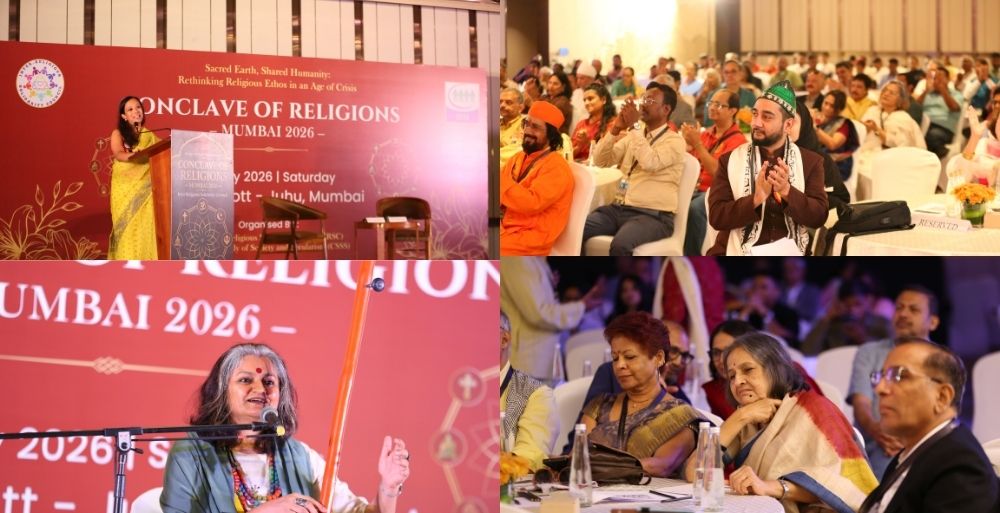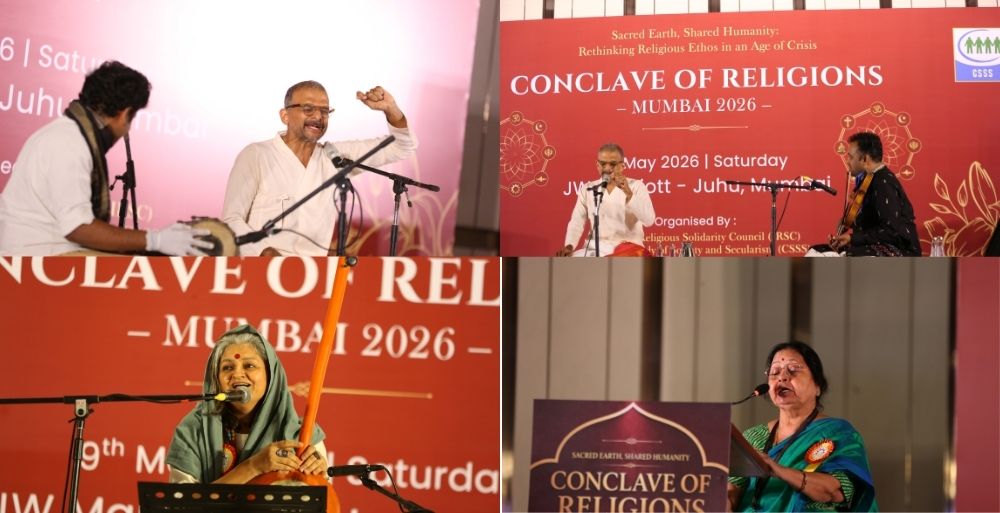
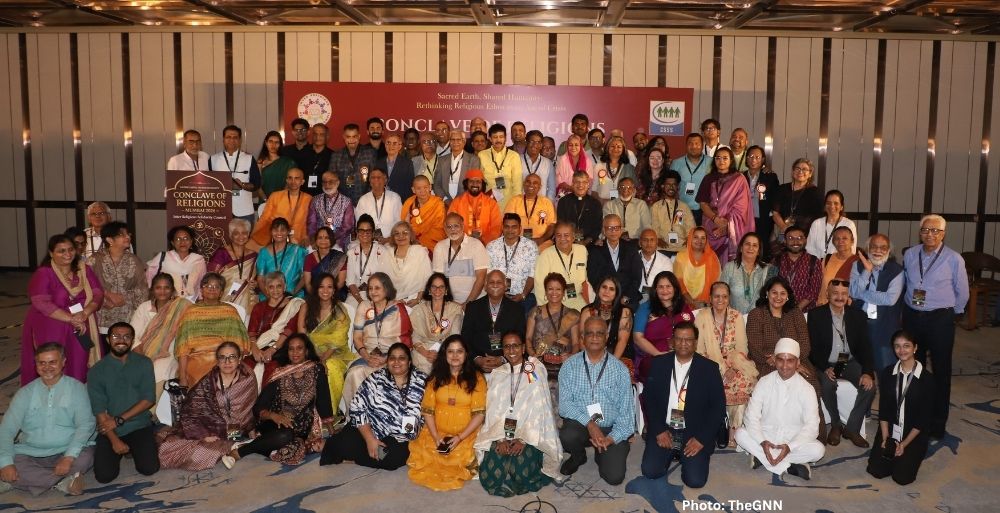
“Religion could help human beings in reaching limitlessness- overcoming barriers of social identities and secondly religion could offer hope to humanity. Religious values hold a mirror that allows reflection and transformation in human beings” said TM Krishna, Magsaysay Award winning vocalist and writer, in his keynote address at the Conclave of Religions titled ‘Sacred Earth, Shared Humanity: Rethinking Religious Ethos in an Age of Crisis’ in Mumbai on 9th May, 2026 organized by Inter-Religious Solidarity Council (IRSC), Mumbai.
Background
The Inter-Religious Solidarity Council (IRSC) organised a landmark Conclave of Religions titled ‘Sacred Earth, Shared Humanity: Rethinking Religious Ethos in an Age of Crisis’ in Mumbai on 9th May 2026. The Conclave of Religions was designed to bring together religious leaders, public intellectuals, and civil society members to deliberate on how religious values can help address modern challenges including religious extremism and environmental degradation.
The Conclave comprised of thematic sessions dedicated to the two central concerns of religious extremism and environmental degradation. Each session featured panel discussions in which religious leaders, distinguished scholars and practitioners examined these issues in depth through an interactive and dialogic format. The objective was to generate informed insights that could guide civil society actors and policymakers in understanding the diverse perspectives and ethical considerations embedded within these debates. The Conclave also sought to move beyond symbolic interfaith representation by creating spaces for critical reflection, public dialogue, and collective ethical responsibility in response to contemporary social and ecological crises. In addition to these deliberative components, the Conclave included cultural performances by eminent artists, thereby fostering a participatory and engaging environment for all attendees.
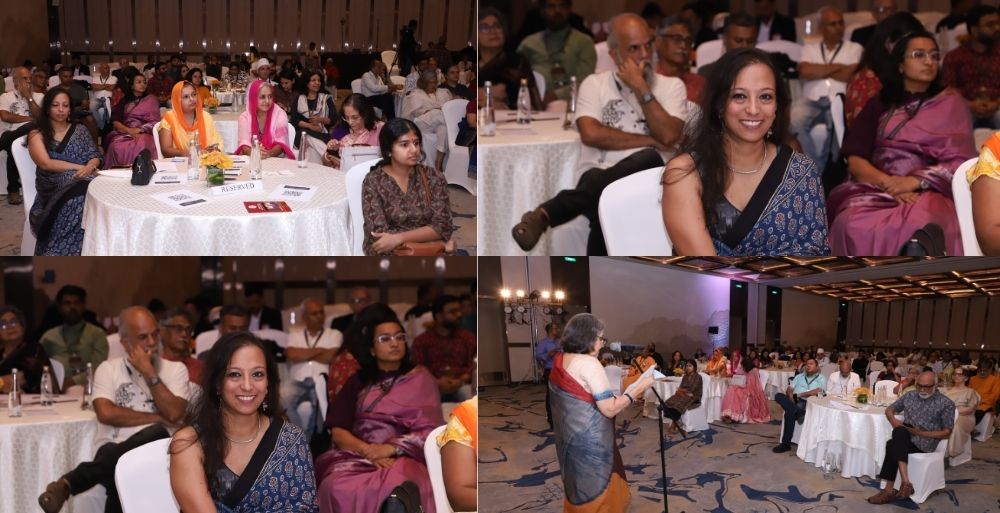
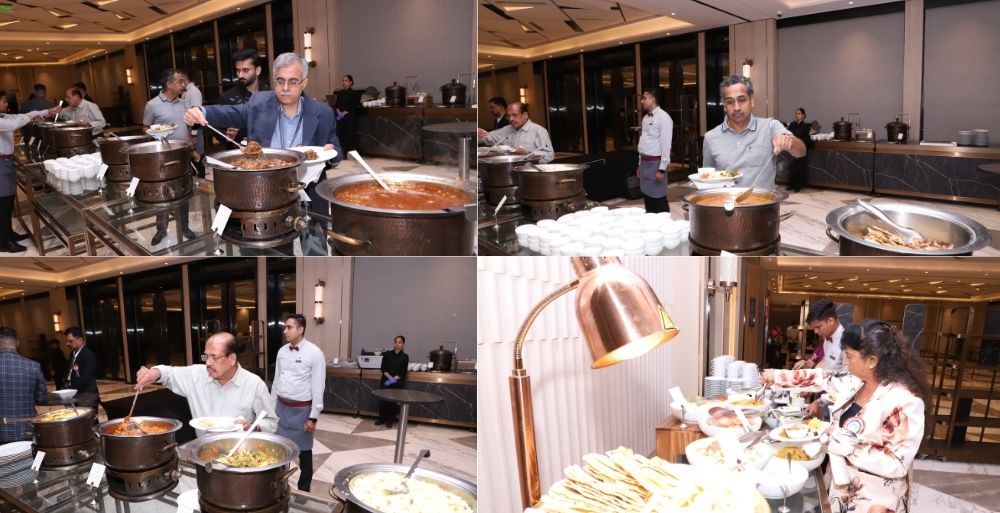
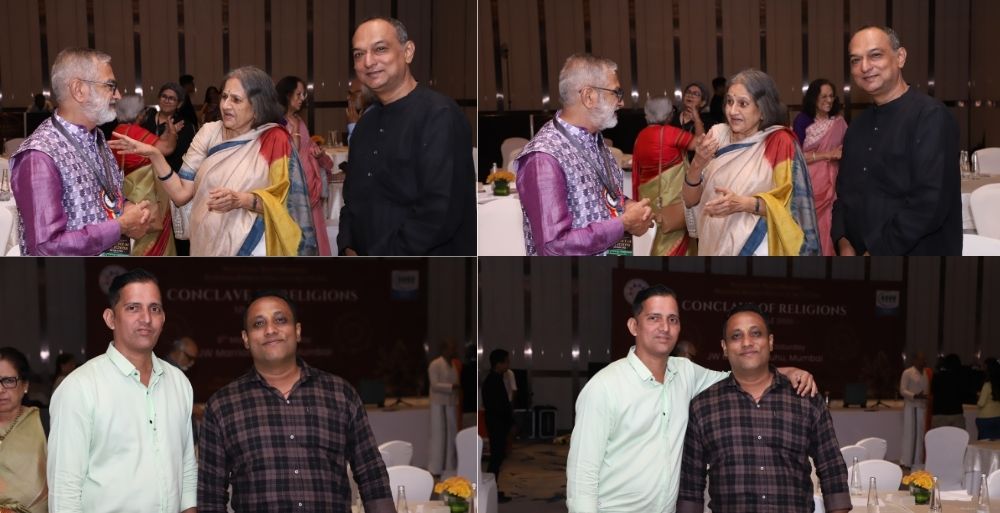
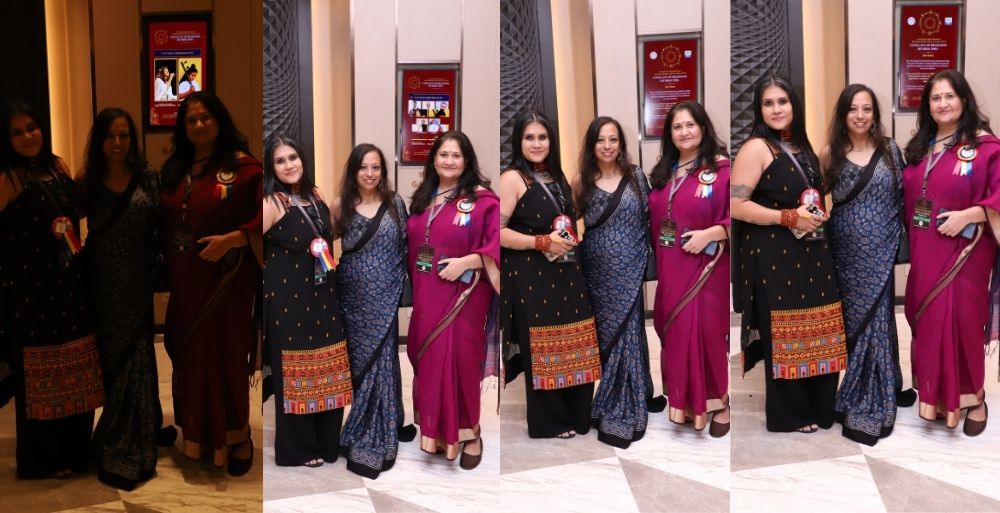
The Conclave was attended by over 250 participants. The participants included journalists, scholars of social sciences, philanthropists, religious leaders, writers, artists and members of civil society organizations. These participants were invited due to the influence they exert in society and shaping opinions and narratives.
Conclave Proceedings:
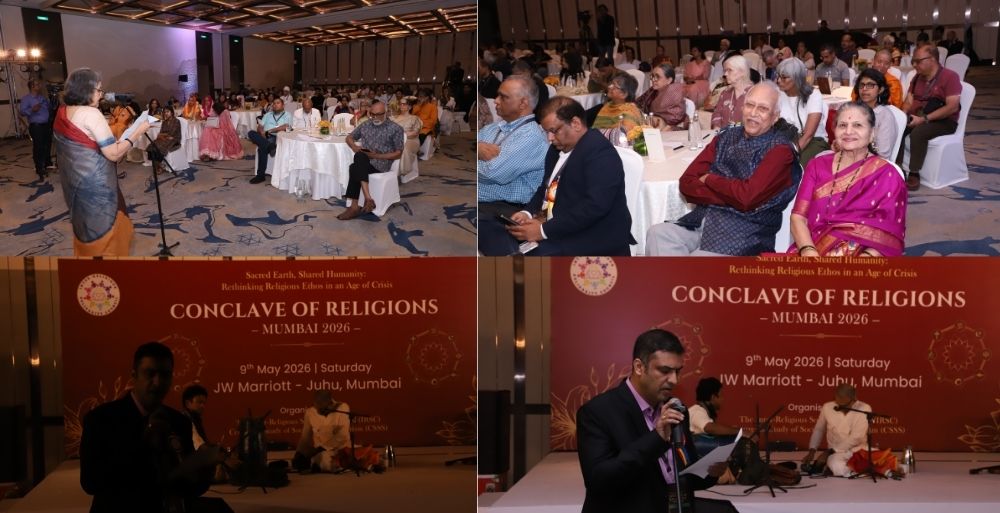
The Conclave opened with a soul stirring performance of Radhika Sood Nayak, who sang ‘Begumpura’, a Shabad composed by Guru Ravidas Ji, describing a utopian city without sorrow, fear, or taxes, representing a state of spiritual liberation and equality and other compositions of Bulle Shah. These compositions which emphasized on compassion, love and equality, reflected the spirit of the Conclave.
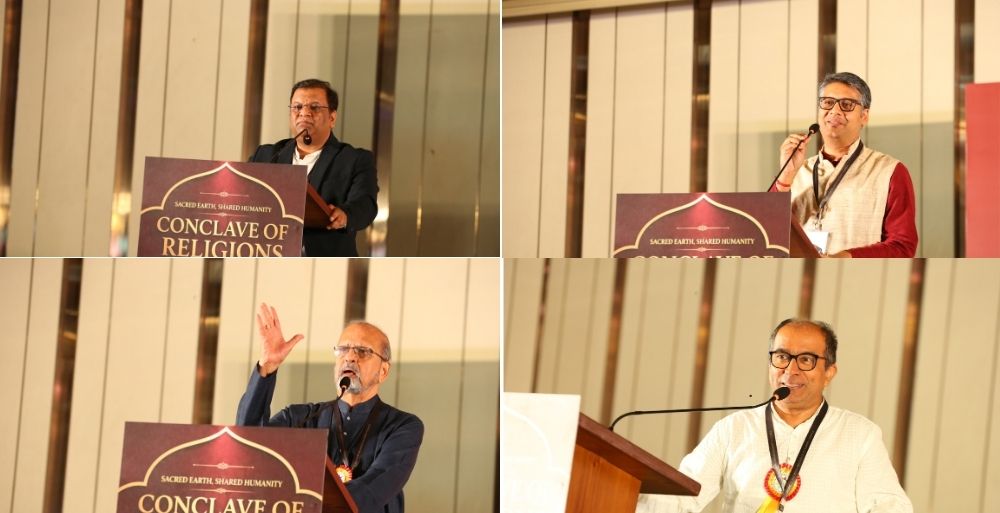
Welcoming participants, IRSC Convenor Keshav Chandra Das reflected on the origins of IRSC, established in 2023 to nurture interreligious harmony through dialogue, shared celebrations, and collaborative engagement in increasingly polarised times. Referring to the theme of the Conclave, he framed the ethical choices before society today as “division or dialogue, exploitation or stewardship.”
Irfan Engineer, Co-Convenor of IRSC and Director of the Centre for Study of Society and Secularism (CSSS), situated the Conclave within India’s pluralistic traditions. Referring to Swami Vivekananda and Mahatma Gandhi, he emphasised the importance of recognising the dignity and truth present across religions.
Keynote Speech
The keynote speech at the Conclave was by TM Krishna well known Ramon Magsaysay Award winning vocalist and writer. Krishna evoked the religious ethos- inclusion, love, dialogue, transformation and truth, steeped in Indian traditions which have shaped India and Indian society historically and gave a framework of understanding current challenges of polarization in religious discourse. This poignant reminder of religious ethos and values resonated throughout the Conclave.
Krishna, reflected on religion, identity, nationalism, social justice, and ecological responsibility through history, music, and constitutional discourse. Beginning with references to Rabindranath Tagore’s Jana Gana Mana and early debates around the Indian flag and Constitution, he explored the layered and evolving imagination of India. He emphasized that the concept of India that was envisaged by the Constituent Assembly and leaders such as Gandhi was an India of equality, fraternity and liberty and of moral responsibility to be inclusive towards all citizens including rationalists/ atheists.
The keynote address by TM Krishna was a powerful reminder of the role religion plays in our society and the challenges society navigates with the array of complexities where religion and nationalism entwine. Several participants later reflected that the keynote created a rare space where questions of religion, constitutional values, social justice, ecology, and culture could be engaged together rather than in isolation.
Najeeb Jung, former bureaucrat, public intellectual and former Lt. Governor of Delhi who was chairing the keynote address recalled Swami Vivekananda’s famous speech at the World Parliament of Religions in Chicago and highlighted the critical historical role of Sufi and Bhakti saints in providing a voice during times of conflict.
Panel Discussions
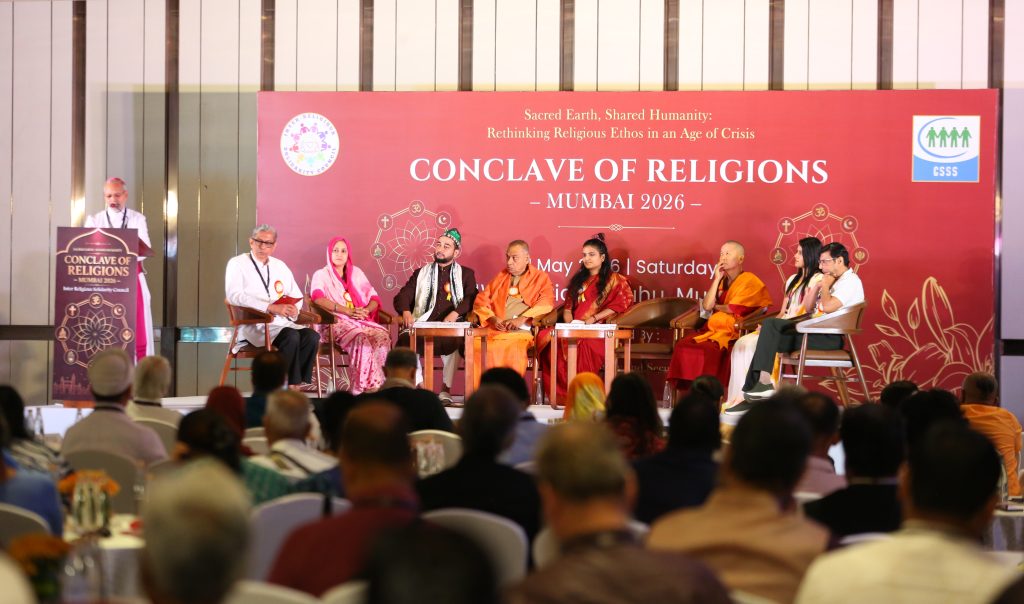
The Conclave of Religion had two important panel discussions- one titled ‘Building Bridges- Healing Divides’ which focused on how religious ethos and traditions in all religions should be harnessed for promoting diversity, harmony and inclusion of all communities. The panel discussion was moderated by Fr. Frazer Mascarenhas and consisted of Swami Sarvalokananda from Rama Krishna Mission in Delhi, Bishop Dominic Savio Fernandez from Mumbai, Haji Syed Ambar Chisty from the Ajmer Sharif Dargah, Dr. Surinder Kaur, lecturer at Khalsa College, Mumbai, Tejashree Ingawale, follower of Warkari Sampradya from Pune and artist, Geshe Tenzin Damchoe, Buddhist scholar from Dharamshala.
The panel had two eminent discussants who added much value to the discussion. Joy Sengupta, prominent actor and public intellectual and Dr. Zarin Shaffi, Sufi scholar at the Somaiya College were discussants who highlighted the challenges of religious intolerance, extremism and polarization along religious lines. The audience posed critical questions emanating from religious discourse and conflicts in contemporary society. Questions from participants touched on difficult themes including coercion, politicisation of religion, exclusion, ecological exploitation, and the challenge of sustaining dialogue in increasingly polarised environments.
The second panel discussion focused on the theme, ‘Stewards of the Earth: A Multi-faith Call to Eco-Centrism’, where each of the panelists highlighted how religions have perceived earth as sacred and human beings as custodians of nature and aim to protect it against greed, exploitation and degradation. Religions, as the panelists pointed out from their own communities’ point of view have taken some concrete steps to arrest environmental degradation. For instance, Sameer Sharma, an entrepreneur, practicing the Bahai’ faith pointed out that the Bahai community has vowed to move towards zero waste to zero landfills. Similarly, Manish Modi, a Jain scholar explained how hundreds of Jain youth every year volunteer their efforts to clean plastic waste from the Jain places of pilgrimages. The panel included Bishop Allwyn Dsilva, Zarin Virji, prominent environmentalist and Dr. Krishna Abhishek Ghost, Dean Emeritus of Department of Dharma Studies, Somaiya College. The audience posed some critical questions to the panel which spanned over the challenges of industrial waste, corporate greed and questioning the overall paradigm of development and policies today.
Reflective Session
The formal portion of the Conclave ended with a reflective session facilitated by Rukmini Iyer and a valedictory address by Dr. Kala Acharya. The reflective dialogue process invited participants to move from abstract discussion towards personal and institutional responsibility, encouraging reflection on what concrete actions could emerge from the conversations initiated during the Conclave. Radhika Sood Nayak once again mesmerized the audience with her renditions of Bulleshah and gave a fitting end to the insightful and enriching discussions that emerged from the Conclave. The Conclave was very well appreciated by the audience who hailed the critical timing of the Conclave and having an opportunity to engage in meaningful dialogue with opinion leaders from different faiths.
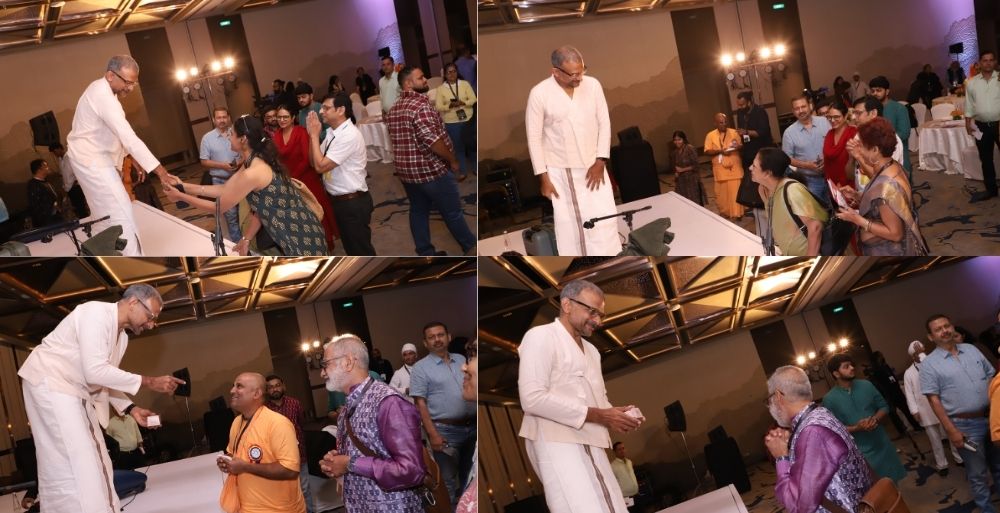
The Event also consisted of a cultural program in the evening with an enthralling performance of Carnatic music by TM Krishna accompanied by HN Bhaskar and Praveen Sparsh.
Journey of IRSC and the conceptualization of the Conclave of Religions:
Conceived in 2023, in response to the growing climate of distrust, polarization, and instances of hate that increasingly strained Mumbai’s social fabric, the IRSC has progressively expanded in both institutional reach and civic relevance. Prior to the Conclave, the IRSC had brought together more than twenty prominent religious and civil society institutions, including the Archdiocese of Bombay, Haji Ali Dargah Trust, ISKCON Chowpatty, Ramakrishna Mission, Bahá’í Centre, Ahmadiyya Muslim Community, Dadar Gurudwara Sabha, and Jamiat Ulama-e-Hind, among others.
IRSC undertook a spectrum of activities since its inception. IRSC organized a series of inter-faith discussions to understand the common values from all religions which can act as a moral compass and resource to foster inclusion, peaceful coexistence and even freedom of religion or belief in the society. Similarly, IRSC has been engaging with faith communities by taking these discussions and messages to the common people and not restricting it to smaller circles of religious leaders. IRSC celebrates all festivals in the spirit of camaraderie and mutual respect at a time where festivals are blamed for being polarizing. IRSC has been acting as a voice of conscience by issuing press statements and organizing press conferences to condemn violence or extremism under the pretext of religion. IRSC in the past has condemned anti-Christian violence during Christmas, violence against Hindus in Bangladesh, Pahalgam attacks and reported incidents of targeting of Muslims in India in its aftermath etc.
IRSC has worked consciously to strengthen the structure of the organization to make it inclusive, resilient and meaningful by constituting the Core Committee which works tireless to plan and execute activities and the IRSC Advisory Committee which provides ideas and guidance to the platform to enable it to expand and reflect on its work.
Given this successful journey in the past three years, IRSC wanted to take its message of peaceful coexistence and inclusion to more people and reach newer audience and partners. Though in the past three years, it was able to partner with prominent religious institutions and faith leaders along with civil society, there was a need to reach out to youth, influencers, affluent class of citizens who so far have not engaged with these issues but can amplify and strengthen inter-faith engagement and the media. Reaching out to these diverse sections was necessary to give more visibility to the platform, engage with those who have so far shied away from such initiatives but can give traction to the cause of inter-faith engagement and dialogue with diverse communities to strengthen the narrative of co-existence. Thus, the Conclave was conceptualized to fill these gaps and bring these critical questions and dialogue in the public discourse.
Although the Conclave itself was conceived as a one-day event, the IRSC Core Committee strategically utilized the occasion as an opportunity to expand engagement with media platforms, places of worship across Mumbai, youth groups, and diverse faith communities in order to disseminate and deepen conversations around the vision and objectives of the IRSC. In this regard, the Conclave functioned not merely as an isolated event, but as part of a broader process of community engagement and public dialogue.
A series of community meetings were organized in localities such as Bandra and Goregaon, among others. These meetings primarily engaged women involved in livelihood activities within the unorganized sector and brought together participants from diverse religious backgrounds. The sessions were addressed by Salim Khan, Prabhu Chaitanya Das, Mayur Yewle, Seema Indorewala, and Irfan Engineer. These interactions created important grassroots spaces for dialogue on fostering communal harmony in everyday life and critically reflecting on the role of religion in addressing wider societal challenges, including environmental degradation, poverty, and social fragmentation. The meetings demonstrated the significance of localized and community-based engagement in strengthening interfaith understanding and social cohesion.
The IRSC also emphasized youth engagement as a central component of its outreach strategy, recognizing the importance of harnessing the creativity, energy, and critical perspectives of younger generations in promoting dialogue and social harmony. As part of this effort, the IRSC organized an ‘open mic’ session at the Bahai Centre featuring young artists and poets who reflected on themes of bridge-building, healing social divides, and fostering solidarity through cultural expression. Approximately twenty young artists participated in the event, presenting performances that were widely appreciated for their creativity, nuance, and social sensitivity. The dissemination of these performances through social media platforms further expanded the reach of the Conclave’s message and facilitated broader public engagement with its themes.
The Conclave additionally enabled the IRSC to strengthen its institutional outreach to prominent religious organizations and places of worship across Mumbai. Members of the IRSC Core Committee initiated engagement with major religious institutions, including the Siddhivinayak Temple, among others. The positive reception received from these institutions opened avenues for future collaboration and signalled the growing legitimacy and acceptance of the IRSC as a platform for interfaith dialogue and civic engagement.
Outcomes of the Conclave and Path ahead
Outreach of the Conclave :
One of the main objectives of the Conclave was a wider outreach through it. The Conclave succeeded in reaching out to and mobilizing 300 participants from a cross section of society- followers of different faiths, journalists, artists, leaders of civil society organizations, representatives of religious institutions and academics. These were influencers from diverse faiths and opinions and deeply interested in the areas of religion and society. They have the potential to replicate similar peace initiatives and influence public discourse. They appreciated the message of the Conclave and some of them expressed their desire to associate with IRSC and actively participate in its activities. Participants also took to their social media to appreciate the Conclave which in turn gave it more visibility and amplified its message.
The Conclave and IRSC gave an unambiguous message against hate and exclusion and demonstrated that dialogue on critical issues in a safe and democratic space where all views will be heard with mutual respect. The Conclave inspired and encouraged those with some hope to take social action and a section which were new to such discourse that there is an alternative narrative and worldview. This Conclave demonstrated that transformation and another worldview is possible. That truly touched hearts.
Media outreach also played a significant role in amplifying the visibility and public impact of the Conclave. Leading English-language newspapers, including The Times of India, The Indian Express, Hindustan Times, Mid-Day, and The Free Press Journal, reported on the Conclave both prior to and following the event. Such media coverage contributed to enhancing the public visibility of the IRSC, broadening awareness regarding its objectives, and reinforcing the relevance of interfaith dialogue and social solidarity within contemporary public discourse.
Strengthened the organization:
From the conceptualization of the Conclave to its planning and execution, partner institutions and religious institutions associated with IRSC have played an integral role in shaping and sustaining the initiative. Their support extended beyond financial contributions mobilized through their respective communities and constituencies; they also demonstrated strong moral and institutional solidarity, particularly in the aftermath of the cancellation of the original venue agreement by a leading Hotel, reportedly due to concerns regarding intimidation and potential backlash from extremist groups. The continued commitment of these partner organizations through the contribution of human resources, intellectual inputs, and organizational support reflected a deep investment in interfaith engagement and a growing sense of collective ownership of the IRSC platform. Consequently, the Conclave strengthened institutional solidarity and reinforced the resilience of the IRSC as a sustained space for dialogue, critical reflection, and civic engagement.
The Core Committee of IRSC which worked for over six months for this Conclave strengthened during this period further. There were multiple meetings and some core committee members despite having day jobs worked tirelessly overtime to put the Conclave together. Three sub-committees were formed to work in three areas- 1. Programme and Culture Team 2. Public Relations and Logistics Team and 3. Finance Team. The three sub-committees worked dedicatedly to pull together the Conclave seamlessly. This team feels inspired to carry on the message of IRSC into the future.
Message of Transformation and Liberation:
The participants who gathered at the Conclave were public intellectuals and leaders deeply concerned with the social issues and religion. In an atmosphere where difference of opinion is not tolerated and where religious extremism prevails, there is a wariness to discuss these topics. Religion is increasingly looked at as a social denominator which divides rather than unites. Against the backdrop, the Conclave gave a message that religion can have transformative and liberating potential based on moral and ethical prescriptions that was well taken across religious identities. This potential can be harnessed to transcend social and religious identities to become better human beings with strong moral character and build resilient non-violent inclusive societies.
Reflection on the range of representation and religious engagement:
The Conclave emerged as an important platform for knowledge exchange and resource-sharing by bringing together religious leaders, panellists, practitioners, and social actors from diverse faith backgrounds and regions across India. Participants represented a broad spectrum of religious and social engagements, contributing varied perspectives, experiences, and expertise to the discussions. Religious institutions from different parts of the country actively participated in the Conclave and contributed to both panel discussions, collectively reinforcing the event’s commitment to inclusion, interfaith engagement, and social cohesion.
The gathering functioned as a forum of collective wisdom and experiential learning, facilitating meaningful dialogue and the exchange of ideas among participants. Through the convergence of diverse knowledge systems, practical experiences, and community-based perspectives, the Conclave created opportunities for mutual learning, reflection, and collaborative engagement on issues related to religion, society, and peaceful coexistence.
Feedback of the Participants:
The message and spirit of the Conclave resonated strongly with participants and audience, many of whom viewed it as a rare and necessary opportunity for meaningful dialogue in a context where democratic and solidarity spaces are increasingly shrinking. Feedback from participants indicated appreciation for the manner in which the Conclave brought together religious leaders, scholars, and members of civil society within a shared framework of dignity, mutual respect, and reflective engagement. While some participants expressed the desire for more critical interventions during panel discussions and greater time for audience interaction, there was broad recognition of the significance of creating a platform capable of facilitating constructive engagement across diverse religious affiliations. The ability to sustain meaningful dialogue amidst social polarization emerged as one of the Conclave’s most valued contributions. At the same time, feedback from several participants also highlighted the importance of creating future spaces for deeper interaction, more sustained engagement, and conversations capable of engaging difficult questions with greater depth and openness. Notably, several participants subsequently approached the IRSC Core Committee to express interest in initiating similar interfaith and dialogic platforms in cities such as Pune and Goa.
The feedback of the participants also reflected the need that the panel discussions should have discussed and addressed more sharply the role of religions to navigate the current social challenges in a more engaging manner. While the panelists mostly spoke from the perspective of their own religions, the audience expected deliberations and addressing of the contemporary challenges arising out of practice of religion and other challenges and to locate how religions and religious ethos could engage with these challenges for peaceful solutions.
Second, the Conclave substantially fulfilled its objective of creating a safe, democratic, and inclusive space for dialogue grounded in dignity and mutual respect within a deeply polarized social context. The event witnessed participation from individuals belonging to diverse religious traditions as well as rationalist perspectives, thereby fostering a pluralistic and inclusive environment for engagement. Discussions addressed, to a significant extent, contemporary social and political tensions that have contributed to widening social fissures. At the same time, the Conclave was marked by a strong sense of ethical responsibility and sensitivity in addressing the complex intersections between religion, extremism, ecological concerns, and social harmony. Through its deliberations, the Conclave demonstrated the possibility of engaging contentious and deeply contested issues in a manner that prioritized coexistence, critical reflection, and democratic dialogue.
Future Action:
The Conclave was an important occasion to widen the awareness & amplify the reach of IRSC’s activities and will be followed up with a number of small group activities, larger scale events, cultural interventions to build inter-faith dialogue and harmony over the next few months. The Conclave affirmed that interfaith engagement cannot remain limited to symbolic events alone, but must evolve into sustained civic, cultural, ecological, and community-based practice rooted in dialogue, dignity, and shared responsibility.
If you are interested in engaging with IRSC activities and staying updated on our initiatives, you may join our WhatsApp group and connect with us through our website and Instagram page:
- WhatsApp Group: https://chat.whatsapp.com/HW5Rrz1ceQBGVTap8PiJcH
• Website: https://irsc.co.in/
• Instagram: https://www.instagram.com/irsc_mumbai/