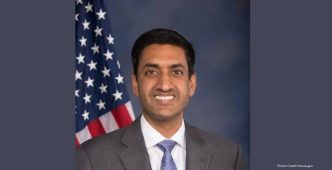
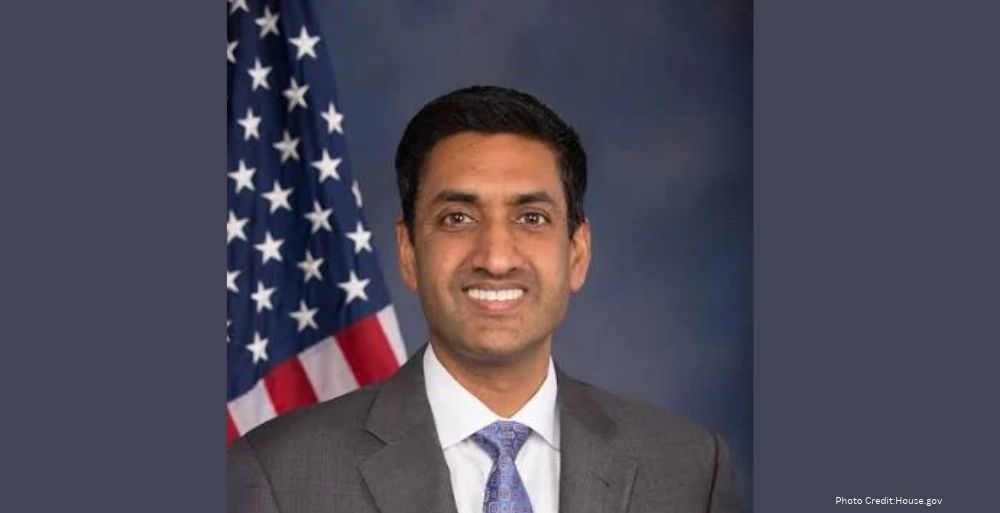
As he considers a presidential run in 2028, Rep. Ro Khanna is positioning himself as a leading voice for the Democrats on China policy, navigating a complex political landscape.
Washington, D.C. – Representative Ro Khanna, a Democrat from California, is actively positioning himself as a key figure in shaping his party’s approach to China policy, especially as he contemplates a presidential campaign in 2028. His ambitions come at a critical juncture when U.S.-China relations are under intense scrutiny, particularly following recent controversies like the Nvidia chip-smuggling scandal that have underscored the intricate dynamics between the two nations.
In a recent interview, Khanna expressed confidence in the revival of the House select committee on China, a body created by the previous Republican majority in 2023, where he has served as the top Democrat since its inception. He stated, “I believe we will have the committee,” while emphasizing that discussions are ongoing regarding its exact title and jurisdiction. Khanna suggested that while there is speculation about potentially transforming it into a subcommittee within the Foreign Affairs Committee, “my guess is that it’ll stay an independent committee.”
Contextualizing U.S.-China Relations
The backdrop of Khanna’s ambitions is the evolving landscape of U.S.-China relations, which have become a focal point for national security and economic policy debates. The Biden administration has been grappling with how to address China’s increasing global influence, balancing the need for economic engagement with concerns over security, human rights, and trade practices. Khanna’s involvement signals an acknowledgment that China policy will be a central theme in the upcoming electoral cycle, especially as the Democratic Party seeks to present a cohesive strategy in response to China’s actions.
The select committee is anticipated to address a variety of pressing issues, including trade policies, technology transfers, human rights abuses, and geopolitical tensions in the Asia-Pacific region. The recent Nvidia scandal, which involved allegations of technology smuggling that could compromise national security, has reignited fears about the implications of Chinese tech firms and their links to the Chinese government, making the committee’s work all the more vital.
Political Landscape and Competition
However, Khanna is not alone in his aspirations. Other prominent Democratic lawmakers are also seeking to carve out leadership roles on China policy, which has led to a burgeoning turf war within the party. Figures such as Senator Chuck Schumer and Representative Adam Schiff have also been vocal about China, advocating for a more assertive U.S. stance. This internal competition raises critical questions about how the Democratic Party can unify its message and strategy in the face of an increasingly aggressive China.
Moreover, the potential revival of the select committee comes with challenges. The history of contentious debates over China policy in Congress has often led to partisan friction, complicating efforts to establish a clear and coherent policy direction. The Nvidia scandal has not only brought focus to the issues of technology transfer and security but has also heightened scrutiny of lawmakers’ positions on China, making it essential for Khanna and his colleagues to navigate these discussions carefully.
Implications for Future Elections
As Khanna solidifies his role as a leading advocate for a comprehensive approach to U.S.-China relations, he must also consider the implications for his potential presidential bid. The focus on China policy aligns with a broader narrative within the Democratic Party, as many party members recognize that foreign policy issues will significantly influence voter sentiment in the 2024 elections and beyond. Given the complexities of the current geopolitical landscape, the stakes are high as the party seeks to articulate a clear, consistent message regarding its approach to China.
This context is particularly important as the United States prepares for a presidential election cycle. Voter perceptions of national security and economic stability are likely to be pivotal in shaping electoral outcomes. Khanna’s efforts to position himself as a central figure in this discourse may resonate with constituents concerned about the implications of China’s rise on American jobs, innovation, and security.
Looking Ahead: A Strategic Role
Ultimately, Khanna’s ambitions to lead the Democratic Party’s China strategy come at a time of heightened scrutiny and complexity in U.S.-China relations. The anticipated revival of the select committee is seen as a critical opportunity for Democrats to not only articulate their stance on China but also to engage in meaningful oversight and policy development. As discussions about the committee’s structure and jurisdiction unfold, the coming months will be pivotal for Khanna and his colleagues in defining the Democratic Party’s approach to one of the most pressing foreign policy challenges of our time.
In conclusion, as Khanna navigates the multifaceted landscape of U.S.-China relations, his efforts will likely have lasting implications for both party dynamics and broader national policy. With a focus on addressing the nuances of competition and cooperation with China, he is positioning himself as a critical voice in shaping the future direction of American foreign policy.