
Author: John Dayal
Fear is the key. It is the quiet mechanism by which a majoritarian project consolidates power without the constant need for open violence. In the India of the present decade, threat has become the preferred instrument of Hindutva: a calibrated pressure that persuades individuals and institutions to retreat, to self-censor, or simply to disappear from the public square. Physical wounds are visible and sometimes documented. The deeper damage is done by the fear that makes documentation itself an act of risk.
Those who work at the intersection of faith and law understand this calculus with particular clarity. Independent friends and small associations that assist the persecuted—whether in matters of conversion cases, church properties, or the everyday harassment that follows an anti-conversion statute—know that visibility can invite destruction. A vindictive administration does not require mass arrests to achieve its purpose. It needs only the credible prospect of investigation, of frozen accounts, of selective prosecution under laws already elastic enough to accommodate almost any charge. For older voices who have little left to lose, the calculation is different. For younger colleagues and fragile organisations, the same calculation can be terminal. They therefore remain unnamed, spoken of only as “independent friends,” their work acknowledged but their identities protected. The silence is itself evidence of the method.
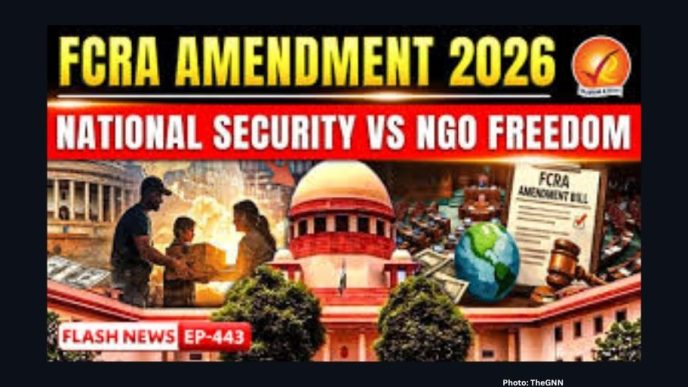
This is not an abstract observation. It is the operating logic that runs through the anti-conversion laws now in force or under consideration in several states, through the selective use of the Foreign Contribution Regulation Act, and through the informal networks of intimidation that surround minority educational and charitable institutions. The physical assault on a pastor or the desecration of a place of worship produces immediate victims. The larger yield is the congregation that cancels its next meeting, the lawyer who declines the next brief, the journalist who files the next story without the names that would make it precise. Fear multiplies the effect of each incident far beyond the number of those who are beaten or arrested.
Some victims do succumb to their physical wounds. Others live with the knowledge that the next complaint, the next police visit, or the next media campaign could finish what the first blow began. The distinction is less important to the project than the cumulative result: a minority community that learns to manage its own public presence, to avoid the appearance of organisation, and to treat constitutional guarantees as theoretical rather than operational. Articles 25 to 30 remain on the statute book. Their practical content shrinks in the shadow of threat.
The cost is not borne by one community alone. A polity that governs by fear rather than by the ordinary instruments of law and politics gradually loses the capacity for honest debate. Institutions that should mediate between citizens and the state—courts, media, civil associations—find themselves calculating risk before they calculate principle. The young people who might have formed the next generation of advocates are taught, early, that survival requires discretion. In that lesson lies the real measure of the method. Fear does not merely silence its immediate targets. It teaches an entire society the limits of what may safely be said, and thereby redraws the boundaries of the possible.