
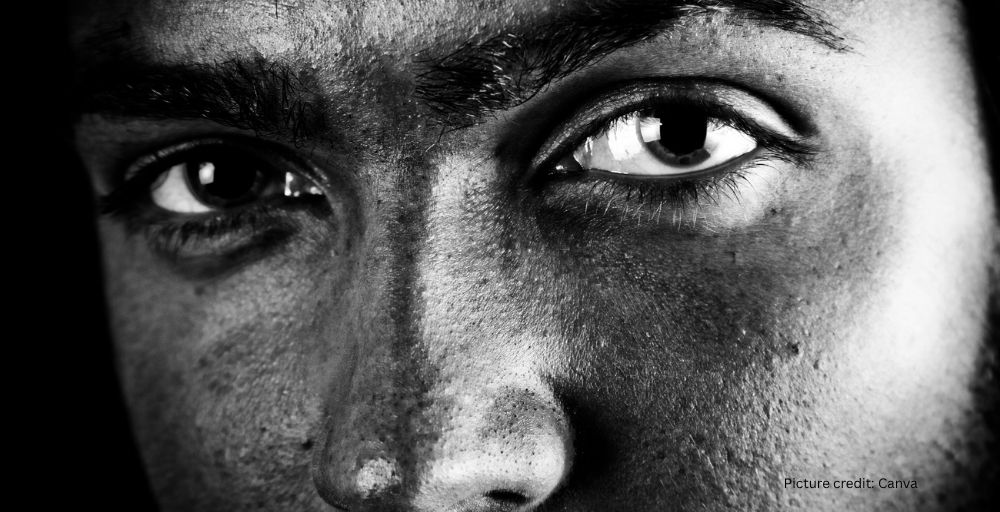
Eyebrows, once thought to serve merely as protective features, have evolved to play a vital role in human communication, allowing for nuanced emotional expression and enhancing social interactions.
Eyebrows, often taken for granted in daily life, are more than just a physical feature; they are integral to how humans communicate and interact socially. Recent research has shed light on the evolutionary significance of eyebrows, revealing their journey from basic protective structures to complex social signals that facilitate emotional expression and enhance the ability to recognize faces.
The evolutionary history of eyebrows can be traced back to the anatomical changes in early hominins. Species such as Homo heidelbergensis and Neanderthals had prominent brow ridges that served a protective role, shielding their eyes from environmental elements. This basic function was crucial for survival, providing a barrier against sweat and debris.
Transformations in Human Facial Structure
However, the trajectory of eyebrow evolution took a significant turn with the emergence of modern humans, Homo sapiens. A 2019 study published in the journal Nature Ecology & Evolution highlights a series of coordinated changes in human facial structure, notably the reduction of the brow ridge and the retraction of the midface. These alterations not only transformed the physical appearance of human faces but also expanded the functional capabilities of the upper face.
With the reduction of the brow ridge, the soft tissue above the eyes gained increased mobility, allowing eyebrows to evolve into more dynamic and expressive features. Although eyebrows still retain some protective functions by helping to redirect sweat and debris away from the eyes, their primary role appears to have shifted toward enhancing social interactions and emotional communication.
Eyebrows as Social Communicators
The pivotal role of eyebrows in social communication is further emphasized in a 2018 study, also published in Nature Ecology & Evolution. This research reframes the human face as a vital tool for social interaction, suggesting that the diminishing prominence of the brow ridge corresponds with a fundamental shift in how early humans interacted with one another. Unlike their predecessors, modern humans rely heavily on dynamic signals, with eyebrows playing a central role in this communicative system.
Eyebrow movements convey a wide range of emotions and states, including:
- A quick raise indicating recognition or greeting
- A prolonged raise signaling shock
- A furrowed brow denoting concern or confusion
- An asymmetrical lift suggesting skepticism
These nonverbal cues are efficient and effective, capable of traveling well across distances and varying lighting conditions. Importantly, they are also difficult to feign convincingly, which fosters trust within social groups.
The Importance of Facial Recognition
As the human face became more expressive, the ability to recognize faces quickly and accurately gained paramount importance. In small, interdependent communities, survival often depended on identifying allies and rivals. A 2003 study published in Perception explored the role of eyebrows in facial recognition, yielding surprising results. Researchers digitally altered photographs of familiar faces by removing either the eyes or the eyebrows and asked participants to identify them.
Counterintuitively, the findings indicated that removing eyebrows caused a more significant decline in recognition performance than removing the eyes. This suggests that eyebrows provide stable, high-contrast shape information essential for facial recognition. The consistent features of eyebrows help anchor the face, allowing for easier identification.
Eyebrows and Social Dynamics
The multifaceted role of eyebrows extends beyond mere recognition; they are integral in how humans navigate social interactions. Studies suggest that the evolution of eyebrows is closely linked to a broader trend toward increased cooperation and social tolerance among humans. As human groups grew larger and more interdependent, the ability to communicate subtle emotional states became increasingly valuable.
Additionally, eyebrows contribute to perceived attractiveness, influenced by societal norms and cultural standards. Subtle differences in eyebrow shape, thickness, and positioning can significantly impact how faces are judged across diverse cultures. This is evident in the extensive grooming practices that many individuals engage in, from shaping and plucking to cosmetic enhancements aimed at refining the appearance of eyebrows.
The Continuing Evolution of Eyebrows
Eyebrows are not merely vestigial remnants of our evolutionary past; they are integral components of human biology that facilitate essential social functions. As they have evolved to become more defined and expressive, eyebrows have taken on a vital role in how we communicate and perceive one another. Their continuing evolution reflects the adaptability and complexity of human social structures.
In conclusion, the eyebrows exemplify a fascinating aspect of human evolution, illustrating how physical features can develop multifaceted roles that extend beyond their original functions. From providing protection to enhancing social signaling and emotional expression, eyebrows are a testament to the intricate relationship between anatomy and social interaction in the human species. The understanding of eyebrows as a dynamic feature of human communication not only highlights their importance in social dynamics but also underscores the broader evolutionary trends that have shaped human interaction throughout history.