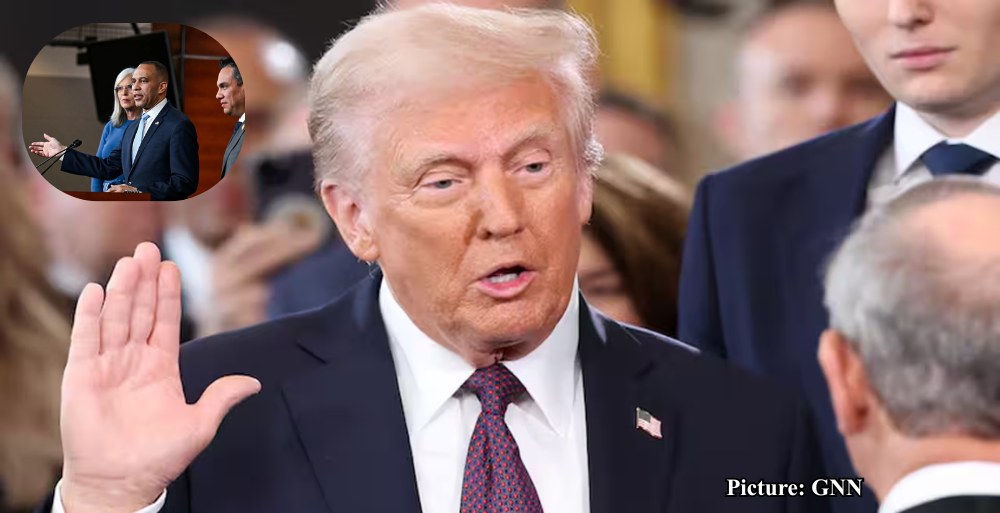
In a recent communication to Congress, President Trump has declared that the military hostilities initiated against Iran in February 2026 have been “terminated,” while signaling the possibility of future military actions.
President Donald Trump has officially notified Congress that the hostilities initiated by the United States against Iran on February 28, 2026, have been declared “terminated.” This announcement was conveyed in a letter to House Speaker Mike Johnson on April 24, 2026. Trump’s declaration effectively resets the timeline regarding military engagement with Iran, potentially complicating congressional efforts to limit the President’s authority under the War Powers Act.
War Powers Act Context
The War Powers Act of 1973 requires the President to seek congressional approval for military actions that extend beyond 60 days. By asserting the end of hostilities, Trump effectively resets this countdown, thereby complicating Congress’s ability to impose constraints through a war powers resolution. Trump’s assertion that the 60-day clock can be paused during periods of ceasefire has sparked significant debate among lawmakers, raising questions about the interpretation of presidential war powers.
Details of the Ceasefire
In his letter to Congress, Trump stated, “On April 7, 2026, I ordered a two-week ceasefire. The ceasefire has since been extended. There has been no exchange of fire between United States forces and Iran since April 7, 2026.” This statement indicates a shift in U.S. military posture, emphasizing a diplomatic effort to de-escalate tensions while retaining the option for future military actions against Iran.
Legislative Responses
In recent legislative activity, the Senate blocked a war powers resolution that aimed to compel Trump to either end military action against Iran or seek formal authorization from Congress. The measure failed with a vote of 47 to 50, with two Republican senators, Susan Collins (R-Maine) and Rand Paul (R-Ky.), joining Democrats in favor of the resolution. This outcome reflects a significant partisan divide on the issue, with Republicans generally more supportive of the administration’s interpretation of its military authority.
Senator Todd Young (R-Ind.) commented on the administration’s flexibility in its military strategy, stating, “It sounds like there’s some wiggle room he provided there for himself. We’ll take a look at whatever they send over.” This remark highlights the ongoing negotiation over the extent of presidential war powers amidst evolving military strategies and engagements.
Administration’s Position
During a Senate Armed Services Committee hearing, Defense Secretary Pete Hegseth articulated the administration’s position, suggesting that the 60-day clock could indeed be paused or stopped during a ceasefire. However, this interpretation has faced resistance from Democratic lawmakers, who argue that the ongoing naval blockade against Iran constitutes a continuation of hostilities. They contend that the administration’s argument does not negate the legal requirements outlined in the War Powers Act, emphasizing the need for congressional oversight in military engagements.
Trump has reiterated his openness to future military actions, framing them as separate engagements distinct from the previously declared hostilities. In his communication to Congress, he noted, “The Department of War continues to update its force posture in the AOR [area of responsibility] in select countries, as necessary and appropriate, to address Iranian and Iranian proxy forces’ threats and to protect the United States and its allies and partners.” This statement underscores the administration’s ongoing commitment to countering perceived threats from Iran and its affiliates.
Implications for U.S. Foreign Policy
The implications of Trump’s declaration extend beyond immediate military considerations. By asserting that hostilities have ended, the administration is attempting to navigate the complex landscape of U.S.-Iran relations, which have been marked by tension and conflict in recent years. The ability to reset the War Powers Act timeline could provide the President with greater latitude in future military decisions, thereby impacting both domestic and international perceptions of U.S. foreign policy.
The evolving U.S.-Iran relationship has been characterized by a series of escalatory actions, including sanctions, military maneuvers, and diplomatic efforts aimed at curtailing Iran’s nuclear ambitions and regional influence. The recent hostilities initiated in February 2026 were part of a broader strategy to address these challenges, yet they also drew criticism from various sectors of Congress concerned about the potential for protracted military engagement without adequate oversight.
As the situation evolves, the administration’s interpretation of the War Powers Act and its approach to Iran will likely continue to be scrutinized by Congress and the public. The balance of power between the executive and legislative branches in matters of military engagement remains a contentious issue, with significant implications for the future of U.S. foreign policy. Lawmakers are expected to closely monitor any developments regarding U.S. military presence in the region, particularly in light of ongoing tensions with Iran and its proxies.
Furthermore, the potential for renewed hostilities raises questions about the effectiveness of diplomatic efforts and the long-term strategy of the United States in the Middle East. As the administration prepares for potential future military actions, the need for a coherent and comprehensive strategy that addresses both immediate and long-term security concerns will be critical to maintaining stability in the region.