A growing wave of smartphone applications designed to detect nearby camera-equipped smart glasses highlights intensifying public pushback over ambient surveillance and privacy in public spaces. Software solutions like “Zuckoff” and “Antizuck” leverage local Bluetooth Low Energy scanning to flag hardware signatures associated with AI-powered eyewear, including Meta’s Ray-Ban collection and Snap Spectacles. While developer adoption and user downloads continue to climb, technical limitations—such as an inability to confirm active recording or pinpoint specific coordinates—underscore the broader policy and regulatory vacuum surrounding unconsented recording in everyday environments.
SAN FRANCISCO — A new class of mobile detection applications designed to alert individuals to the presence of camera-equipped smart glasses is gaining rapid traction, signaling a growing public resistance against ambient artificial intelligence and wearable surveillance hardware.
As devices such as Meta’s Ray-Ban smart glasses become increasingly indistinguishable from standard optical frames, independent software developers are repurposing wireless scanning tools to create digital warning systems for bystanders. The emergence of these utilities comes amid mounting scrutiny from privacy advocates, civil liberties organizations, and lawmakers who argue that current consumer tech norms fail to provide adequate notice or consent when recording occurs in shared spaces.
Mechanics of Bluetooth Detection and Technical Limits
Applications such as “Zuckoff,” launched in August 2026 by developer Pawel Szydlowski, alongside open-source and paid alternatives like “Antizuck Smart Glasses Scanner” and “Nearby Glasses,” operate by continuously monitoring local radio frequencies. Specifically, the software sweeps Bluetooth Low Energy (BLE) channels to locate vendor identifiers (IDs), system signatures, and hardware advertising packets unique to smart eyewear manufacturers.
When a matching signal is registered, the application sends a notification to the user’s smartphone, displaying an estimated confidence level and a rough proximity radius based on received signal strength indications.
“It is essentially existing signal-sweeping technology wrapped in a targeted user interface,” Szydlowski stated during a video interview regarding the tool’s architecture. “People feel entitled to capture and publish high-definition footage in public without taking basic steps to blur faces or seek consent. The goal here is to give individuals basic situational awareness.”
However, security researchers and tech analysts point out substantial technical limitations inherent to BLE detection. Because smart glasses broadcast their heaviest signal bursts during initial powering on, Bluetooth pairing, or removal from charging cases, a device already connected to its host phone may significantly drop its transmission frequency. Consequently, a silence in RF signals does not guarantee that a camera is inactive, nor does a detected signal confirm that video capture or AI feature processing is underway.
Furthermore, Bluetooth signal strength offers only a general proximity estimate rather than directional vectoring. A user alerted by an application cannot determine who in a crowded room is wearing the detected hardware without manual visual inspection.
Market Penetration and the Hardware Landscape
Despite these functional constraints, consumer demand for detection utilities has spiked significantly throughout August 2026. Zuckoff reported securing over 2,000 user registrations within weeks of its release, alongside a paid tier offering background scanning services. Simultaneously, competing applications like Antizuck climbed into the top charts of the Apple App Store’s paid utility categories, reflecting a tangible appetite among consumers for anti-surveillance tools.
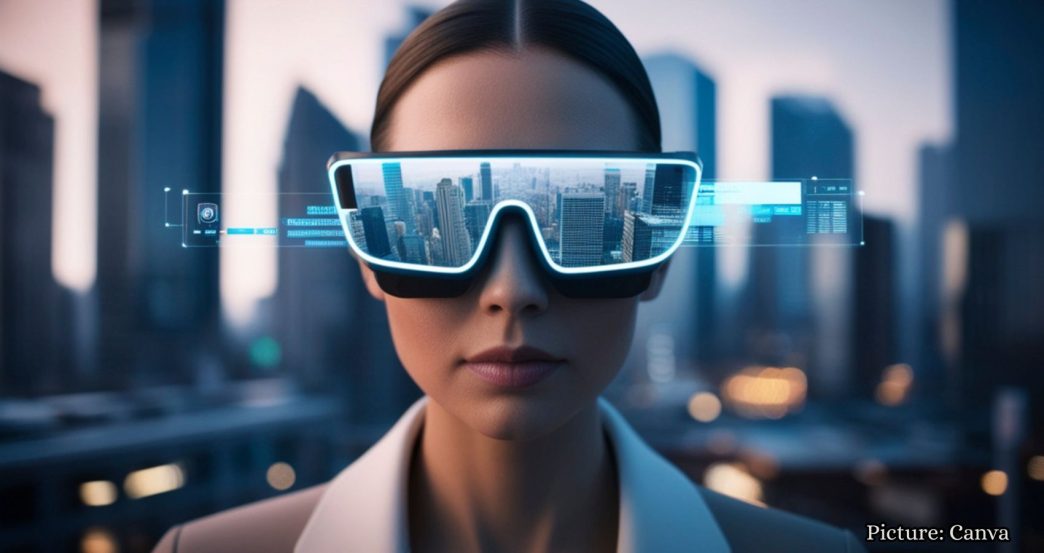
The controversy centers primarily on the proliferation of high-definition, AI-integrated eyewear. Modern smart glasses feature ultra-wide 12-megapixel camera sensors capable of 3K video recording, multi-microphone audio capture arrays, and integrated voice assistants capable of real-time image analysis. Designed to resemble classical frame styles, the hardware integrates micro-LED notification lights intended to illuminate whenever the camera is active.
+-------------------------------------------------------------------------+
|                    SMART GLASSES DETECTION MAP                          |
+-------------------------------------------------------------------------+
|  [ Bystander Mobile Device ]                                            |
|              |                                                          |
|              v (Scans 2.4 GHz BLE Spectrum)                             |
|    +-------------------+                                                |
|    | App Environment   | ---> Flagged Vendor ID / Hardware Signature    |
|    +-------------------+                                                |
|              |                                                          |
|              v                                                          |
|  [ Proximity Alert ]  ==> Indicates hardware present within radius.     |
|                           (Does NOT confirm active recording state)     |
+-------------------------------------------------------------------------+
Privacy groups argue that physical capture indicators are insufficient defense mechanisms. Social media platforms have seen a steady stream of online tutorials documenting methods to obscure or disable external LED indicators using tape, opaque resin, or modified firmware, rendering visual recording cues ineffective.
The friction has prompted hardware developers to explore alternate market avenues. Display-centric manufacturers have introduced camera-free designs, such as monochrome optical heads-up displays, aimed explicitly at users seeking hands-free data access without raising privacy concerns in professional or public settings.
Legal Frameworks and Public Policy Dilemmas
The rapid distribution of wearable cameras presents complex legal challenges for regulators worldwide. In the United States, public recording is broadly protected under First Amendment jurisprudence in areas where individuals lack a reasonable expectation of privacy. However, the integration of ambient AI—capable of facial recognition, live data extraction, and continuous audio monitoring—has strained traditional legal definitions.
“The core issue is that existing privacy laws were written for stationary CCTV systems or handheld smartphones,” explained Elena Rostova, a senior fellow at the Center for Digital Privacy Policy, speaking calmly during a panel discussion in Washington. “When spatial computing hardware becomes virtually indistinguishable from prescription spectacles, the friction between individual recording rights and collective privacy rights reaches a boiling point.”
European regulatory bodies have similarly begun evaluating whether continuous optical sampling by consumer wearables complies with the General Data Protection Regulation (GDPR), which imposes strict limitations on biometric processing and data collection without explicit consent.
As proximity detection software continues to evolve, developers acknowledge that phone apps represent an interim response rather than a permanent legal or technological resolution. Until industry standards establish unified, verifiable protocols for broadcasting active recording statuses, software scanners remain a primary, if imperfect, countermeasure for an increasingly monitored public.