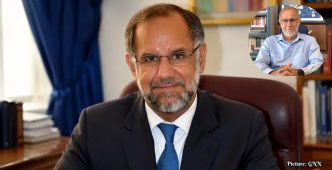
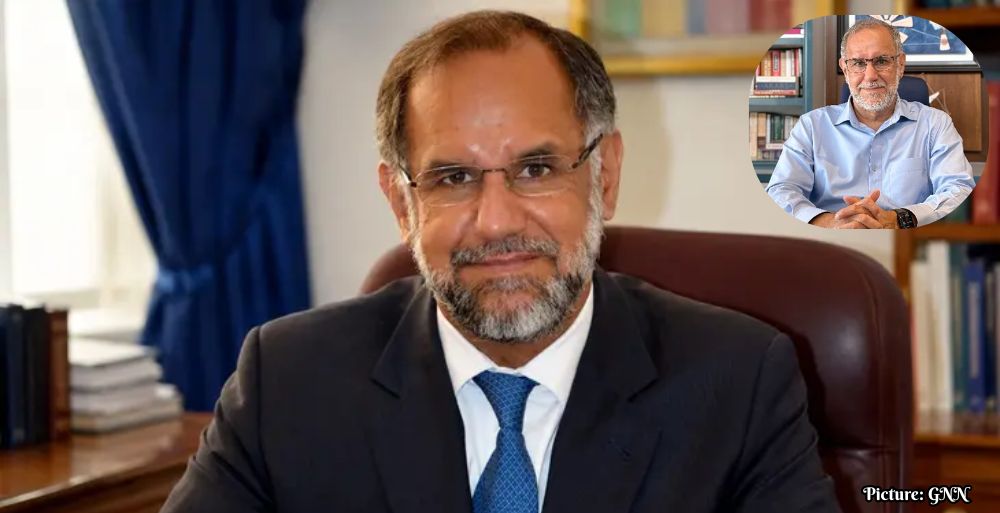
Retired Indian diplomat Navdeep Suri, who served as ambassador to multiple nations, faced unexpected challenges in proving his citizenship during a routine electoral verification process in Punjab.
AMRITSAR, Punjab – In a notable incident reflecting the complexities surrounding citizenship verification in India, retired Indian Foreign Service officer Navdeep Suri found himself requested to provide proof of his citizenship while participating in the Special Intensive Revision (SIR) of electoral rolls in Punjab. Suri, who has had an esteemed career representing India as an ambassador to the United Arab Emirates and Egypt, as well as a high commissioner to Australia, encountered an unexpected challenge during what began as a routine verification exercise.
During his visit to the Booth Level Officer (BLO) in Amritsar, Suri submitted his voter ID and Aadhaar card, both of which were initially accepted as valid documentation. However, he later received a notification indicating that there were discrepancies in his records dating back to 2003, a year when he was serving overseas. This notification led to a request for additional proof of his Indian citizenship, a situation he found particularly ironic given his extensive diplomatic service.
“Sharing my experience with SIR in Punjab. Went to BLO, submitted Voter ID and Aadhaar card, was assured that everything is in order. Got a message today from a volunteer saying some details don’t match with SIR in 2003!” Suri recounted on the social media platform X. This message raised questions about the reliability of the documentation that had previously sufficed for his identity verification.
Context of the Verification Process
The SIR process in Punjab is part of a broader initiative to ensure the accuracy and integrity of electoral rolls in the state. The first phase of this extensive verification effort was conducted between June 25 and August 3, during which election officials undertook a house-to-house drive to collect and digitize enumeration forms from nearly 1.94 crore of Punjab’s total of approximately 2.14 crore registered electors. This initiative aimed to identify discrepancies among the electorate, with over 20 lakh electors, or 9.63 percent of the total, classified as absent, shifted, dead, or duplicate.
Following the initial phase, draft electoral rolls for all 117 Assembly constituencies were published, allowing voters to verify their details and file claims or objections between August 13 and September 12. Election officials will review these submissions until October 8, with the final electoral rolls expected to be published by October 12.
Challenges of Proving Citizenship
Suri’s predicament is further complicated by the request for his passport as part of the verification process. The Ministry of External Affairs clarified in June that while passports are typically issued to Indian citizens following thorough document checks and police verification, they do not serve as conclusive proof of citizenship. Similarly, the Aadhaar card, which Suri already submitted, is intended to establish identity and residence but does not confirm citizenship status, as even eligible non-citizen residents can obtain an Aadhaar.
This incident has garnered attention from political figures, including Congress MP Shashi Tharoor, who has called for passports and Aadhaar cards to be recognized as valid proof of citizenship. Tharoor emphasized the administrative uncertainty faced by citizens, questioning why government-issued documents are not considered definitive proof of nationality. He has also proposed the introduction of a visually distinct Aadhaar card for non-citizens to mitigate confusion and ensure clarity in identity verification.
Implications for Citizens
Suri’s experience raises significant concerns regarding the bureaucratic processes surrounding citizenship verification in India. His statement, “If I have trouble establishing my citizenship after representing India in three countries, what’s the fate of the common citizen?” underscores the potential challenges that many individuals may face when navigating the complexities of governmental requirements for citizenship documentation. This observation highlights a critical issue in an administrative landscape where discrepancies can lead to confusion and distress for ordinary citizens.
The implications of such verification challenges are profound, particularly as the SIR process continues across Punjab. The unfolding situation not only emphasizes the need for clear policies and consistent practices in verifying citizenship but also brings to the forefront the necessity of ensuring that all citizens, irrespective of their backgrounds, are able to participate fully in the democratic process. As governmental bodies work to improve the electoral system, the case of Navdeep Suri serves as a reminder of the importance of streamlining citizenship verification processes to avoid undermining the rights of individuals in the electoral arena.
As Punjab advances through the SIR, the challenges posed by citizenship requirements may require a reevaluation of existing policies to better support citizens in proving their identity without unnecessary bureaucratic hindrances. The situation underscores the need for systemic changes to ensure that all citizens can engage in the democratic process without the fear of being disenfranchised due to documentation discrepancies.