
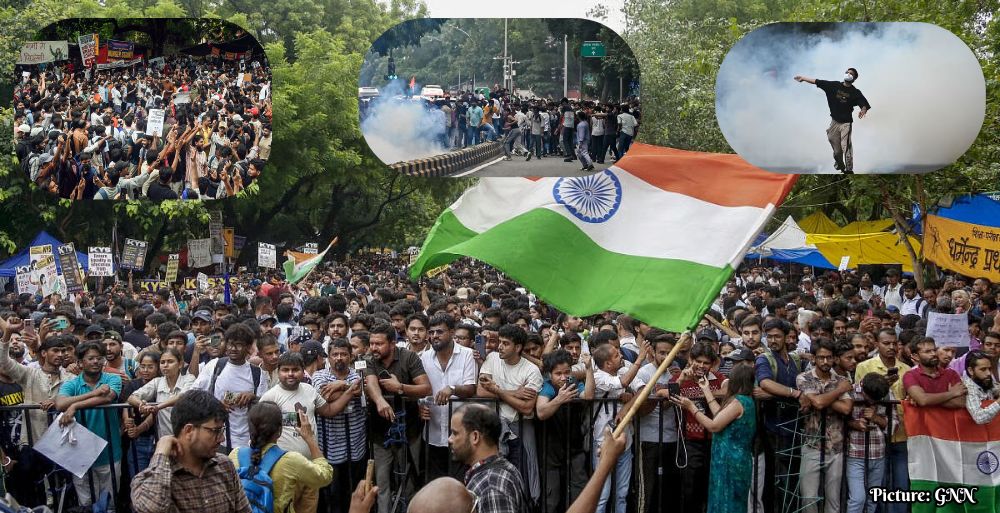
A peaceful protest march organized by the Cockroach Janta Party (CJP) in New Delhi on September 5 aims to hold the central government accountable for unfulfilled commitments made to the youth regarding the NEET-UG examination crisis.
The Cockroach Janta Party (CJP) has announced a protest march scheduled for September 5, 2023, in New Delhi, aimed at addressing the perceived failures of the central government to meet its commitments to the youth following a previous demonstration on July 25. The march will commence at India Gate and proceed toward the Delhi Police Headquarters, with families of NEET aspirants who tragically died and individuals allegedly subjected to police brutality leading the procession.
The planned protest follows a significant event on July 25, when the CJP initially gathered at Jantar Mantar to voice their concerns over an alleged paper leak of the National Eligibility Entrance Test for Undergraduate (NEET-UG). During that demonstration, the group called off their protest after Union Education Minister Dharmendra Pradhan resigned, a decision that they hoped would prompt necessary governmental action. However, CJP members assert that the government has failed to deliver on two critical promises: the withdrawal of all First Information Reports (FIRs) filed against protesters and the provision of financial assistance to families of NEET students who died by suicide, reportedly due to the distress caused by the paper leak.
Unfulfilled Promises and Frustration
In a statement released by the CJP, frustration over the government’s inaction was palpable. Nearly a month after the commitments were made, the organization highlighted that there has been little to no concrete action taken by the authorities. Moreover, they criticized the central government for its lack of clarity regarding commitments on issues raised before the Supreme Court. On August 18, the Supreme Court had instructed the government to compile a comprehensive list of FIRs registered across the country, allowing the court to consider whether these cases could be addressed collectively. This directive came amid rising concerns over the treatment of protesters and the implications of the NEET-UG controversy.
“The patience of young people cannot be mistaken for weakness. Our good faith cannot become an opportunity for the government to betray the young people of this country,” the CJP stated, framing the upcoming demonstration as a demand for accountability and a rallying cry for the youth of India.
Mobilization and Call for Unity
The CJP is actively urging students, youth organizations, and concerned citizens across India to gather at India Gate to participate in the march advocating for their rights. The organization emphasized that the planned demonstration will remain peaceful and democratic, underscoring its commitment to these principles throughout the event. The CJP insists that the government must fulfill its commitments to the youth “in letter and spirit,” highlighting the urgency of the situation as well as the emotional and financial toll the NEET-UG crisis has had on students and their families.
This planned protest occurs within a broader context of escalating tensions between the government and various student organizations, as the NEET-UG paper leak issue has emerged as a focal point for discussions surrounding educational integrity and the welfare of students in India. The CJP’s mobilization efforts bring to light widespread concerns about governmental accountability and the treatment of youth amidst systemic challenges within the educational framework.
Background of the NEET-UG Crisis
The NEET-UG examination, which serves as a gateway for students aspiring to enter medical and dental colleges in India, has faced scrutiny in recent years over allegations of malpractice, including paper leaks and administrative mishandlings. The distressing outcomes of these events, including reported suicides among students, have fueled public outcry and demands for reform in the examination system. The CJP’s march aims to emphasize the need for transparency and accountability in this crucial aspect of India’s education sector.
The political landscape surrounding education in India is complex, with various stakeholders—including government officials, educational institutions, and student advocacy groups—often at odds over policies and practices. The NEET-UG crisis has not only highlighted the inadequacies within the system but has also sparked a broader conversation about the mental health of students and the pressures they face during competitive examinations.
Future Implications and Government Response
As the date of the planned march approaches, the government’s response to the ongoing demands for action remains uncertain. Past experiences suggest that such mobilizations can lead to increased scrutiny of governmental practices and reforms, particularly in the education sector. The CJP’s determination to amplify the voices of those affected by the NEET-UG situation indicates a potential shift in the dynamics of student advocacy in India.
The outcome of the protest and the government’s reaction to the CJP’s demands will likely be closely monitored by various stakeholders, including student organizations, political analysts, and the general public. The demonstration is poised to serve as a litmus test for the government’s responsiveness to the concerns of young citizens, and its handling of the situation could have far-reaching implications for future policies regarding educational integrity and student welfare.
In conclusion, the CJP’s upcoming march on September 5 represents not only a specific demand for accountability regarding the NEET-UG crisis but also a broader call for the government to address the systemic issues affecting the youth of India. As the nation prepares for this significant event, the eyes of many will be on the streets of New Delhi, where the voices of young people will resonate in their quest for justice and recognition.