During his visit to France, Pope Leo XIV underscores the nation’s Christian heritage and advocates for a cooperative relationship between church and state, emphasizing the importance of ethical dialogue in contemporary society.
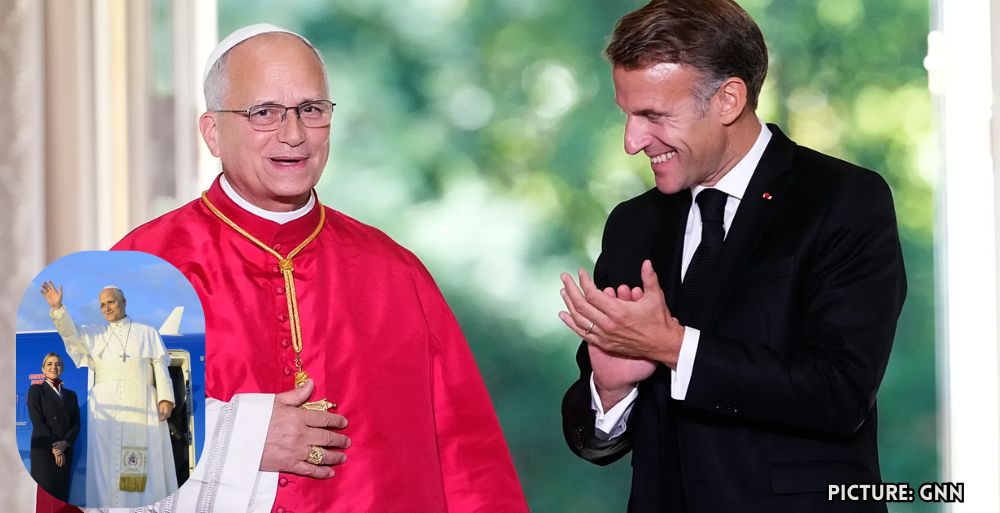
Pope Leo XIV arrived at Orly Airport in Paris at approximately 10 a.m. on September 25, 2026. The Pope was welcomed by French President Emmanuel Macron and First Lady Brigitte Macron. After a brief official reception, the Pope proceeded to the Élysée Palace for a significant meeting with French civil authorities, representatives of civil society, and members of the diplomatic corps accredited to the Holy See.
Pope’s Address: Celebrating French Heritage
In his address, Pope Leo XIV expressed gratitude for the invitation and highlighted France’s rich cultural and religious heritage. “Together, they make up a people whose diverse origins have enlivened and enriched the nation and its democracy,” he remarked, emphasizing France’s historical role as a beacon of culture and spirituality.
The Pope noted that France has significantly contributed to the global understanding of truth, beauty, and goodness, facilitated by its educational institutions. He pointed to the restoration of the Notre-Dame Cathedral as a symbol of renewed hope, stating that it represents the potential for rebirth through cooperation among various sectors of society.
Christian Roots and Secularity
Pope Leo XIV further elaborated on France’s deep Christian roots, tracing the nation’s spiritual and cultural lineage back to historical figures like Saint Irenaeus and the baptism of Clovis. He emphasized that the essence of French humanism has been shaped by the interplay of classical heritage and Christian faith, contributing to universal concepts of human rights and religious freedom.
In referencing France’s national motto—liberty, equality, and fraternity—the Pope argued that these principles reflect an ethical imperative inspired by the Gospel. He stated, “The Universal Declaration of Human Rights, proclaimed here in Paris, sought to foster a broader awareness of the inalienable dignity of the human person,” highlighting the long-standing commitment to human rights in French society.
The Role of Technology and Ethical Discernment
Pope Leo XIV addressed the challenges posed by modern technological advancements, particularly artificial intelligence. He cautioned against the risks of losing humanity amid technological progress, advocating for education in ethical discernment. “There is an urgent need for education in ethical discernment and the capacity to acknowledge the moral good,” he stated, emphasizing the necessity for society to focus on human dignity amidst the rapid development of technology.
The Pope’s remarks reflect a growing concern regarding the commodification of life and the potential dangers of profit-driven scientific ventures, including genetic manipulation and assisted death. He called for mutual respect and protection of every human life as a fundamental duty, linking this to the broader concept of secularism in public service.
Cooperation Between Church and State
In his address, Pope Leo XIV argued for a constructive dialogue between religious institutions and the state, asserting that authentic secularism should not exclude religion from public life. He pointed out that a Christian engaged in public service should not be seen as a threat to societal unity but rather as a contributor to the common good.
The Pope acknowledged the significant role of Catholic schools in France’s educational landscape and stressed the importance of fostering a culture of respect and openness in society. He remarked, “An authentic secularity consists not in excluding religion from the public sphere but in ensuring that the State and religious institutions maintain dialogue and join forces.”
Commitment to Global Peace and Humanitarian Efforts
Pope Leo XIV also highlighted France’s historical commitment to assisting Christians in the Middle East, commending the collaborative humanitarian efforts with various organizations. He noted that education plays a crucial role in promoting understanding and harmony among diverse peoples.
In light of ongoing global conflicts, the Pope urged France to continue its advocacy for peace and multilateralism, particularly within Europe. He reiterated that peace is not merely a balance of power but is built through dialogue and justice.
“I urge you, then, never to grow resigned to the prospect of war or to consider it ‘inevitable,’” he said, encouraging ongoing efforts toward diplomacy and dialogue to foster peaceful societies.
Conclusion and Call to Action
As Pope Leo XIV concluded his address, he expressed fervent prayers for France, hoping for its peace, unity, and prosperity. “May God grant it peace, unity, and prosperity, that the world may have life,” he stated, entrusting his hopes to the intercession of the Blessed Virgin Mary, the principal patroness of France.