
Recent polling data indicates a positive shift for Democrats in several Senate battlegrounds, suggesting a potential for significant gains in the upcoming elections.
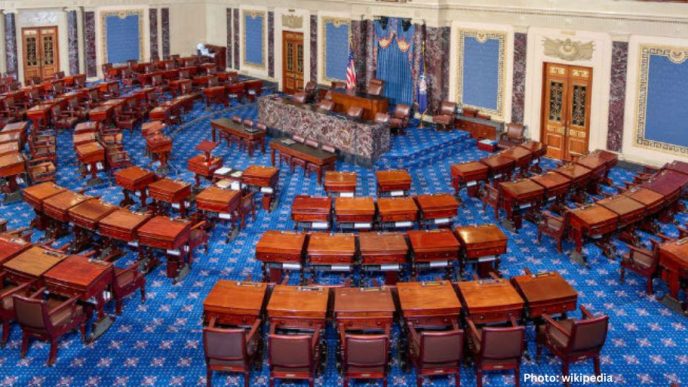
In a pivotal election year, recent polling has revealed a notable surge in support for Democratic candidates in key Senate races, leading to renewed optimism within the party as they approach the November elections. Polls suggest that Democrats could be well-positioned to flip control of the Senate, a scenario that seemed improbable just a year ago.
An AARP poll released on Monday highlights this trend, showing North Carolina Governor Roy Cooper, a Democrat, leading Republican challenger Michael Whatley by a significant margin of 11 percentage points. Similarly, polls in Texas indicate that Democrat James Talarico is either tied or leading Republican candidate Ken Paxton, reflecting a shift in voter sentiment in traditionally Republican strongholds.
Current Landscape and Historical Context
Historically, the Senate has been a challenging battleground for Democrats, particularly in states like North Carolina and Texas, where Republican candidates have dominated in past elections. However, political analysts, including Charlie Cook of the Cook Political Report, have noted that the landscape appears to be shifting. Cook remarked that the possibility of a Democratic Senate flip, which seemed unrealistic a year ago, is now a viable outcome.
“I think it’s going to be a bad day,” said Brian Darling, a former top aide to Senator Rand Paul (R-Ky.), expressing concern over the current political environment for Republicans. Many election forecasters now predict that Democrats could reclaim the House of Representatives by varying margins, with some analysts suggesting a more favorable outlook for the Senate.
Inside Elections and Decision Desk HQ (DDHQ) have recently projected that Democrats could flip the Senate by gaining at least four seats. Inside Elections estimates that Democrats could take between two to four seats, while DDHQ gives them a 54 percent chance of winning the upper chamber.
Voter Sentiment and Economic Factors
The shifting dynamics come amidst growing voter dissatisfaction with economic conditions and the ongoing conflict in Iran, which has fueled discontent among the electorate. According to a recent Emerson College Polling survey, Democrats hold an 11-point lead over Republicans on the general congressional ballot, a statistic that underscores the challenges facing the GOP as they seek to maintain control.
Strategists are looking toward President Trump to potentially alter the course of the election. “If a deal was cut on the Iran war, and if there was an actual winding down and an end game that was presented to the American people, I think that would be very helpful to Republicans,” Darling noted, emphasizing the need for a significant shift in messaging to win back voter support.
Polling data from Texas Public Opinion Research shows Talarico leading Paxton by 5 points, which is just outside the survey’s margin of error. Talarico has also garnered substantial support among independent voters, leading Paxton 58 percent to 26 percent. In addition, a Marist poll indicates Talarico leading by 6 points, further solidifying his position in the race.
In Iowa, Democratic candidate Josh Turek is polling ahead of Republican Ashley Hinson by 8 points according to a separate Marist survey. However, the race in Iowa is expected to be competitive, with the Republican-leaning Trafalgar Group indicating Hinson holds a narrow 2-point advantage. It is noteworthy that Iowa has not elected a Democrat to the Senate in 18 years, and South Carolina has not seen a Democratic senator since 1998.
Challenges and Opportunities for Republicans
Despite the challenges presented by the current polling landscape, Republicans maintain a significant financial advantage. Recent data from ad-tracking firm AdImpact shows that the GOP is outspending Democrats in ad reservations across eight of nine competitive Senate races, with Democrats only narrowly leading in North Carolina.
Moreover, a recent Supreme Court ruling allowing campaigns and state parties to coordinate and spend unlimited amounts of money may provide additional support for Republican candidates, potentially counterbalancing some of the negative polling data.
However, the ongoing negative trends in polling for the GOP cannot be overlooked. “Republicans can look at the fact that polling is an inexact science, and it could be pretty far off,” Darling stated. “But notwithstanding that, it still doesn’t look great because the polls have been overwhelmingly bad news for Republicans.”
As the midterm elections approach, both parties will continue to navigate the complex landscape of voter sentiment, economic conditions, and campaign strategies, all of which will play a crucial role in determining the outcome of the Senate races in November.