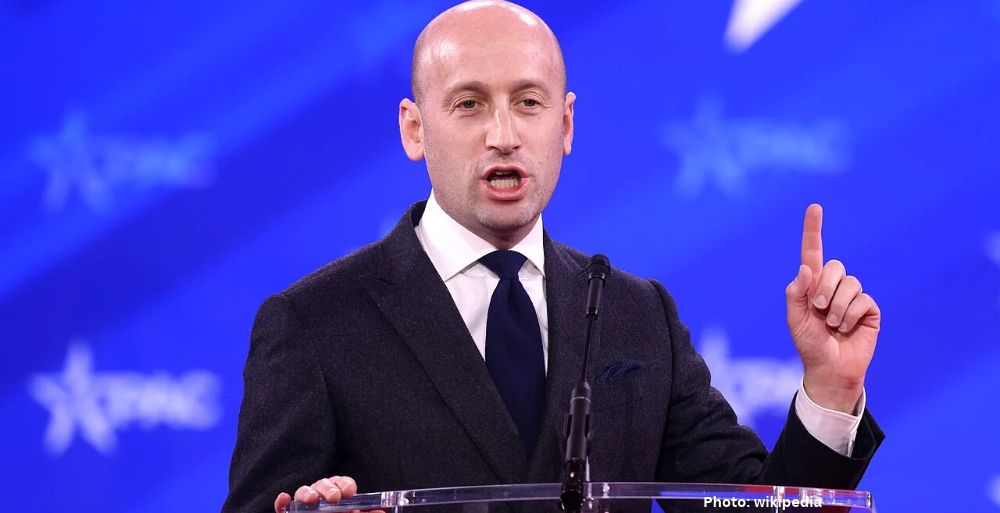
Stephen Miller’s initial week as chief of staff has ushered in significant changes aimed at reshaping the Trump administration’s approach to governance and messaging.
Washington, D.C. — Stephen Miller, appointed as President Donald Trump’s new chief of staff, has embarked on an aggressive restructuring of the West Wing during his first week in office. Miller, who officially took over on Monday, has made it clear that he intends to consolidate his authority and distance his leadership style from that of his predecessor, Susie Wiles. His early moves suggest a strategic shift aimed at revitalizing the administration’s agenda as it enters its final two years.
Miller’s strategy includes issuing two significant memos that purportedly enhance the autonomy of Cabinet secretaries and curb the influence of lobbyists within the White House. These directives have surprised many in the administration, with some interpreting them as direct criticisms of Wiles’ management style. The dissatisfaction with Wiles stemmed, in part, from the administration’s perceived failures leading up to the recent midterm elections, where the Republican Party suffered notable losses.
“Stephen’s in the driver’s seat now,” remarked a Trump ally, indicating that the dynamics within the White House are set to change considerably under Miller’s leadership. Since his appointment, Miller has announced alterations to the administration’s communication strategy, aiming to empower Cabinet leaders to take charge of their messaging. Additionally, he has implemented a ban on meetings with lobbyists without prior approval, a move that some have viewed as an implicit critique of Wiles’ policies.
Strategic Restructuring
These changes represent the initial steps in Miller’s broader effort to accelerate Trump’s “Make America Great Again” (MAGA) agenda. Observers within the administration have noted that the 41-year-old Miller appears focused on delineating the president’s objectives and motivating officials across the executive branch to achieve these goals expeditiously. This approach mirrors Miller’s previous tenure, where he was instrumental in pushing for a stringent immigration policy.
“He understands how government works and what the powers and levers of government are,” stated a Trump adviser, praising Miller’s knowledge of presidential objectives. While Miller’s assertive tactics have garnered support among some officials weary of Wiles’ restrictive communications approach, there are concerns that this could lead to increased chaos within an already tumultuous environment.
Miller’s decision to revoke a policy that required West Wing approval for all announcements and appearances has been divisive. Some insiders have criticized the prior rule as “suffocating,” while others fear that a more decentralized structure could result in a return to the tumultuous infighting that characterized Trump’s first term.
Cabinet Dynamics and Internal Concerns
Under Miller’s new framework, Cabinet secretaries are expected to have more direct access to both him and President Trump, which may facilitate more open communication. However, this shift also raises the potential for an environment reminiscent of Trump’s earlier administration, marked by intense competition among Cabinet members vying for the president’s favor.
In a statement, White House spokesperson Taylor Rogers praised Miller’s decade-long loyalty to Trump and emphasized his trustworthiness among the Cabinet. “In his role as Chief of Staff, he will continue working to implement President Trump’s populist agenda on behalf of the nation’s working people,” Rogers asserted.
Despite this optimistic portrayal, significant infighting and leaks have persisted within the administration, particularly surrounding the fallout from revelations about Nvidia CEO Jensen Huang’s alleged affair with a woman linked to Chinese intelligence. These developments have fueled a sense of uncertainty among staff, many of whom feel apprehensive about their job security under the new regime.
Future Direction and Legislative Strategy
Miller’s second memo, which restricts staff meetings with lobbyists without explicit permissions, has been interpreted as a further attempt to delineate his leadership from that of Wiles. The former chief of staff faced criticism from the MAGA base for allegedly granting undue influence to lobbyists and wealthy donors prior to the midterms.
While the White House has consistently denied any external influence over policy decisions, Miller’s allies argue that he remains steadfastly committed to advancing Trump’s agenda without succumbing to lobbyist pressures. “Stephen is a guy who isn’t moved by connections; he’s a guy who’s moved by policy arguments,” commented Hunter Morgen, a lobbyist who previously collaborated with Miller.
Looking ahead, the Miller-led White House is expected to double down on executive actions designed to bolster Trump’s populist coalition and cement his legacy, especially in light of the recent electoral setbacks. As the administration braces for potential investigations from incoming Democratic majorities in Congress, it has already signaled a willingness to engage in battles over its policy direction.
In the immediate aftermath of Miller’s ascension, White House officials successfully shielded Defense Secretary Pete Hegseth from impeachment, garnering sufficient Republican support to quash the measure. Furthermore, the administration has issued warnings to congressional Democrats regarding potential repercussions for pursuing investigations.
While some Trump aides have suggested maintaining a cooperative stance with Democrats to advance certain policy goals, skepticism remains high regarding the feasibility of such negotiations. The prevailing sentiment among those close to Trump and Miller is likely to prioritize assertive strategies over compromise, setting the stage for a contentious political landscape in the coming years.
“If you have Democrats essentially declaring war, then you want a wartime consigliere,” remarked Newt Gingrich, a close Trump ally. “And Steve Miller is a great wartime consigliere.”