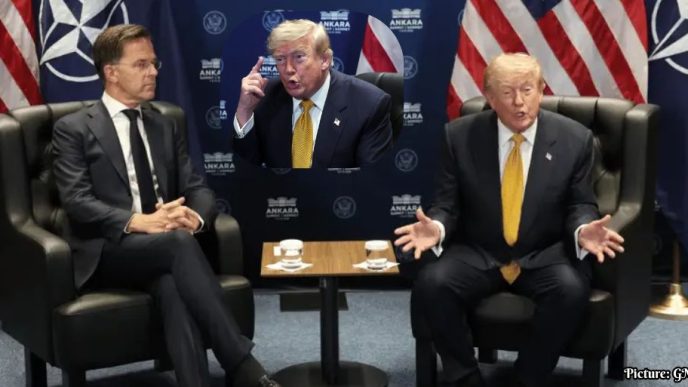
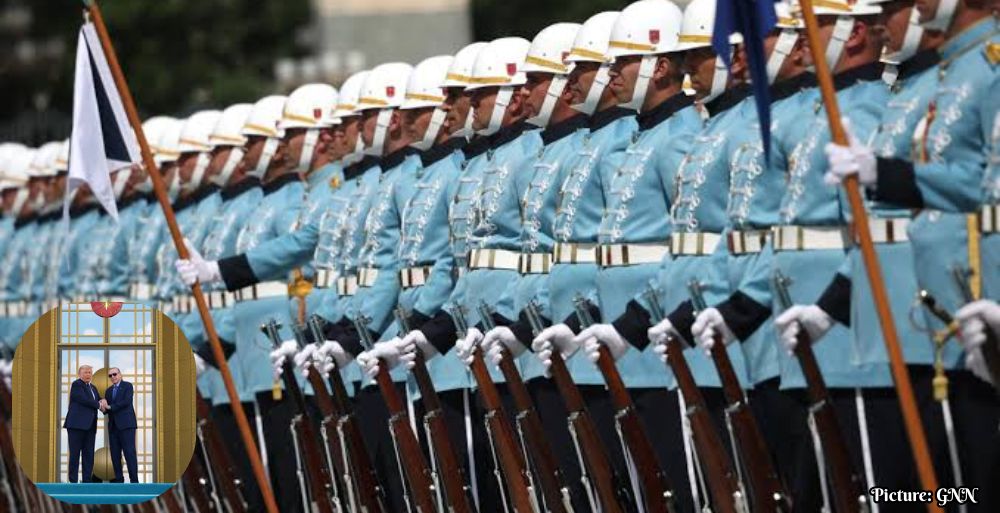
A NATO summit in Ankara, Turkey, saw President Trump assert U.S. interests in Greenland and announce sanctions relief for Turkey, as NATO unveiled significant defense spending initiatives aimed at bolstering military capabilities among member nations.
ANKARA, Turkey — President Donald Trump, attending the NATO summit on July 7, 2026, reiterated his stance that Greenland should be under U.S. control rather than that of NATO ally Denmark. This statement came amidst ongoing efforts by NATO to address U.S. concerns about European defense spending and military readiness.
Trump described Greenland as an “important part” of U.S. strategic interests, adding that the island was threatened by Chinese and Russian naval activity, a claim that has been disputed by various experts and officials. “That should be controlled by the United States, not by Denmark,” he stated during a meeting with Turkish President Recep Tayyip Erdogan.
The NATO alliance, which comprises 32 member countries, was established on the principle of mutual defense, emphasizing cooperation rather than territorial claims. This summit, however, highlighted tensions between the U.S. and its European allies over defense spending. Secretary General Mark Rutte and European leaders have been working to address Trump’s long-standing complaints regarding European nations’ military expenditures.
U.S. Sanctions Relief for Turkey
In a separate but related development, President Trump announced the lifting of sanctions imposed on Turkey after its acquisition of a Russian missile defense system, which had previously led to Turkey’s expulsion from the F-35 fighter jet program. “We’re going to be taking the sanctions off, OK?” Trump said, indicating that U.S. Secretary of State Marco Rubio, Treasury Secretary Scott Bessent, and Defense Secretary Pete Hegseth were involved in the discussions surrounding this issue.
This decision to relieve sanctions comes after years of diplomatic tensions between the U.S. and Turkey, primarily stemming from Turkey’s purchase of the Russian-made S-400 missile system in 2019. While the removal of sanctions could pave the way for Turkey’s return to the F-35 program, legal hurdles remain, as U.S. law currently prohibits the sale of these jets to countries that operate Russian weapons systems. Trump acknowledged that the possibility of selling F-35s to Turkey was worth considering, based on the nations’ relationship.
NATO’s Military Spending Initiatives
During the summit, NATO officials unveiled military projects worth billions aimed at enhancing the alliance’s collective defense capabilities. Secretary General Rutte described the investments as “money well spent,” emphasizing the need to satisfy U.S. expectations. NATO does not directly purchase weapons; rather, member countries are responsible for their military assets. However, the alliance announced plans to replace its aging fleet of AWACS early warning radar planes with up to 10 new GlobalEye surveillance aircraft from Swedish manufacturer Saab, a project expected to involve a 10-nation consortium.
In addition to this aircraft deal, NATO revealed a multinational effort among 15 nations to procure air-to-air refueling and transport planes from Airbus, along with plans to purchase new Triton surveillance drones. Rutte had previously indicated that the summit would include announcements of “tens of billions in new contracts,” although specific financial figures were not disclosed during the event.
Ukraine’s NATO Aspirations
On the sidelines of the summit, Ukrainian President Volodymyr Zelenskyy made a renewed appeal for Ukraine to join NATO. He asserted that Ukraine’s military capabilities, honed through years of conflict with Russia, would enhance NATO’s defense posture. He pointed to Ukraine’s capability to strike deep within Russian territory and reported that Ukrainian forces were eliminating approximately 30,000 Russian troops each month.
Zelenskyy expressed the urgency of Ukraine’s situation, noting, “Frankly we take no pride in this… We are forced to fight a war we did not seek.” His comments come as concerns grow among European nations about potential hybrid attacks from Russia, combining conventional military force with cyber warfare tactics.
Despite these tensions, a senior NATO official indicated on the summit’s sidelines that the alliance has effectively deterred any aggressive moves by Russia toward member states. Citing recent violations of airspace by Russian aircraft, the official, who requested anonymity, stated that NATO remains vigilant in safeguarding its members against potential threats.
The NATO summit in Ankara thus served as a critical platform for addressing multifaceted security issues while navigating the complexities of U.S.-Turkey relations and the ongoing conflict in Ukraine. As the alliance moves forward with its defense spending initiatives, the implications for European security and transatlantic relations remain significant.