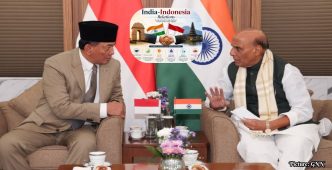
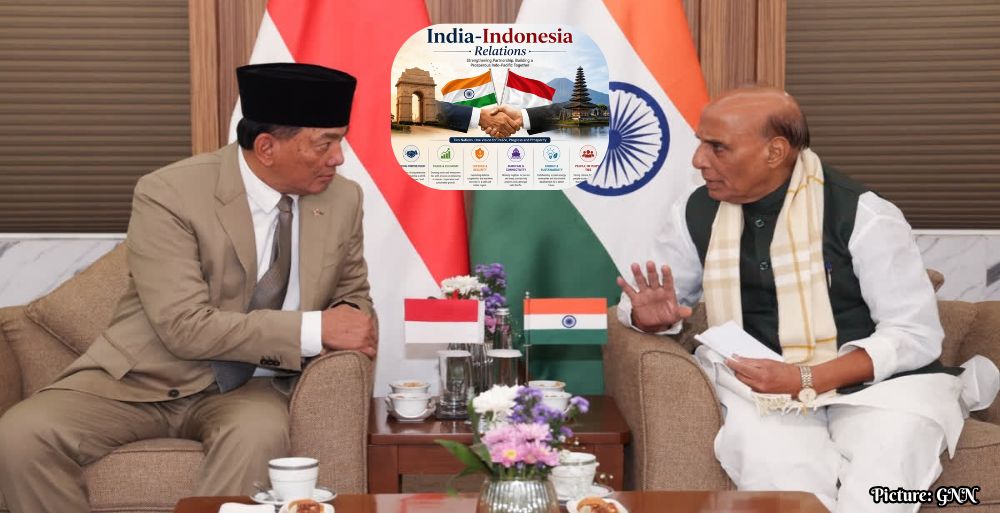
The recent visit of Indian Prime Minister Narendra Modi to Indonesia reflects a commitment to deepening ties between the two nations, focusing on cooperation in trade, defense, and cultural exchange.
JAKARTA, Indonesia — Prime Minister Narendra Modi’s official visit to Indonesia from July 6 to July 8, 2023, marks a significant milestone in the historical relationship between India and Indonesia, which spans over 1,600 years. This visit follows Indonesian President Prabowo Subianto’s attendance at India’s Republic Day celebrations in January 2023, where he was the chief guest, underscoring the shared commitment of both nations to enhance their strategic partnership amidst a shifting geopolitical landscape in the Indo-Pacific region.
Historical and Cultural Connections
The relationship between India and Indonesia is characterized by rich civilizational interactions, significantly influencing cultural and economic ties that extend beyond their borders. Indian culture, particularly through the lenses of Hinduism and Buddhism, remains deeply embedded in Indonesian society despite its predominant Muslim population. The stunning architectural achievements of the Borobudur and Prambanan temple complexes are prominent symbols of this enduring connection.
Scholarly research indicates that Indian epics such as the Ramayana and Mahabharata, along with the Sanskrit language, have played an essential role in shaping traditional Indonesian art forms and governance. To further promote cultural diplomacy, an India-backed conservation initiative is underway at the Prambanan Temple complex, a UNESCO World Heritage Site, aiming to preserve and celebrate Indonesia’s rich historical legacy.
Economic Ties and Trade Dynamics
On the economic front, the partnership has experienced fluctuations. Bilateral trade surged from $4.3 billion in the fiscal year 2005-06 to an anticipated $24.8 billion by 2025-26, although it has decreased from its peak of $38.8 billion in 2022-23. Currently, Indonesia ranks as India’s ninth-largest trading partner and the second-largest in the ASEAN region, following Singapore. India is a major importer of Indonesian coal, crude palm oil, and other commodities, including minerals and rubber.
Conversely, India exports a variety of products to Indonesia, including refined petroleum, commercial vehicles, telecommunications equipment, and agricultural goods. Approximately 100 Indian companies have invested across various sectors in Indonesia, including infrastructure, power, textiles, and steel. Additionally, multiple medium and small Indian enterprises are engaged in coal mining operations within the country.
Defense and Security Cooperation
In terms of defense and security, cooperation between India and Indonesia has grown increasingly robust. India is currently developing its first deep-sea port in Sabang, located in Aceh Province. This port, situated 700 kilometers from India’s Andaman and Nicobar Islands and 500 kilometers from the strategically vital Malacca Strait, is designed to enhance India’s surveillance capabilities over crucial global trade routes.
During Modi’s visit, Indonesia finalized an agreement to procure BrahMos and Astra missile systems from India, valued at approximately $630 million. This deal not only boosts India’s defense exports but also strengthens Indonesia’s military capabilities, particularly in light of China’s assertive posture in the Indo-Pacific region.
Strategic Importance of the Partnership
Both nations have established regular interministerial dialogues to bolster their bilateral relationship. Recent engagements, such as the third India-Indonesia Defence Ministers’ Dialogue and a foreign ministers’ meeting as part of the eighth India-Indonesia Joint Commission Meeting, aim to enhance cooperation in defense, maritime security, and economic development.
Indonesia’s pivotal role in India’s Act East Policy is underscored by its position as the largest economy in the ASEAN region. Strengthening defense and trade ties with Indonesia is viewed as a crucial strategy for India to counterbalance China’s increasing influence in Southeast Asia. As regional tensions continue to rise, both countries recognize the importance of rekindling their historical ties as strategic partners, fostering collaboration across economic, defense, and cultural domains.
Looking Ahead
As India and Indonesia look towards the future, their partnership is set to deepen and diversify. The agreements signed during Modi’s visit reflect a shared commitment to collaborate across various sectors, including energy, counterterrorism, cybersecurity, and critical mineral supply chains. Efforts to enhance people-to-people connections, particularly in tourism and cultural exchange, are also expected to enrich the bilateral relationship.
In conclusion, as India and Indonesia navigate the complexities of a changing geopolitical landscape, their partnership stands as a potential stabilizing force in Asia, advocating for a collaborative approach to regional security and economic growth. Both nations are poised to deepen their cooperation in key areas, reinforcing their commitment to fostering enduring ties based on shared history, cultural heritage, and strategic interests.