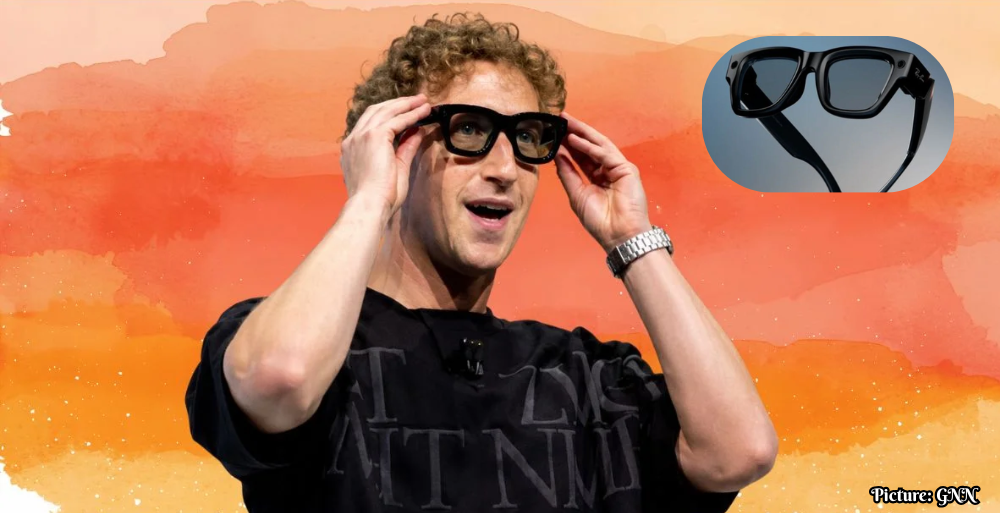
A recent analysis revealed that Meta’s companion app for smart glasses includes dormant facial recognition technology, sparking significant privacy concerns among users and lawmakers.
On June 4, 2026, a security researcher known as Buchodi published a technical analysis of Stella, the companion app for Meta’s Ray-Ban and Oakley smart glasses. The analysis, which examined version 273.0.0.21 of the Android build, uncovered a complete, dormant facial recognition pipeline integrated into the application. This discovery highlights critical privacy implications, particularly as the app had been downloaded over 50 million times without users being informed about its capabilities.
Analysis of the App’s Technical Features
The analysis revealed that the Stella app contains three on-device AI models designed for facial recognition: SCRFD, a face detection model developed by InsightFace; KPSAligner, which aligns detected faces using key facial points; and SFace, which generates a biometric fingerprint of an aligned face. Notably, the SFace model found in Stella is larger than its public counterpart, with a size of 96 megabytes compared to 40 megabytes in the open-source version. This indicates a substantial investment in engineering for what appears to be a sophisticated facial recognition system.
In addition to these models, the researcher identified a SQLite database associated with Meta’s cross-device sync framework, RLDrive. This database, located in a namespace called person_profiles, is configured to store named person records and face records linked to each individual. When the recognition feature is activated, it performs a cosine-similarity query against these stored faceprints, potentially providing users with notifications such as “Person recognized” along with the individual’s name.
Operational Status and Meta’s Response
However, it is essential to note that the researcher did not observe the recognition pipeline actively functioning on a standard account without enrolled contacts. The app’s interface does not display the recognition features unless specific user conditions are met. Furthermore, the researcher was unable to confirm whether Meta was transmitting face data to the person_profiles database on test accounts. As such, the functionality of the facial recognition system remains unclear, with the researcher emphasizing that the mere existence of the technology does not confirm its operational status.
In response to these revelations, Ryan Daniels, a spokesperson for Meta, stated that the findings reflect ongoing development rather than a fully realized product. He emphasized that “nothing has shipped to consumers and no final decision has been made” regarding the deployment of these features. The company has reiterated that it is not secretly building a central biometric database of users’ faces, drawing a distinction between the existence of the facial recognition apparatus and its activation for consumer use.
Historical Context and Privacy Implications
This is not the first instance where Meta’s products have intersected with facial recognition technology. In February 2021, it was reported that Facebook considered integrating facial recognition into its initial Ray-Ban smart glasses but ultimately concluded that state biometric privacy laws would pose significant challenges. Furthermore, Meta has previously faced legal repercussions over its handling of biometric data, including a $650 million settlement in 2021 for allegations of collecting biometric identifiers without user consent, and a subsequent $1.4 billion settlement in 2024 with the state of Texas.
In February 2026, the New York Times reported that Meta had revived its interest in facial recognition for smart glasses, citing internal documents that suggested a feature known as NameTag could be launched during a politically favorable climate. This prior history raises concerns about the implications of the newly discovered technology within the Stella app.
Questions Raised by the Findings
The recent findings prompt critical questions about user transparency and privacy. The researcher’s framing of the situation suggests that significant engineering resources have been allocated to develop this facial recognition capability, which may indicate a future feature rather than a shelved project. Despite Meta’s insistence that the feature is not enabled, the distinction between “not enabled” and “not present” may not be adequately communicated to users at the point of download or during subsequent app updates.
Senator Ed Markey and other lawmakers have expressed concerns regarding Meta’s facial recognition plans, having sent letters to the company in March 2026 requesting clarification. As of this report, no public response has been documented. The legal landscape surrounding biometric data collection remains complex, particularly in states like Illinois and Texas, where strict regulations govern the storage and collection of such identifiers.
Market Impact and Future Considerations
Meta’s smart glasses have sold approximately seven million pairs over the past year, and the companion app’s significant download numbers reflect widespread user engagement. At this scale, the line between dormant functionality and active features could be manipulated by a simple server-side configuration change. As the situation develops, stakeholders from consumers to regulators will be closely monitoring Meta’s actions regarding facial recognition technology, underscoring the need for clear communication and robust privacy protections in the tech industry.