
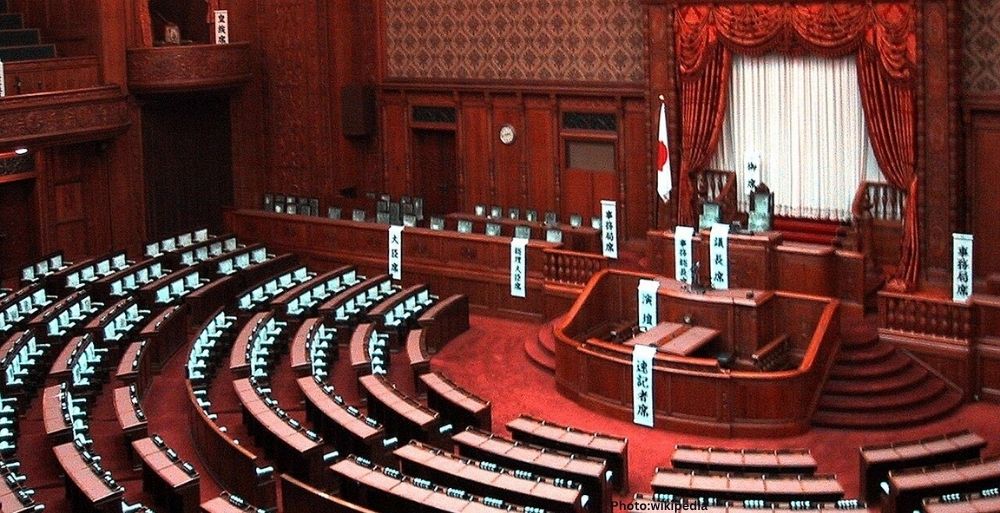
Japan’s parliament has passed significant revisions to the Imperial House Law, reaffirming male-only succession within the imperial family, a move that has raised concerns about the future stability of the monarchy amid gender inequality debates.
TOKYO — On July 17, 2026, Japan’s parliament enacted a historic revision to the 19th-century Imperial House Law, stipulating that only males of paternal lineage can ascend to the Chrysanthemum Throne. This legislative decision has reignited discussions about gender roles within the monarchy and the implications for Japan’s imperial family, which has been facing a declining number of heirs.
The revisions permit the adoption of distant male relatives to ensure the continuation of the royal bloodline, while also allowing princesses to retain their royal status after marrying commoners. However, the measures have been criticized by many observers who fear they may ultimately jeopardize the 1,500-year-old institution by reinforcing a male-only succession rule.
Concerns Over Monarchical Stability
At the center of this controversy is Princess Aiko, the 24-year-old daughter of Emperor Naruhito, whose popularity has led many to advocate for her succession. Despite public support, she is ineligible to inherit the throne due to the male-only succession rule. The line of succession now moves to Emperor Naruhito’s younger brother, Crown Prince Akishino, followed by his 19-year-old son, Prince Hisahito, and then to the emperor’s 90-year-old uncle, Prince Hitachi.
Hisahito, the first male royal born in four decades, represents a dwindling pool of potential heirs. Currently, only five of the 16 adult members of the imperial family are men, raising questions about the future viability of the monarchy. Critics argue that the new laws will exacerbate the existing gender disparities within the royal family, effectively sidelining female royals.
Political Backing and Cultural Resistance
Prime Minister Sanae Takaichi and other conservative lawmakers assert that the male bloodline forms the essential foundation of the emperor’s authority and legitimacy. Takaichi expressed her emotional response to the law’s enactment, stating, “I’m deeply moved.” This sentiment reflects a broader cultural attitude toward monarchy in Japan, where traditional views on gender roles persist.
The revisions to the Imperial House Law are viewed by some as a defense of male lineage at the cost of female representation. Hideya Kawanishi, a monarchy expert at Nagoya University, commented, “It’s a declaration to prevent female monarchs and to defend the male lineage at all costs.”
Historical Context and Modern Implications
The male-only succession principle was first established in the 1890 Imperial House Law, during a period when Japan was promoting patriarchal systems. The current version of the law, implemented in 1947, has largely retained this framework. The latest amendments provoke ire among advocates for gender equality, who see it as a regressive step that perpetuates discrimination against women.
Chizuko Ueno, a prominent feminist scholar, criticized the government’s motives, suggesting that it effectively treats male royals as “stallions” while positioning female royals as mere “childbearing machines.” Ueno’s perspective highlights the emotional and psychological toll that these societal expectations can impose, particularly on women within the royal family.
Criticism from Former Royals and Public Sentiment
The legislation has prompted protests from segments of the Japanese population who view it as an attempt to eliminate Princess Aiko from the line of succession. Shingo Haketa, a former chief of the Imperial Household Agency, noted that the monarchy’s future appears “extremely unstable” given the diminishing number of eligible heirs.
As Japan grapples with a rapidly aging and shrinking population, historians argue that the current succession system may soon prove unworkable. The Imperial family historically relied on concubines to produce heirs, a practice that ceased approximately a century ago. The government’s previous proposal in 2005 to allow female monarchs was discarded soon after Hisahito’s birth.
The Future of the Imperial Family
As it stands, the only male heirs in the immediate line are Crown Prince Akishino and his son, Hisahito, both of whom face immense pressure to produce male heirs. The potential adoption of distant male relatives, while presented as a solution, raises questions about the legitimacy and public acceptance of such figures as future emperors.
Many Japanese citizens express support for Princess Aiko, with some arguing that a female emperor would be a fitting evolution of a modern monarchy. “The emperor is a symbolic figure, and I don’t see why women cannot serve in the role,” stated Junichiro Tsujimaru, a sushi chain founder. Similarly, Yoshio Iwase remarked that Aiko, as the emperor’s daughter, is “the legitimate successor.”
The legacy of former Emperor Akihito, who abdicated in 2019, included efforts to bridge the monarchy’s perceived distance from the public. His advocacy for greater inclusivity and the recognition of female roles within the imperial family is now at risk of being overshadowed by the latest legislative actions. Emperor Naruhito himself has expressed hope for discussions regarding succession to culminate in a manner that reflects the people’s understanding, hinting at a nuanced discontent with the current developments.
In addition to the Imperial House Law changes, Japan also enacted a controversial new law prohibiting the desecration of the national flag on the same day, a move regarded by critics as part of a broader right-wing agenda under Takaichi’s leadership.