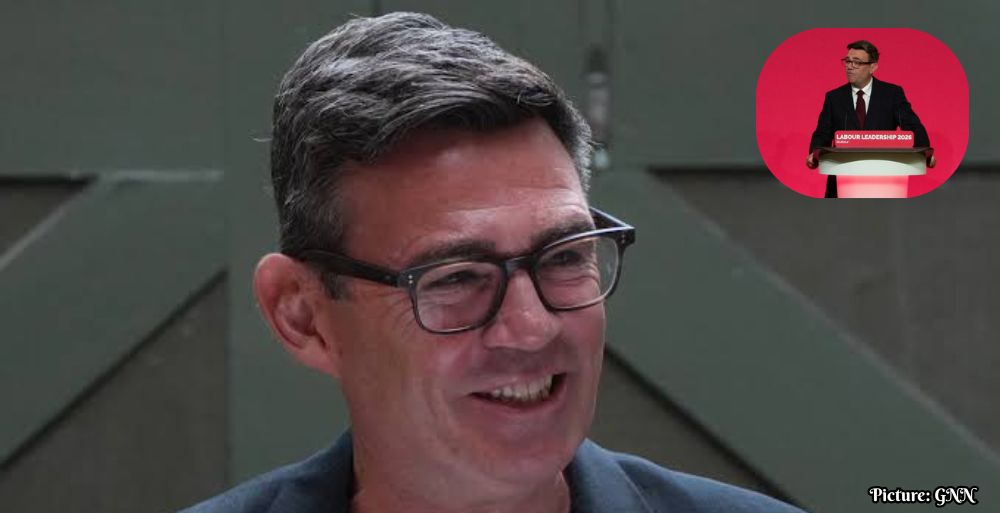
Andy Burnham has made history as the first practicing Catholic to serve as Prime Minister of the United Kingdom, taking office under unique circumstances that may reshape the political and religious landscape of the nation.
London, 07.21.2026 – In a historic moment for the United Kingdom, Andy Burnham has been appointed Prime Minister following the resignation of Sir Keir Starmer. At 56 years old, Burnham, a former Mayor of Greater Manchester, has become the first British Prime Minister to openly identify as a practicing Catholic, a significant milestone in the context of a country whose constitutional identity has long been intertwined with the Church of England since the English Reformation.
Burnham’s appointment comes during a period of unusual political transitions, as he is the seventh Prime Minister in a decade who has not led his party through a general election prior to taking office. While the political dynamics surrounding his ascension to power have garnered immediate attention, it is his religious identity that has ignited a compelling public discourse within modern British politics.
Burnham’s Catholic Background and Political Philosophy
Unlike previous leaders such as Tony Blair, who converted to Catholicism after leaving office, or Boris Johnson, who was baptized Catholic but later adopted Anglicanism, Burnham has consistently embraced his Catholic roots throughout his political career. Born in 1970 in a Catholic family in Liverpool and educated in Catholic schools, Burnham’s early life was marked by a strong connection to his faith. He served as an altar boy and was influenced by prominent Catholic figures, such as Archbishop Derek Worlock, whose advocacy for the marginalized left a lasting impression on many in the region.
Throughout his political career, Burnham has highlighted the impact of Catholic social teaching on his governance, focusing on themes such as the common good, decentralization of political power, and the importance of community support. His tenure as Mayor of Manchester was characterized by initiatives aimed at combatting homelessness and fostering local engagement, aligning closely with the values he attributes to his Catholic upbringing.
Public Perception and Criticism
Despite his strong identification with Catholic social teachings, Burnham has faced criticism from various Christian groups for his stances on contentious moral issues. His support for legal abortion, same-sex marriage, and assisted dying for terminally ill patients stands in direct opposition to traditional Catholic doctrine. Critics such as Andrea Williams, chief executive of Christian Concern, argue that a Christian leader should uphold both the Church’s social teachings and its moral teachings, suggesting that Burnham’s approach represents a form of cultural Catholicism that selectively embraces social concerns while rejecting doctrinal tenets.
Constitutional Implications of Burnham’s Appointment
The constitutional ramifications of Burnham’s appointment are significant, as the Catholic Emancipation Act of 1829 removed many of the legal barriers preventing Catholics from holding public office. However, vestiges of the post-Reformation constitutional structure remain, including the monarch’s role as the Supreme Governor of the Church of England. This raises questions about the potential need for delegation of certain responsibilities should a Catholic serve as Prime Minister, highlighting the nuanced relationship between religion and governance in modern Britain.
Burnham assumes leadership at a time when the religious landscape of the United Kingdom is evolving. Participation in the Church of England has seen a marked decline, while Catholicism is experiencing a resurgence in visibility due to immigration and conversion trends. His appointment reflects not only a personal triumph but also a broader societal shift within the nation.
Domestic and International Priorities
In his inaugural address outside Number 10 Downing Street, Burnham identified the urgent issue of homelessness as a primary focus for his administration. This commitment aligns with the principles of human dignity upheld in Catholic social teaching, suggesting that his faith may play a role in shaping governmental priorities.
Internationally, Burnham faces immediate challenges, particularly regarding the Israeli-Palestinian conflict. Humanitarian organizations have called for a reevaluation of Britain’s approach to this complex geopolitical issue, advocating for stronger measures related to settlements and arms exports. The decisions Burnham makes in these foreign policy matters will undoubtedly test his administration’s moral stance and could impact both domestic and international perceptions of his leadership.
Responses from the Catholic Community
The Catholic Church has responded to Burnham’s appointment with cautious optimism. Archbishop Richard Moth, president of the Catholic Bishops’ Conference of England and Wales, congratulated Burnham and underscored the importance of political leadership that prioritizes human dignity and social justice. He expressed hope for constructive cooperation between the government and the Catholic community, though the success of this relationship will depend on the policies Burnham implements.
As the United Kingdom approaches the bicentenary of Catholic Emancipation in 2029, the possibility of a visit from Pope Leo XIV has been suggested, which would carry significant historical implications given Burnham’s role as the first lifelong Catholic Prime Minister. Such a meeting could provide a platform for meaningful dialogue between two leaders inspired by Catholic social teachings, despite their differing political perspectives.
Burnham’s rise to the highest office in the UK symbolizes a remarkable transformation within a nation that historically excluded Catholics from leadership positions. His journey reflects not only a personal achievement but also a broader societal evolution regarding religious identity and its role in governance.