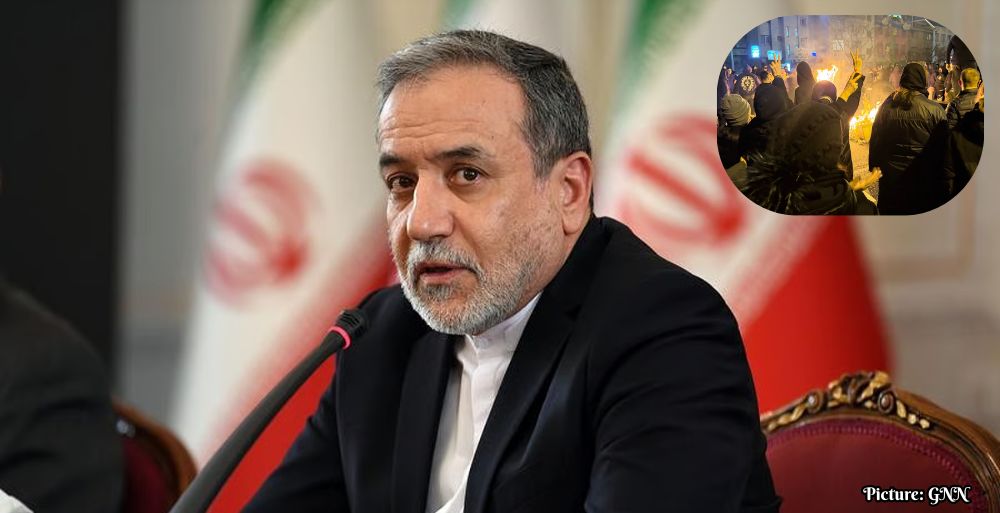
Iran’s top security official cautioned that support for new U.S. sanctions would be viewed as an ‘act of war,’ while the Iranian president emphasized the need for a diplomatic resolution to ongoing conflicts.
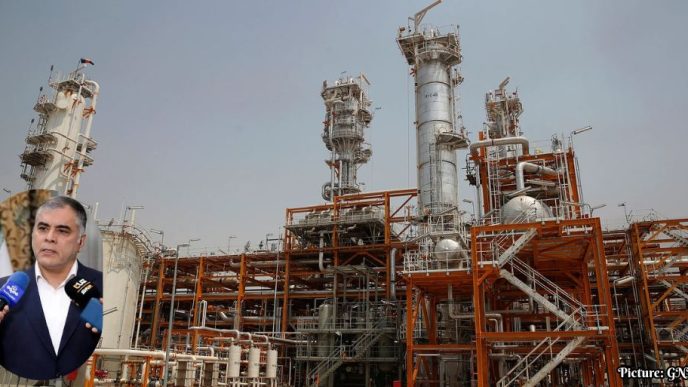
The Iranian government has issued stern warnings regarding potential new economic sanctions from the United States, with the head of Iran’s Supreme National Security Council, Mohsen Rezaei, stating that any country supporting such measures would be perceived as engaging in an ‘act of war.’ This statement was made on Sunday, coinciding with rising tensions in the region and discussions around diplomatic negotiations.
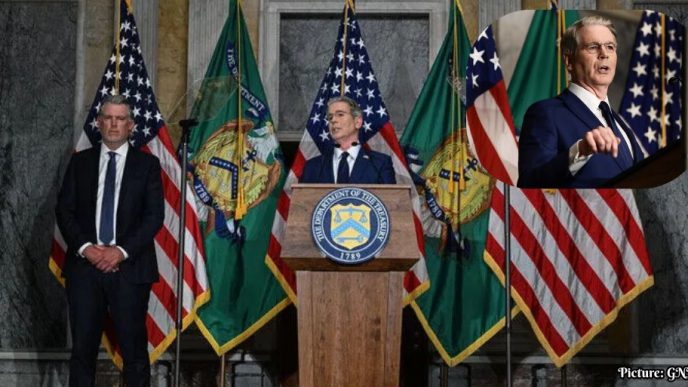
Rezaei’s warning follows an anticipated announcement by U.S. Treasury Secretary Scott Bessent, who is expected to unveil new sanctions targeting Iran on Monday. This move comes as the Biden administration has pledged to intensify economic pressures on Iran, which has been under various sanctions for decades. The new sanctions are part of a broader strategy by the U.S. to isolate Iran economically and politically.
Context of Sanctions and Diplomatic Efforts
In mid-June, Iran and the U.S. signed a memorandum of understanding intended to pave the way for future negotiations. However, Iranian President Masoud Pezeshkian has since described the agreement as the best avenue to escape a state of ‘neither war nor peace,’ which has persisted in the region. Pezeshkian emphasized that the Iranian government is desperate for foreign investment but has faced significant challenges in attracting it since the onset of the war. He stated, ‘There is not a single provision in this agreement that amounts to capitulation,’ reinforcing Iran’s commitment to following the supreme leader’s directives.
The interim deal opened a 60-day window for negotiations regarding Iran’s nuclear program, which recently concluded without any signs of progress or a potential extension. This lack of movement underscores the ongoing complexities of diplomatic relations between Iran and the U.S., particularly amidst escalating military posturing.
Strait of Hormuz Tensions
Despite reports indicating a lull in attacks in the strategically significant Strait of Hormuz, tensions remain high. The U.S. Navy reported no confirmed attacks in the past 48 hours, though overall shipping traffic has decreased as a result of heightened military activity. The U.S. has redirected approximately 70 commercial vessels and disabled three ships as part of its ongoing blockade of Iranian ports.
In a show of defiance, Iran’s newly established Persian Gulf Strait Authority has outlined a list of vessels that it claims have violated transit agreements, threatening future restrictions including fines and possible seizures. The situation regarding the strait has become increasingly contentious since the U.S. and Israel conducted airstrikes against Iran on February 28, further complicating the issue of maritime navigation in the area.
Regional Diplomacy and Military Developments
On the diplomatic front, Pakistan’s army chief, Field Marshal Asim Munir, is scheduled to visit Tehran on Monday. This visit is part of Islamabad’s efforts to mediate tensions between the U.S. and Iran, with two unnamed regional officials confirming the visit’s purpose of urging both parties to return to the negotiating table.
In addition to the geopolitical maneuvering, Iran has recently executed an individual connected to protests that erupted earlier this year. The judiciary reported the execution of Majid Adineh, who was arrested during the unrest following the January protests against the government. This execution is part of a broader crackdown on dissent, as the Iranian government seeks to quell opposition to its rule.
Violence in the West Bank and Gaza
In related regional news, violence continues to escalate in the occupied West Bank, with an Israeli teenager arrested for the assault of a 61-year-old Palestinian man who had previously lost a leg due to gunfire from a settler. The Palestinian, Saeed Muhammad Ibrahim Rabah, expressed his determination to remain in his home despite the ongoing violence targeted at his community.
Meanwhile, in Gaza, an Israeli airstrike resulted in the death of a four-year-old child, Mohammed Taha, along with injuries to at least five others. The Israeli military claimed the strike targeted a Hamas commander, highlighting the ongoing conflict and its devastating impact on civilians. Israeli Defense Minister Israel Katz has called for immediate and forceful military responses to prevent any further attacks originating from Gaza, reiterating the heightened urgency following the Hamas-led attacks on Israel on October 7, 2023, which resulted in significant casualties.
Hamas condemned Israel’s military actions, accusing it of using pretexts to justify further aggression against the people of Gaza. The humanitarian situation continues to deteriorate as military actions and retaliatory strikes contribute to the cycle of violence in the region.