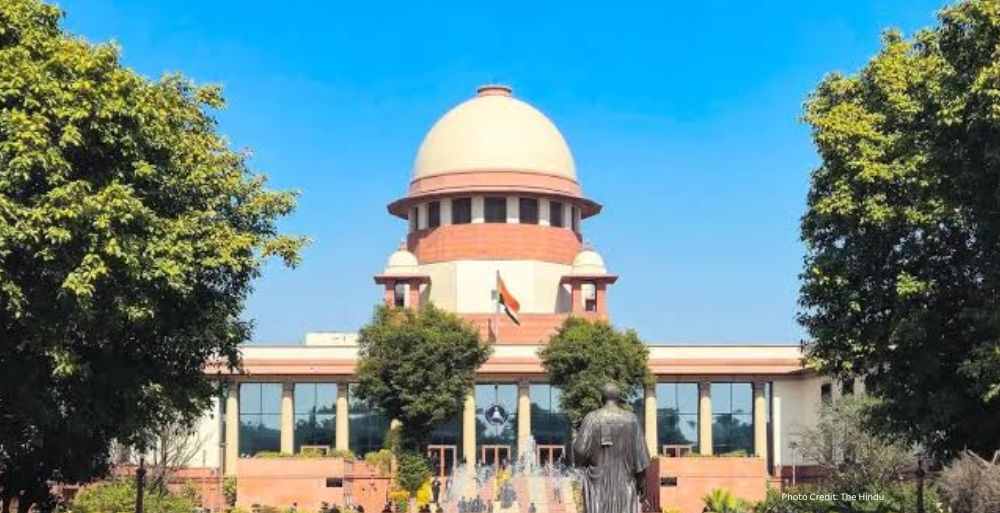
The Supreme Court is currently reviewing allegations of police misconduct during protests against the Election Commissioner, with the central government stating it is challenging to differentiate between independent journalists and content creators.
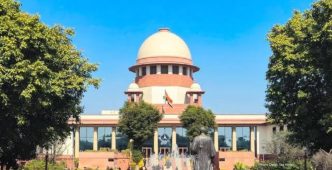
The Supreme Court of India convened on Thursday to address a series of petitions concerning alleged police excesses and protests against Election Commissioner Gyanesh Kumar. The bench, comprising Chief Justice of India Surya Kant and Justice Joymalya Bagchi, is reviewing about 32 petitions that focus on the powers of the Chief Election Commissioner and the allegations of police misconduct during recent protests.
During the proceedings, Solicitor General Tushar Mehta, representing the central government, articulated the complexities involved in identifying independent journalists amid a growing number of individuals labeling themselves as freelance reporters. Mehta stated, “What has happened, and our experience is that there are several people who say we are freelance journalists. They have a mic, and they record things, and they upload on the… What is going on is reel-making; that happens even at the protest site. So, we do not know who is a reel maker, and who is an independent journalist.” This remark highlights the challenges faced by authorities in distinguishing between legitimate journalism and content creation that may not adhere to traditional journalistic standards.
Despite his comments, Mehta underscored the importance of ensuring that no woman, including female police personnel, should face inappropriate behavior. He stated, “But no lady should be inappropriately dealt with, including female police personnel.” This acknowledgment comes in response to pressing allegations of sexual harassment leveled against male police officers by women journalists during the protests.
Concerns Over Police Conduct
Mehta expressed reservations regarding a proposal put forth by Senior Advocate Indira Jaising, who is representing some of the affected journalists. Jaising’s petition seeks the formation of a committee to investigate the alleged police excesses. Mehta cautioned against issuing a “blanket direction,” suggesting that it would be inappropriate to make broad assumptions about police conduct without a thorough examination of the specifics. He stated, “Your lordships may examine what is done by the police. If your lordships, after that, come to the conclusion that there is nothing, they have not done enough, then your lordships have the power to do that, though I am objecting. Second, as far as no FIR against any lady journalist, that would be too wide a thing to do.”
Moreover, the Solicitor General indicated that the government would provide a formal response to the allegations made by the journalists within a week, aiming to clarify the circumstances surrounding the complaints and the actions of the police.
Allegations Against Delhi Police
The legal discourse intensified as Jaising raised concerns about the treatment of a female journalist who reported an incident of alleged sexual harassment and manhandling by a Delhi Police officer during the protests on October 3. This journalist has since been implicated in a counter FIR lodged against her under the Scheduled Castes and Scheduled Tribes (Prevention of Atrocities) Act (SCST Act), raising questions about the misuse of legal provisions for retaliatory purposes.
According to police accounts, the FIR against the journalists was filed based on a complaint by Assistant Commissioner of Police (ACP) Vivek Bhagat, who was present at the protest. Bhagat alleged that during the demonstration, a journalist identified his caste and made derogatory remarks about him and his appointment. Bhagat claims to belong to the Scheduled Caste community, which has added a layer of complexity to the situation.
Legal and Social Implications
The Supreme Court’s engagement with these cases comes amidst increasing scrutiny of police practices and the treatment of journalists in India, particularly women journalists who have reported harassment. The legal framework surrounding the SCST Act is designed to protect marginalized communities, yet concerns over its potential for misuse in retaliatory contexts are being highlighted in this case.
The ongoing legal proceedings not only reflect the specific incidents involving the police and journalists but also raise broader questions about the rights of individuals during protests, the role of law enforcement, and the protections afforded to journalists in their pursuit of truth. As the court deliberates on these matters, the implications for press freedom and police accountability remain a critical focus.
The situation continues to unfold as the Supreme Court seeks to balance the rights of journalists against the framework of law enforcement practices, emphasizing the need for clarity and accountability in both journalism and policing.