The 2026 CFDA/Vogue Fashion Fund finalists presented innovative designs centered on sustainability, utilizing bio-based materials in a bid to reshape the future of fashion.
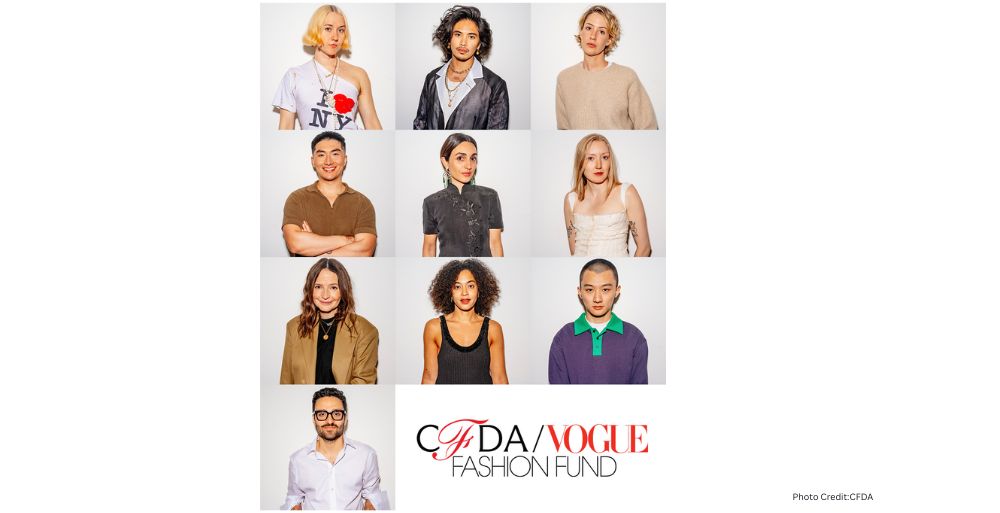
The annual CFDA/Vogue Fashion Fund, known for its commitment to fostering emerging designers, took a significant step towards sustainability during its 2026 Material Innovation Challenge. Held at the Warren Street Hotel, the event showcased the creative efforts of ten finalists who were tasked with reimagining their brands through the lens of sustainable and bio-based fabrics. This year’s challenge was presented in partnership with Humane World for Animals, emphasizing a commitment to ethical practices in fashion.
Each participating designer received a stipend and was provided with a list of recommended sustainable materials, with the requirement to incorporate at least two into their final designs. The finalists convened for the first time in June and have since spent months exploring new materials and rethinking their production methods. The culmination of their efforts was presented to a distinguished judging panel that included prominent figures in the fashion industry, such as Thom Browne, Chloe Malle, Aurora James, and Eva Chen.
Innovative Approaches to Sustainable Fashion
Among the standout designs was Zane Li’s collaboration with model Ayak Veronica, who embodied the bold spirit of Li’s vision. “I think she represents what a woman should be,” Li stated, highlighting Veronica’s individualistic style. Li’s collection featured a mix of contrasting red cotton jersey and natural fiber fur, reimagined into a vest and skirt, paired with a black tank top crafted from 98% natural latex sourced from the Amazon.
Claire Sullivan took a personal approach, drawing inspiration from her community and personal relationships. For her design challenge, Sullivan created a whimsical bridal gown made entirely from orange peel fiber, with a matching bouquet. Her muse, Alix Vernet, is set to wear the creation at her wedding in a few weeks, further intertwining personal milestones with sustainable fashion. “I wanted to focus on two avenues that I feel like are part of the current structure of Miss Claire Sullivan and also part of the future,” Sullivan expressed.
Juju Vera, primarily known for jewelry design, faced the challenge of creating ready-to-wear garments for the first time. Inspired by 1970s fashion and her muse, Agnese Furlanis, Vera presented a white turban and flowing dress, all made from iterations of orange peel fibers. “I loved this challenge because it really helped illustrate the Vera woman from head to toe,” she remarked, showcasing her evolution as a designer.
A Diverse Range of Inspirations
The finalists’ designs not only showcased creativity but also reflected diverse cultural backgrounds and personal narratives. George Inaki, whose brand Milamore is deeply rooted in his Filipino heritage, designed a matching set from an upcycled kimono, incorporating elements of his dual heritage with a focus on sustainability. “I talk about my Japanese heritage a lot, but I wanted to highlight and also embrace my other heritage with the Filipino,” Inaki noted.
Emily Dawn Long’s collaboration with model Meadow Walker resulted in a playful yet sophisticated design, utilizing materials sourced from a Brooklyn artisan who collects sap from Brazilian trees. Long’s backless dress paired with a Hawaiian-print skirt illustrated her commitment to innovative material use. “This was very up my alley and what I’ve been wanting to do,” she said.
The event also highlighted the emotional connections between designers and their muses. For Terrence Zhou, collaborating with his best friend Helen Hong allowed him to explore new creative avenues. Zhou’s avant-garde piece, which featured a sculptural design made from vegan leather, aimed to inspire hope through fashion. “I want to give people hope in this time and era,” he expressed.
Looking Forward: The Future of Sustainable Fashion
The designs presented during the challenge are not only a showcase of individual talent but also a reflection of a broader movement within the fashion industry towards sustainability and ethical practices. As the sector faces increasing scrutiny over its environmental impact, initiatives like the CFDA/Vogue Fashion Fund’s Material Innovation Challenge are crucial in promoting and supporting young designers who prioritize sustainable methodologies.
As the finalists continue to develop their brands, the challenge serves as a reminder of the potential for fashion to evolve in a way that respects both creativity and the planet. With an emphasis on innovative materials and ethical production practices, these designers are paving the way for a more sustainable future in fashion.