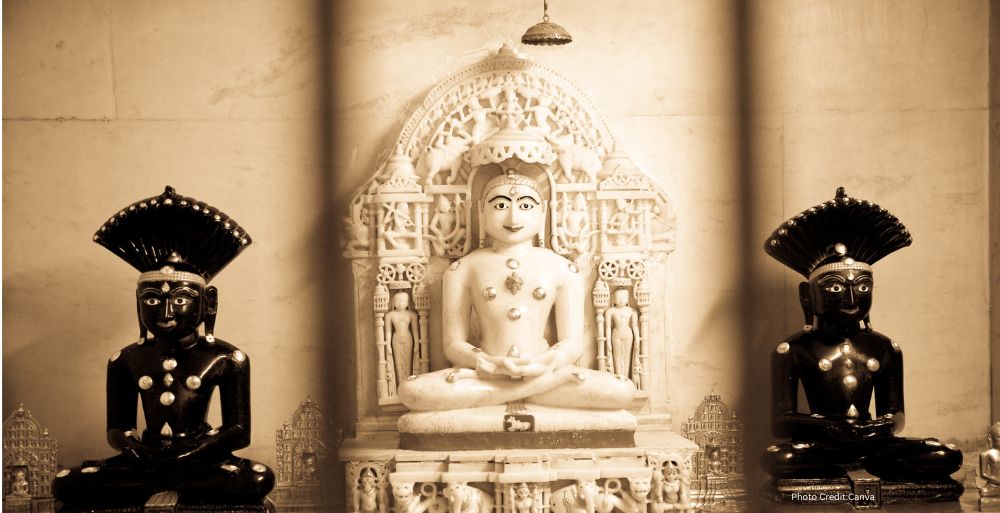
A deep exploration of the Bhaktamar Stotra reveals its transformative potential as a healing practice within the Jain tradition, supported by modern practitioners and researchers.
In recent years, the ancient Jain hymn known as the Bhaktamar Stotra has gained recognition not only as a spiritual text but also as a tool for healing. Composed in the 7th century by Acharya Mantungasuri, the hymn consists of 48 verses dedicated to Lord Adinath, the first Tirthankar of Jainism. Its historical roots lie in the Jain tradition, which emphasizes spiritual purity and nonviolence as a pathway to liberation. The stotra has been a central part of Jain devotion for centuries, but its contemporary interpretations have begun to reveal its potential for personal growth and healing.
The Bhaktamar Stotra’s enduring significance stems from its ability to resonate with practitioners on multiple levels, particularly those who engage with it through faith and intention. The hymn’s structure allows for various forms of contemplation and practice, with practitioners exploring its depths through sound, mantra, and meditation. This multifaceted approach has led to the emergence of a new wave of healing practices grounded in the stotra’s verses.
Modern Practitioners and Their Perspectives
Among the advocates of Bhaktamar as a healing practice is Dr. Manju Sandeep Jain, a pioneer in this field, based in Nagpur, Maharashtra. Dr. Jain’s engagement with the stotra began in her childhood, influenced by observing her mother recite it for the sick. These experiences laid the groundwork for her extensive research into the hymn’s healing properties. In 2007, she began working in a hospice setting, where she noted remarkable improvements in patients’ conditions after chanting specific verses of the stotra.
“I thought, let me take up this research myself. And if I find it works, then I will take it to the medical fraternity,” Dr. Jain explained. Her systematic study culminated in a PhD focused on the 45th verse of the Bhaktamar, which addresses incurable diseases. This verse emphasizes that true spiritual surrender and meditation can transform suffering into health and joy, a concept that resonates with her findings.
Since formally beginning to teach in 2011, Dr. Jain has trained thousands in the art of Bhaktamar chanting and healing through her Global Centre for Bhaktamar. Her teachings integrate the stotra’s verses with their meanings, along with meditation, mantras, and yantras—symbolic representations used in Jain practices. She emphasizes that different verses can be applied to various life challenges, including health issues and academic pursuits.
Innovative Approaches to Bhaktamar Practice
Another notable practitioner, Sejal Mehta, has developed a unique approach to the Bhaktamar Stotra, referring to it as a form of “nanotechnology” in healing. Based in Mumbai, Mehta focuses on distilling the stotra’s verses into subtler forms of sound and vibration, enhancing their effectiveness in contemporary contexts. Her experience during the COVID-19 pandemic deepened her relationship with the hymn, leading her to witness significant recoveries in clients when she applied these practices.
Mehta teaches at her Shree Rushabh Bhaktamar Healing Centre, where she has developed methods to make the stotra more accessible, particularly for those who may struggle with lengthy recitations. She advocates for using specific verses related to individual concerns, which she believes makes the practice more manageable and effective, especially for vulnerable populations such as children and the elderly.
In her instructional sessions, Mehta emphasizes the importance of intention and discipline. She recommends abstaining from meat and alcohol and approaching the practice with purity of heart. “It is magical,” she asserts, highlighting the significance of consciousness in the healing process.
Emphasizing Devotion and Inner Transformation
Hetal Kothari, another advocate of the Bhaktamar Stotra, brings a devotional perspective to her practice. With a background in occult sciences, Kothari emphasizes the importance of faith and inner transformation that the stotra can foster. Her journey with Bhaktamar reflects a deepening understanding of its meanings, leading to personal resilience and inner peace.
Kothari advises newcomers to approach the stotra with sincerity, emphasizing that true transformation begins with a heartfelt connection to its teachings. “When you understand the meaning, your devotion deepens,” she notes, underscoring the importance of intention in the recitation.
Global Outreach and Future Initiatives
Dr. Jain’s mission has expanded beyond traditional Jain communities, as she seeks to make the healing practices of the Bhaktamar Stotra accessible to a broader audience. Her initiatives include international teaching engagements, including presentations at conferences in the United States and plans for a Bhaktamar Healing Conference scheduled for September 30, 2026, in Nashik, Maharashtra.
Both Mehta and Kothari have also engaged in international outreach, advocating for the integration of the stotra into various spiritual and healing practices worldwide. Their efforts reflect a growing movement to explore the intersections of ancient wisdom and modern therapeutic practices, potentially transforming the lives of many.
The stories of healing and personal growth associated with the Bhaktamar Stotra illustrate its profound impact on individuals seeking solace and strength. While these accounts reflect personal experiences, they contribute to a broader dialogue about the relevance of ancient spiritual texts in contemporary society.
As the practice of Bhaktamar continues to evolve, so does its potential to bridge the gap between tradition and modernity, offering a pathway for healing and transformation that resonates across cultures and generations.