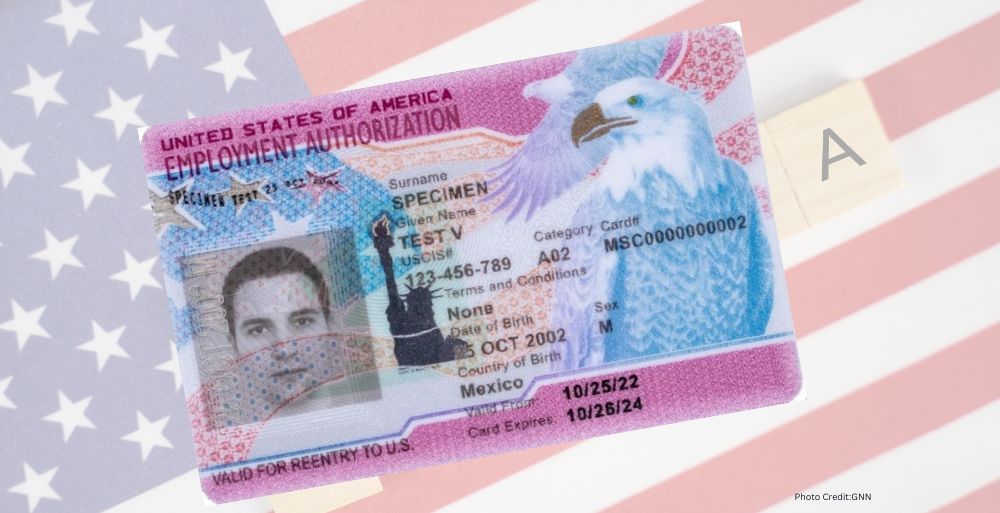
The United States has officially rescinded the automatic 540-day extensions for work permits that were previously available to various categories of applicants, including H-4 visa holders, significantly impacting legal immigrants and foreign professionals.
The United States Citizenship and Immigration Services (USCIS) has enacted a final rule that terminates the automatic 540-day extensions for employment authorization documents (EADs) for several applicant categories, notably affecting the spouses of H-1B visa holders. This decision, announced on Wednesday, may have far-reaching implications for thousands of foreign professionals, particularly those from India, as they navigate the complexities of renewing their work permits.
This rule follows an interim policy change issued on October 30, 2022, which initiated the process of ending these automatic extensions. The 540-day automatic extension policy was originally introduced in May 2022 during President Joe Biden’s administration as a temporary measure to protect renewal applicants from losing their work authorizations due to processing delays at USCIS.
Background on the 540-Day Extension Policy
The 540-day automatic extension was designed to provide relief to individuals facing extended processing times for their EAD applications. The policy was particularly beneficial to H-4 visa holders, who are spouses of H-1B workers, allowing them to continue working while their renewal applications were pending. The automatic extension aimed to ensure stability for families reliant on dual incomes in a challenging immigration landscape.
Details of the New Rule
The newly adopted rule eliminates the automatic extension for various applicant categories, including H-4 spouses, asylum seekers, refugees, asylees, and individuals with temporary protected status. In contrast, students on F-1 visas applying for employment authorization in STEM fields are exempt from this termination and will continue to receive a 180-day automatic extension if their applications are filed in a timely manner.
Importantly, spouses of individuals on L and E visas will remain authorized to work due to their visa status, which does not require a separate employment authorization document. This distinction highlights the varied impacts of the new rule across different visa categories.
Proposed Changes and Their Potential Impact
The current administration, under President Biden, is not the only one to influence immigration policy. The Trump administration previously proposed a rule that would eliminate the longstanding practice of considering previously approved applications when evaluating extension petitions for certain non-immigrant workers, including H-1B visa holders. Should this rule be finalized, it could lead to increased scrutiny of visa extension applications, resulting in potentially longer waiting periods for applicants.
If implemented, USCIS officers would be required to evaluate each extension petition independently rather than relying on previous approvals. This could result in a rise in requests for additional evidence, broader documentation requirements, and increased processing times, thereby raising the legal and administrative costs for employers. Consequently, businesses may need to prepare visa extension petitions with the same rigor as initial applications, creating additional burdens for employers and foreign workers alike.
Public Response and Criticism
The Department of Homeland Security is currently accepting public comments on the proposed changes until November 13, 2023. Ajay Jain Bhutoria, a former White House adviser and immigration attorney, has been vocal in his criticism of the decision to eliminate the automatic 540-day extension. He stated, “I strongly condemn the Trump administration decision to codify and finalize the elimination of the 540-day automatic work permit extension. This regressive policy shift is a devastating blow to hardworking legal immigrants, H-4 spouses, healthcare workers, and families who rely on employment authorization documents to build their lives and contribute to America’s prosperity.”
Critics argue that these changes may exacerbate the challenges faced by legal immigrants in the U.S., particularly in maintaining their work authorization. The elimination of the automatic extension could lead to job gaps for many H-4 spouses and others who rely on timely processing to secure their employment. As such, the implications of these decisions extend beyond individual applicants to affect the broader economy, particularly in sectors reliant on skilled foreign labor.
Broader Implications for Immigration Policy
The termination of the 540-day automatic work permit extension and the proposed changes underscore ongoing tensions and challenges within U.S. immigration policy. As the immigration landscape continues to evolve, the decisions made by USCIS will likely resonate with many foreign professionals and their families, impacting their ability to work and contribute to the economy. The complexities surrounding visa renewals and extensions highlight the precarious position of legal immigrants in the U.S., who are often caught in a web of bureaucratic delays and policy shifts.
As the deadline for public comments approaches, stakeholders, advocates, and immigration experts are closely monitoring the situation, anticipating further developments that could shape the future of work authorization for foreign professionals in the United States. The ongoing evolution of these policies reflects broader debates on immigration reform and the vital role that legal immigrants play in the American economy.