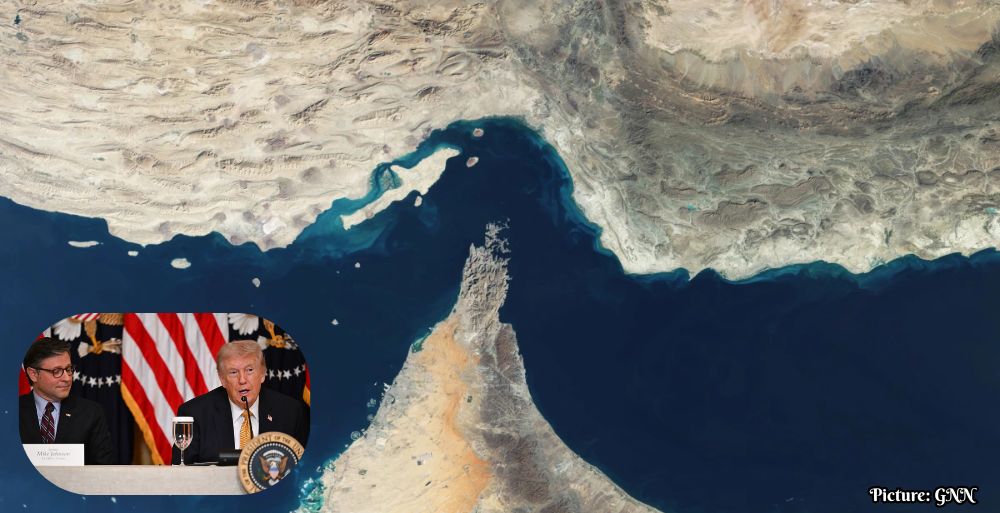
The Trump administration is grappling with limited options in response to Iran’s demand for control over the Strait of Hormuz, as tensions escalate amid ongoing military confrontations.
As tensions continue to mount in the Persian Gulf, President Donald Trump finds himself in a precarious situation regarding Iran’s demands for control over the strategically vital Strait of Hormuz. This critical maritime passage is responsible for the transit of a significant percentage of the world’s oil supply, making its security a major geopolitical concern. Former officials within the Trump administration have expressed that the situation presents a series of difficult choices for the president, who must navigate between diplomatic negotiation and potential military escalation.
Iran’s position is clear: they seek a political concession that would allow them to exert influence over the Strait of Hormuz, which has been a flashpoint for U.S.-Iran tensions. A former official, who spoke on the condition of anonymity, highlighted that allowing Iran any form of control could set a dangerous precedent in international law and diplomatic practice, embedding their authority in a way that could complicate future sanctions.
In recent days, President Trump has oscillated between threats of military action and calls for a diplomatic resolution. On Saturday, he communicated via Truth Social that he had reconsidered potential military strikes against Iran, contingent upon reaching an agreement that would ensure the “immediate, complete, and total opening” of the Strait of Hormuz and address Iran’s nuclear ambitions. This announcement followed speculation that the Trump administration was preparing for intensified military action against Iranian energy infrastructure, a move that could escalate the ongoing conflict.
Despite Trump’s overtures, Iran has yet to confirm any agreement with the United States. Furthermore, officials within the White House, including Secretary of State Marco Rubio, have cautioned against any arrangement that might legitimize Iran’s control over the strait, warning it would undermine the U.S.’s ability to impose sanctions and pressure Tehran regarding its nuclear program.
Negotiation Challenges and Iranian Leverage
As the diplomatic landscape becomes increasingly fraught, analysts indicate that the Iranian government appears to feel emboldened, complicating negotiations. Alex Gray, a former National Security Council chief of staff, noted that Iran’s perception of leverage, combined with internal communication issues among Iranian factions, has led to a reluctance to make necessary concessions. This dynamic presents significant challenges in reaching a ceasefire or resolution.
Amid these geopolitical maneuvers, the Strait of Hormuz remains open for international transit, with millions of barrels of oil passing through daily. A senior administration official reiterated that while the strait is accessible, any arrangements that require guarantees of safe passage from Iran pose substantial risks for U.S. citizens and foreign entities, potentially leading to sanctions. The official emphasized, “As the President has stated, the Strait of Hormuz is open, and will remain open if people want to go through it.”
Impact on Domestic Politics and Oil Prices
The implications of the ongoing conflict are becoming increasingly relevant as the U.S. approaches the midterm elections. Current gas prices have surged to an average of $4.10 per gallon, a rise from $3.85 just a month ago, prompting concern among Republican lawmakers who wish to shift focus to domestic economic issues. With potential U.S. casualties and attacks on American bases in the region, the administration must balance military engagements and public sentiment regarding cost-of-living concerns.
Experts warn that Trump is faced with a series of unattractive options. “Any diplomatic agreement will likely require accepting some form of Iranian control over the Strait of Hormuz, an outcome many in Washington would find difficult to accept,” remarked Danny Citrinowicz, a non-resident fellow at the Atlantic Council. He added that further military escalation risks elevating oil prices without guaranteeing a shift in Iran’s strategic approach.
Moreover, allowing Iran to impose fees on the strait could set a concerning precedent, affecting U.S. naval operations and international norms regarding freedom of navigation. Gray warned that if the U.S. concedes to any nation imposing tolls on major international waterways, it could undermine commercial traffic and the U.S. Navy’s operational capabilities.
Potential for Escalation or Stalemate
As the conflict persists, Trump has expressed frustration with Iran’s negotiating tactics, accusing them of misrepresenting their nuclear ambitions. During a recent Cabinet meeting, he remarked, “I’m losing faith in them because they do lie and they do misrepresent. We just want to win.” Despite asserting that Iranian offensive capabilities have been significantly diminished, he acknowledged that Tehran retains some missile and drone capabilities.
The situation remains fluid, with Iranian-backed groups, such as the Houthis in Yemen, displaying increased aggression, indicating Tehran’s reluctance to seek a swift end to hostilities. Greg Priddy, an energy market expert, suggested that Iran’s actions reflect a confidence in their position, potentially aiming to pressure Trump into a more favorable negotiation.
In the face of these challenges, Elliott Abrams, a former U.S. special representative for Iran, outlined the stark choices confronting the administration: concede to Iranian control, escalate military action, or maintain a blockade with ongoing tit-for-tat exchanges. The risk of Iranian retaliation heightens the stakes for any military escalation, which could further destabilize the region and negatively impact U.S. allies.
As the conflict continues with no clear resolution in sight, U.S. officials, including those from Qatar and Pakistan, are still advocating for a return to diplomatic talks after earlier ceasefire agreements faltered. Fred Fleitz, a former National Security Council chief of staff, conveyed that while the U.S. is not ready to abandon efforts for a negotiated solution, the reality of the upcoming midterm elections could complicate the administration’s approach, suggesting that Trump will not easily accept a deal perceived as unfavorable to U.S. interests.
In conclusion, as the Trump administration navigates the complexities of U.S.-Iran relations, the situation remains tenuous, with significant implications for both domestic politics and international stability.