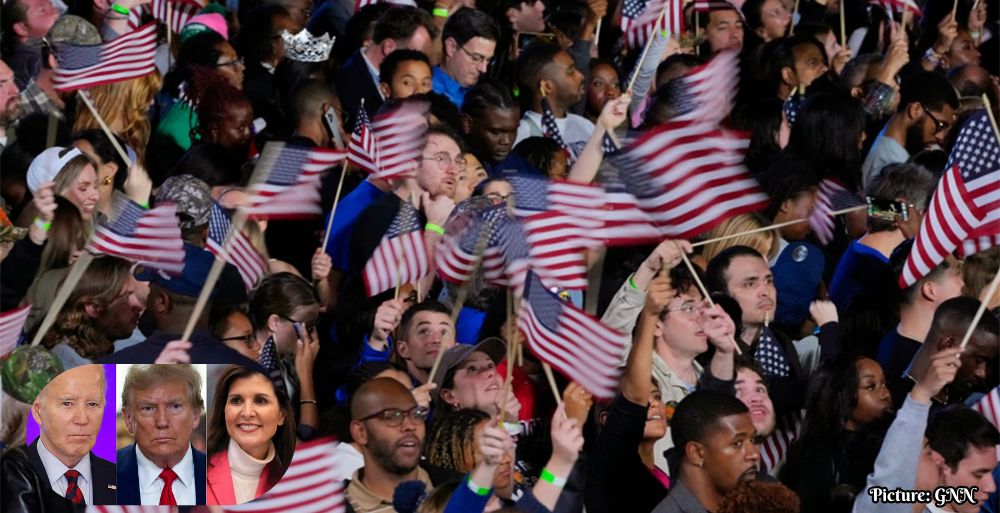
In a series of closely watched primary elections across several states, both progressive and establishment Democrats claim victories, while Republican candidates backed by former President Trump maintain their influence within the GOP.
LANSING, MICHIGAN – August 4, 2026 – Primary elections held on August 4 revealed a complex political landscape as various factions within the Democratic Party and Republican candidates endorsed by former President Donald Trump faced off in critical races across states including Michigan, Missouri, Virginia, Kansas, and Washington.
The results from these primaries are poised to shape the political dynamics leading into the general elections, particularly in swing states where voter sentiment could significantly impact control of Congress. Notably, the Democratic primary for the U.S. Senate seat in Michigan remains too close to call, reflecting the ongoing tensions between progressive and establishment factions within the party.
Progressive and Establishment Wins
While both progressive and establishment Democrats celebrated successes in various races, preliminary results indicate a slight edge for the establishment. One of the most closely monitored contests was the Democratic primary for the Michigan Senate seat, where Abdul El-Sayed, a former county health director, was leading Rep. Haley Stevens with 48.5% of the vote compared to Stevens’ 47.5% as of early Wednesday morning. A third candidate, Mallory McMorrow, secured only 4% of the votes.
This Senate race is particularly significant for progressives, as a victory for El-Sayed could signal a strong appetite for populist policies such as Medicare for All in a state that has historically swung between parties. Conversely, Stevens, who previously flipped a suburban congressional district in 2018, represents a more moderate alignment within the party and has garnered support from establishment figures.
Regardless of the outcome, the close nature of the race underscores the deep divide among Democratic primary voters, a trend that is evident in other primaries as well. In Michigan’s competitive 7th Congressional District, progressive William Lawrence emerged victorious, positioning him to challenge incumbent Rep. Tom Barrett in the upcoming general election.
Establishment Democrats also claimed victories in other key primaries. In Missouri’s 1st Congressional District, U.S. Rep. Wesley Bell defeated former Rep. Cori Bush, who had the backing of prominent progressive leaders, including Vermont Sen. Bernie Sanders. Bell’s victory, in a district rated as solidly Democratic by the Cook Political Report, reflects the establishment’s continued influence in Democratic contests.
In Virginia, Democratic voters opted for candidates favored by the party establishment in two House districts that Democrats aim to flip in November, further indicating a strategic alignment with more centrist candidates.
The Financial Landscape of the Primaries
The influence of money in politics emerged as a critical theme during the primaries, particularly in Michigan’s Senate race. El-Sayed criticized the significant financial backing that Stevens received from pro-Israel political action committees, including AIPAC, which he argued had an outsized influence on the political process. Data from Open Secrets, a nonpartisan organization tracking fundraising, revealed that outside groups had already spent over $52 million in Michigan’s races, marking it as the second most expensive Senate contest in the nation.
In St. Louis, Rep. Bell’s campaign, which included a commitment to support humanitarian and military aid to Israel, attracted backing from AIPAC, highlighting the complex interplay between local and national political influences.
Trump’s Enduring Influence in the GOP
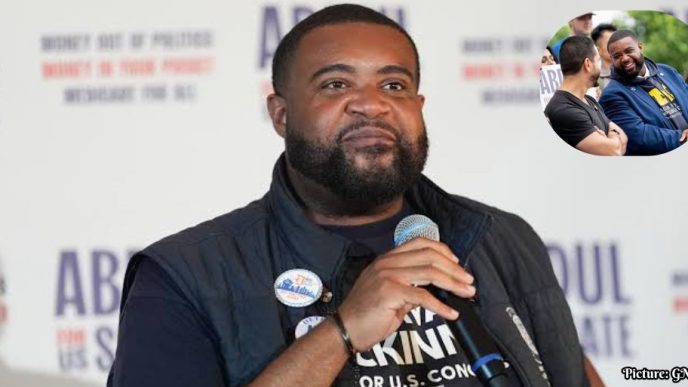
Former President Trump’s endorsement continued to play a significant role in Republican primaries, as candidates he supported emerged victorious in states like Washington, Kansas, and Michigan. In Washington’s 4th congressional district, Amanda McKinney, a county commissioner endorsed by Trump, triumphed over a crowded field of ten candidates. This seat is particularly noteworthy as it aims to fill the position of outgoing Congressman Dan Newhouse, one of the few Republicans who voted to impeach Trump.
Despite McKinney’s victory, the path ahead is uncertain; no Trump-backed candidate has previously won a general election in this predominantly conservative district. McKinney will face Democrat John Duresky in the November election.
In Michigan, Trump-backed candidates also secured nominations for the governor’s race, with Rep. John James winning the nomination to challenge Democratic Secretary of State Jocelyn Benson. In Kansas, state Sen. Ty Masterson clinched the Republican nomination, setting up a contest against fellow state senator Cindy Holscher. Both states have differing electoral landscapes; Michigan, a swing state, has seen Democrats maintain the governor’s office since 2018, while Kansas remains solidly Republican.
Ballot Initiatives Reflect Voter Sentiment
Alongside primary elections, voters in Missouri and Kansas rejected Republican-backed ballot initiatives that aimed to reshape state governance. In Kansas, a proposal to elect state Supreme Court justices instead of appointing them was defeated, maintaining the current system whereby justices are appointed by the governor based on nominations from a committee. This decision preserves a court that has upheld abortion rights, which has been a contentious issue among Republican leaders.
Missouri voters similarly voted against a measure that would have made it more difficult for the public to pass constitutional amendments, a response to recent amendments that expanded Medicaid and protected abortion rights. The failed initiative would have required majority approval from each of the state’s eight congressional districts, a significant increase from the current statewide majority requirement.
As the political landscape continues to evolve, the outcomes of these primary races and ballot initiatives are likely to have lasting implications for the 2026 elections and beyond.