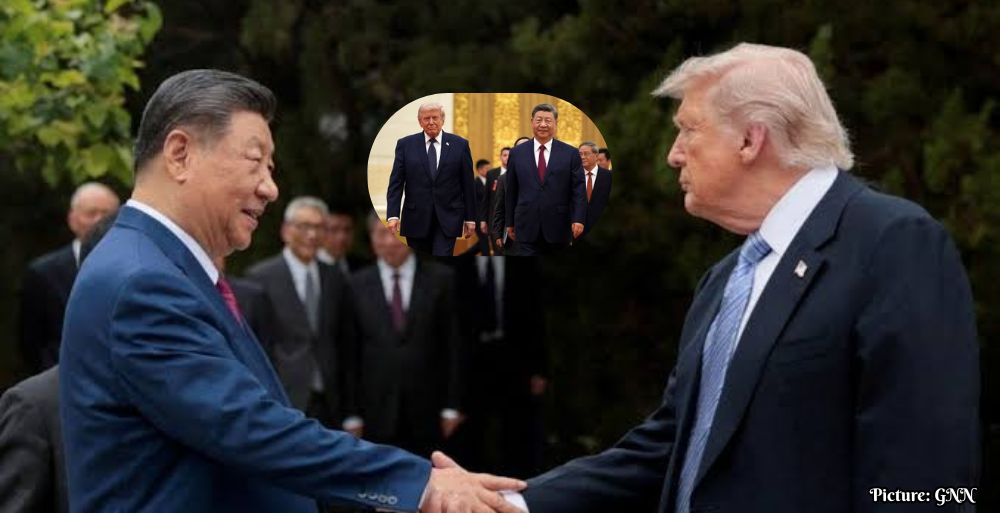
In a move characterized as retaliation against U.S. sanctions, China has enacted a series of measures against American companies, including sanctions and export controls, as both nations prepare for an upcoming summit between their leaders.
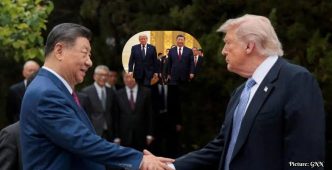
BEIJING — On Wednesday, the Chinese government announced a broad array of sanctions against the United States and its companies, framing these actions as essential countermeasures in response to recent U.S. sanctions targeting Chinese enterprises. This escalation comes just weeks before a highly anticipated summit between Chinese President Xi Jinping and U.S. President Donald Trump, scheduled to take place in the United States next month. Amidst a backdrop of intensifying technological rivalry, both nations have emphasized the importance of maintaining what they describe as “constructive strategic stability.”
The Ministry of Commerce of China disclosed that it would sanction several American entities, including a biotech firm and a resource analytics company. In addition, Beijing has decided to tighten export controls on drones and related components directed towards the U.S. market. These actions are seen as a direct response to the U.S.’s recent ban on imports from 43 Chinese companies, which the U.S. government has linked to allegations of human rights abuses involving Uyghurs and other minority groups.
Specifically, six companies were added to China’s designated “countermeasures list” in retaliation for the U.S. import ban. A seventh company was listed following the Federal Communications Commission (FCC)’s decision last month to prohibit the import of new humanoid and quadruped robots, which are mainly manufactured in China, along with power converters. As a result of these sanctions, individuals and entities in China are barred from conducting business or engaging in cooperation with the listed American firms.
Notably, the U.S. FCC had previously prohibited the import and sale of new drone models and critical equipment produced by foreign manufacturers, including those from China, citing national security concerns. As the world’s leading drone manufacturer, China has progressively tightened its own export controls over these products in recent years, further complicating bilateral trade relations.
New Measures and Broader Context
In addition to the sanctions announced on Wednesday, China has initiated a national security investigation into imported office equipment that utilizes foreign system software. Furthermore, Beijing has suspended certain collaborative efforts related to factory tracking inspections with the U.S. A spokesperson for the Ministry of Commerce indicated that China had “no choice but to take necessary countermeasures” in light of the recent actions taken by the United States against Chinese firms.
“China urges the United States to immediately revoke the relevant measures, stop its erroneous actions … and work together to maintain a constructive and stable China-U.S. relationship,” the spokesperson stated. They further warned that if the U.S. continues to impose additional restrictive measures against China, the country would respond with further countermeasures.
Recent weeks have seen a notable escalation in tensions between the two nations. The Trump administration has not only blacklisted Chinese firms over alleged forced labor ties but has also sanctioned Chinese shipping operators accused of facilitating the transport of Iranian fuel. Additionally, new institutions, including two prominent civilian universities, have been added to a Pentagon blacklist. In another contentious move, the U.S. has recently levied tariffs of 10% or 12.5% against China and several other countries due to perceived failures to address exports produced by forced labor. Moreover, officials from the Trump administration have threatened to impose sanctions on Chinese artificial intelligence firms.
Preparations for the Xi-Trump Summit
The backdrop of these escalating tensions coincides with preparations for the Xi-Trump summit, which is expected to take place next month. Last week, senior economic officials from both nations engaged in trade discussions via video link. Additionally, a Chinese vice-foreign minister visited the U.S. in early July, a trip widely interpreted as a preparatory measure for the upcoming summit. These high-level interactions underscore the complexities of the bilateral relationship, which remains fraught with both competition and a mutual interest in dialogue.
As both countries navigate their fraught interactions, the implications of these sanctions and countermeasures extend beyond immediate economic impacts, potentially affecting global supply chains and international diplomatic relations. The outcome of the forthcoming summit may hinge on the ability of both leaders to address these contentious issues constructively. Analysts suggest that the ability to mitigate tensions may be crucial not just for U.S.-China relations but also for broader global economic stability.
The sanctions and countermeasures represent a significant moment in the ongoing trade conflict between the two nations, which has seen various rounds of tariffs, restrictions, and retaliatory actions since 2018. The broader implications of these actions could lead to a protracted economic standoff, affecting not only bilateral trade but also the global economy, as firms and investors navigate an increasingly uncertain landscape. Stakeholders in both countries will be watching closely to see if the summit can produce a pathway toward de-escalation or if further confrontations will ensue in the months to come.