Dharmendra Pradhan’s resignation underscores the rising influence of youth activism in India, marking a significant challenge to Prime Minister Narendra Modi’s government.
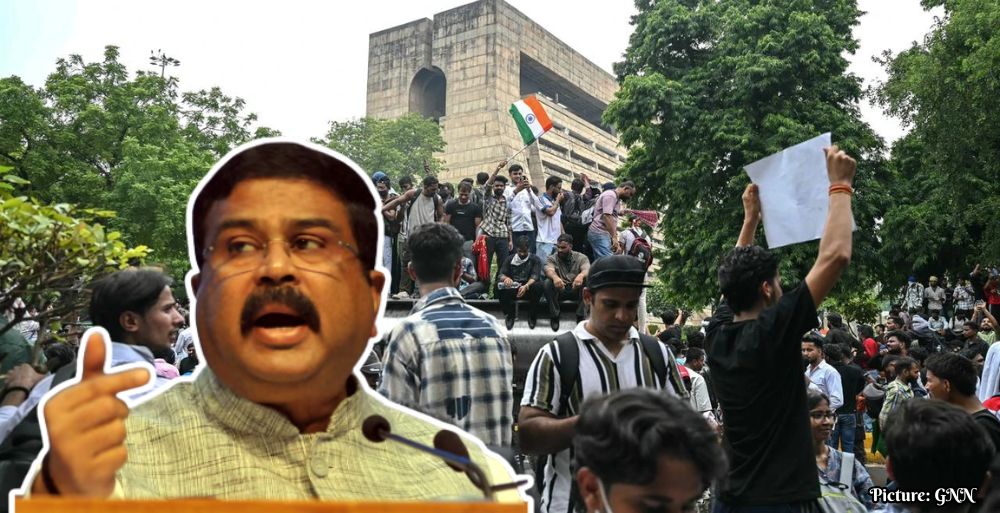
New Delhi, India – In a historic move that has reverberated through the political landscape, India’s Education Minister Dharmendra Pradhan resigned on Saturday following a week of unprecedented protests led by a newly formed youth movement known as the Cockroach Janata Party (CJP). This resignation, seen as a major victory for the CJP, marks a pivotal moment in the ongoing struggle between the youth of India and the Modi administration.
Pradhan’s resignation was announced in a statement via social media, where he stated, “Considering the situation that has arisen at Jantar Mantar and across the country, so that anti-national forces do not take advantage of this situation … I have sent my resignation letter to the prime minister.” He expressed respect for the aspirations and legitimate expectations of the youth, acknowledging the power of their collective voice in the current political climate.
This resignation is particularly noteworthy as it represents the first time in Prime Minister Narendra Modi’s 12-year tenure that a minister has been compelled to resign due to public pressure. The protests stemmed from widespread outrage over an exam leak scandal that has severely impacted millions of students across the country, leading to tragic consequences, including multiple suicides. Many of the protest leaders undertook hunger strikes to amplify their demands, further demonstrating the gravity of the situation.
Emergence of the Cockroach Janata Party
The Cockroach Janata Party, which derives its provocative name from a common pest, has quickly gained traction among young people disillusioned with the government’s handling of educational issues. Since its inception, the CJP has organized large-scale protests, culminating in one of the largest youth-led movements seen in India in recent years. The movement’s demands center around accountability from the government regarding the circumstances surrounding the exam leak crisis.
Since May, the CJP has rallied for Pradhan’s resignation, arguing that his leadership has failed to provide adequate solutions to the crises faced by students. The protests intensified dramatically earlier this week, when hundreds of thousands of students and young people marched through Delhi, leading to clashes with police. Law enforcement responded with teargas and baton charges, which resulted in numerous injuries among peaceful demonstrators, further galvanizing public support for the CJP’s cause.
Government Response and Political Implications
In light of the escalating protests, the Modi administration has sought to engage with the CJP. The Prime Minister agreed to expedite investigations into the exam leaks, a move that some observers view as an attempt to placate the demonstrators. However, this response did not address the core demand for Pradhan’s resignation, which has remained a focal point of the protests. As public discontent grew, the government faced increasing pressure to respond effectively to the demands of the youth.
The announcement of Pradhan’s resignation was met with jubilant celebrations among CJP supporters gathered in Delhi, who viewed this outcome as a significant victory. Many protesters interpret this event as a pivotal moment in Indian politics, signaling a potential shift towards greater accountability from government officials and a growing recognition of the youth’s role in shaping political discourse.
The implications of this movement extend beyond the immediate political landscape. The CJP’s ability to mobilize large numbers of young people raises important questions about the future of political engagement among India’s youth and the potential for sustained pressure on the government to address their concerns. The protests reflect a broader awakening among young voters, who are increasingly willing to demand transparency and accountability from their leaders.
As the CJP continues to gain momentum, the future of political dynamics in India may be significantly altered. The resignation of Dharmendra Pradhan could serve as a catalyst for further political changes, as youth movements challenge existing power structures and advocate for reforms that resonate with their aspirations for an equitable society.
While the Modi administration has historically maintained a strong grip on power, the organized and passionate response from the youth signifies a challenge to the status quo. As the government contemplates its next steps, the potential for increased youth activism and engagement in the political process appears substantial, suggesting that the voices of India’s younger generations will play a crucial role in shaping the nation’s future.
In conclusion, the resignation of Pradhan symbolizes not merely a political defeat for the current administration but also a broader shift in the landscape of Indian politics, where youth activism is poised to play a central role in advocating for change and accountability in governance.