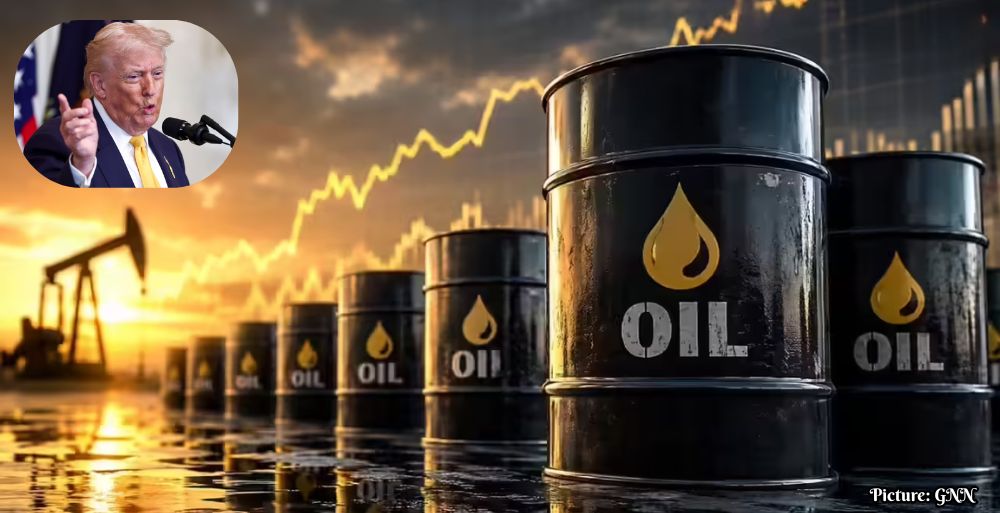
The Biden administration has issued a rare warning to Ukraine, urging a halt to attacks on non-Russian tankers in the Black Sea, as rising geopolitical tensions contribute to escalating oil prices globally.
In a notable diplomatic move, the Biden administration has advised Ukraine to cease its long-standing attacks on non-Russian vessels operating in the Black Sea. This warning is part of a broader strategy to address the significant implications of rising oil prices, which have been aggravated by ongoing geopolitical conflicts, particularly the war in Ukraine, and tensions in the Strait of Hormuz and the Red Sea. The White House’s stance reflects a complex balancing act as it seeks to support Ukraine while also maintaining stability in global energy markets.
According to a senior administration official, who spoke on the condition of anonymity due to the sensitivity of the discussions, the U.S. considers the Caspian Pipeline Consortium (CPC) a vital conduit for transporting Kazakhstani oil to European markets. This pipeline serves as a crucial alternative to Russian energy supplies, which have been significantly impacted by international sanctions amid the ongoing conflict.
Crude Prices Surge Amid Escalating Risks
The recent increase in crude oil prices can largely be attributed to heightened risks associated with critical shipping routes worldwide. Analysts have expressed concerns that a substantial portion of the global oil supply is now surrounded by geopolitical instability. John Evans, an analyst at PVM Oil Associates, stated in a recent client note that the current rise in crude prices is both “understandable” and “required,” particularly as potential remedies such as increased U.S. production and Strategic Petroleum Reserve (SPR) releases become less feasible.
Even before the emergence of these new threats to shipping, the fundamentals of the oil market were already showing signs of strain. Global oil inventories, which were robust at the onset of the conflict in February, are now nearing critically low levels. The Biden administration has completed over 60 percent of its planned drawdown from the SPR, with the pace of these releases slowing significantly in recent weeks. “The crisis is going to start now because now we’re through all of that oil,” remarked Amy Jaffe, an energy expert and professor at New York University. She emphasized that while it initially seemed that the market was weathering the storm, the reduction in oil supplies and unexpected geopolitical events could soon lead to a critical shortage.
Domestic Fuel Prices Under Pressure
The implications of rising crude oil prices are beginning to manifest in domestic gasoline prices. Gregory Brew, a senior analyst at Eurasia Group, highlighted that U.S. refineries are currently operating at maximum capacity, which limits their ability to ramp up production further. “The U.S. has essentially run out of spare refining capacity — it’s refining just about as much as it possibly can,” Brew noted. This situation poses a significant risk of rising gasoline prices for consumers.
Analysts project that if geopolitical tensions do not de-escalate, gasoline prices could rise back to between $4 and $4.50 per gallon, with the potential to reach as high as $5 per gallon in the upcoming fall months if conditions remain unchanged. This trend could influence consumer behavior, potentially leading to a reduction in driving and increased demand for alternative transportation methods, thereby affecting broader economic activity as transportation and goods pricing across various sectors become impacted.
Geopolitical Risks and Market Stability
The ongoing conflict in Ukraine, coupled with rising tensions in the Middle East, continues to reverberate through global oil markets. The Biden administration’s warning to Ukraine underscores the intricate dynamics of international diplomacy, where military support is weighed against the necessity of ensuring stability in energy markets. The decision to caution Ukraine highlights the complexities involved in navigating support for an ally while attempting to mitigate potential disruptions in energy supplies.
The future trajectory of oil prices will likely hinge on several critical factors, including the resolution of conflicts affecting key shipping routes, adjustments in U.S. domestic energy policy, and the global market’s ability to respond to supply chain disruptions. Stakeholders in both the energy and political arenas will be closely monitoring developments as tensions evolve. Should the geopolitical landscape remain volatile, further increases in oil prices could have cascading effects on global economies and consumer behavior.
As the situation continues to unfold, the Biden administration faces the dual challenge of supporting Ukraine in its conflict with Russia while simultaneously addressing the economic repercussions of rising energy costs. The administration’s diplomatic approach, along with its policy responses to the evolving energy landscape, will be crucial in determining both domestic and international economic stability in the months ahead.