When the Centers for Medicare & Medicaid Services (CMS) released the CY 2027 Medicare Physician Fee Schedule (MPFS) Proposed Rule this July, the reaction across the physician community was immediate — and deeply concerned. For the American Association of Physicians of Indian Origin (AAPI), the nation’s largest ethnic medical organization, the proposal represents more than a technical payment adjustment. It is a turning point that could reshape how physicians deliver care and how patients access it.
At the center of the controversy is a sweeping change: CMS proposes paying physicians 50% less for any sameday service performed alongside an office or outpatient evaluation and management (E/M) visit. Whether it is a biopsy, a joint injection, a lesion removal, or a minor procedure with a 0, 10, or 90day global period, the rule would pay 100% for the highestvalued service and half for everything else — regardless of specialty, clinical context, or medical necessity.
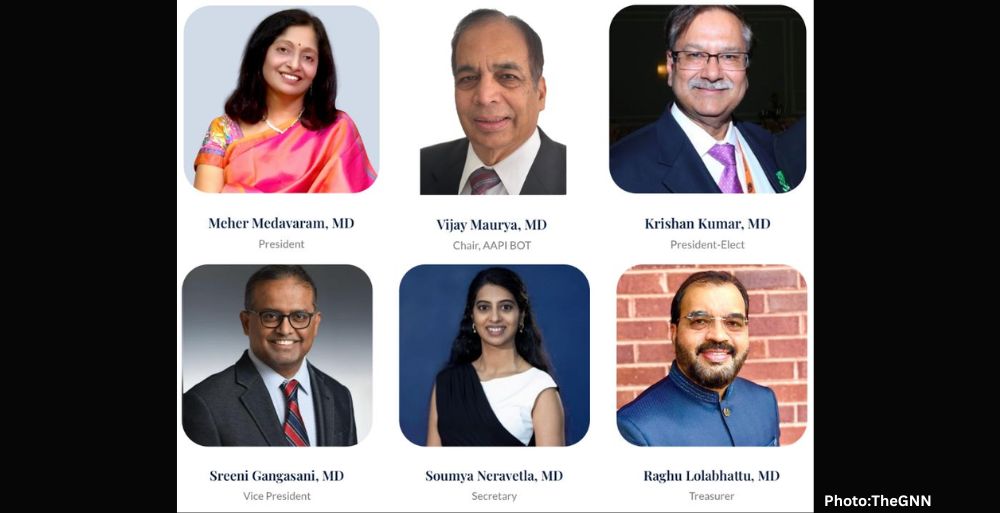
AAPI President Dr. Meher Medavaram calls the proposal “a fundamental misunderstanding of how care is delivered in real clinical settings.” She adds, “A 50% acrosstheboard cut is not a correction — it is a presumption of duplication applied to every physician, in every specialty, without evidence.”
A Policy Built on an Unproven Premise
CMS argues that sameday care creates “efficiencies” that may duplicate work. But AAPI and the AMA point out that the existing RUC valuation process already accounts for overlapping tasks between E/M visits and procedures. The proposed rule, they argue, is not a refinement — it is a blunt instrument.
The message circulated to AAPI members underscores this point: CMS has not produced data showing widespread duplication of work across specialties. Instead, the proposal assumes duplication and applies a universal cut.
Dr. Medavaram states: “This proposal does not create efficiency. It creates exit — physicians reducing services, limiting Medicare panels, or closing practices.”
BelowCost Payment: A Breaking Point for Practices
In its own examples, CMS shows reimbursement falling beneath direct practice expenses. For small and solo practices — many of which are run by AAPI physicians — this is not a theoretical concern. It is a financial breaking point.
The timing compounds the impact. The temporary annual 2.5% Congressional increase expires at the end of 2026, meaning physicians already face declining reimbursement before this new cut is applied. Rising staffing costs, supply shortages, and technology investments only intensify the pressure.
Specialties That Rely on SameDay Care Will Be Hit Hardest
Dermatology, otolaryngology, podiatry, colorectal surgery, and hand surgery are among the specialties where evaluating and treating a problem in one visit is standard. For these physicians, sameday care is not an efficiency — it is the model of care itself.
The proposed rule would force many to split visits unnecessarily. For patients, especially those in rural counties, this means: two trips; two copays; and two delays.
For some, that second visit is the point at which care stops. Dr. Medavaram emphasizes the human impact: “Physicians should not be penalized for doing in one visit what would otherwise take two.”
AAPI Physicians Serve Communities Where Access Is Fragile
Dr. Vijaya Maurya, Chair of AAPI BOT, pointed out that “AAPI members practice in solo offices, academic centers, and rural regions where they may be the only specialist within an hour’s drive. In these communities, sameday care is not a convenience — it is a lifeline.”
“Our members practice in every specialty and nearly every state — in academic centers, in solo offices, and in rural communities where we are often the only specialist within an hour’s drive,” Dr. Krishan Kumar, President-Elect of AAPI, notes. “Fair physician payment is not a physician issue. It is a patient access issue.”
AAPI’s Position: Withdraw the Proposal Entirely
AAPI is urging CMS to withdraw the policy and pursue targeted, evidencebased alternatives. The AMA has issued the same call. Both organizations stress that payment reform must be grounded in data, not assumptions.
Dr. Medavaram summarizes the stakes: “We must protect the physicians who care for our communities so they can continue to be there for the patients who depend on them.”
A Call to Action Before September 14
CMS must review and respond to substantive comments. AAPI is mobilizing physicians nationwide to submit individualized comments before September 14, 2026.
The message to members is clear: “Fifteen minutes of your time is worth more here than any statement we can issue on your behalf.”
Physicians are encouraged to describe real sameday care scenarios, financial impacts, and consequences for patient access. AAPI also urges its members to contact their Representatives and senators to express their concerns regarding CY 2027 Medicare Physician Fee Schedule.
The Road Ahead
The CY 2027 MPFS proposal is more than a policy debate — it is a defining moment for physician advocacy. AAPI stands firmly with its members and with the patients who rely on them. As Dr. Medavaram affirms: “AAPI stands with our physicians. AAPI stands for our patients.”
To share your comments, please visit: Regulations.gov
For more details, please visit: www.aapiusa.org