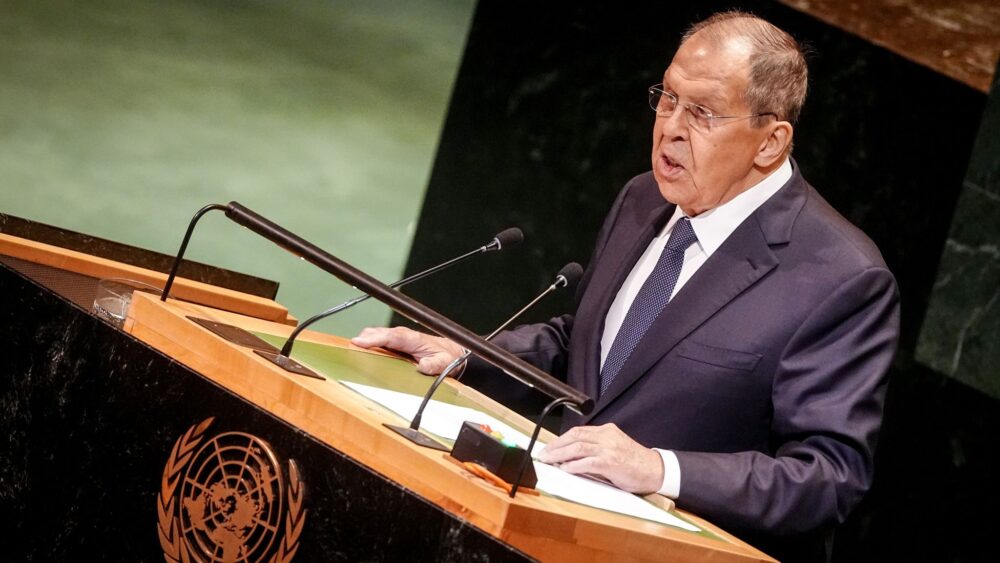
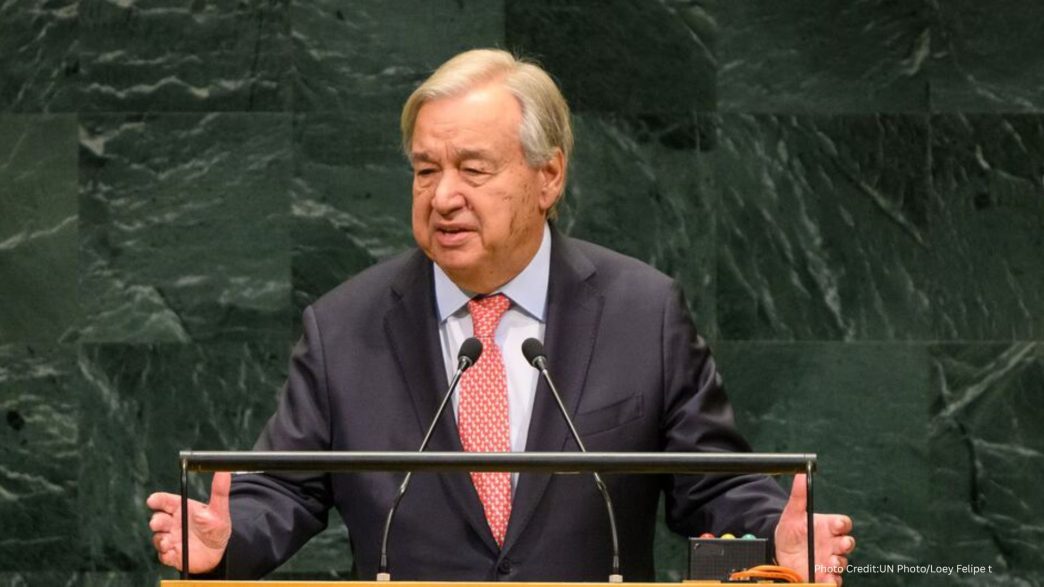
The outgoing Secretary-General of the United Nations, António Guterres, outlined a grim assessment of global challenges during his final address to the General Assembly, emphasizing the limitations of superpowers in ensuring security and addressing crises.
NEW YORK CITY – In his farewell address to the United Nations General Assembly, António Guterres, the outgoing Secretary-General, painted a stark picture of the world’s geopolitical landscape, asserting that superpowers have proven unable to resolve the myriad crises plaguing humanity. Over his decade-long tenure, Guterres has witnessed a dramatic escalation of conflicts, humanitarian crises, and the deepening of global inequalities.
“Wars erupted with devastating consequences and dragged on with despicable cruelty,” Guterres stated, highlighting the toll on civilians and the erosion of human rights that have marked recent conflicts. He expressed concern that the climate crisis has shifted from a distant warning to a daily reality, and that advancements in artificial intelligence are proceeding at an alarming pace, often outpacing regulatory measures.
Geopolitical Tensions and Humanitarian Crises
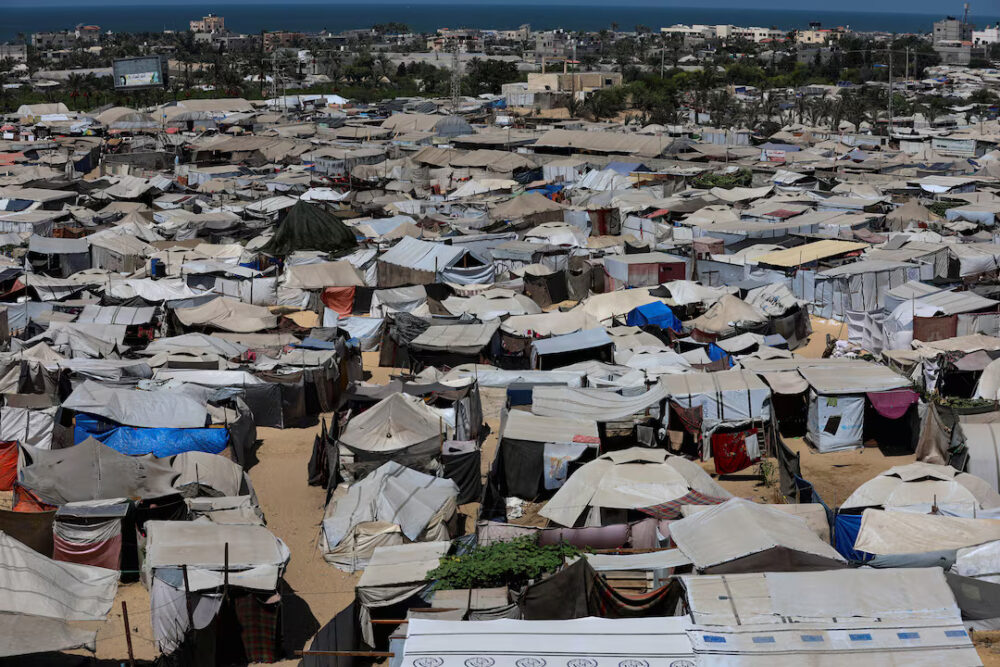
While Guterres refrained from naming specific nations, he referenced the aftermath of the Hamas attacks in October 2023 and the subsequent military actions in Gaza, describing the scale of death and destruction as unprecedented in his experience. He criticized the actions taken against civilians, stating, “We must stop letting civilians pay the price for the cascading conflicts across the Middle East.”
His address also touched upon the conflict in Ukraine, where he condemned Russia’s invasion as a flagrant violation of international law, while also acknowledging the repercussions that have reached beyond Ukraine’s borders, affecting global food and energy supply chains.
Guterres urged world leaders to cease hostilities and allow humanitarian aid to flow freely to those in need. He referenced a ruling from the International Court of Justice mandating that the UN be permitted to fulfill its humanitarian obligations in Gaza, illustrating the urgent need for action.
Calls for Multilateralism and Reform
The Secretary-General emphasized that the world must move away from hegemonic tendencies and prevent what he termed the “great fracture” – a division along rival geopolitical lines that would entrench separate economic, technological, and security systems. He argued that effective governance is increasingly hindered by a power imbalance that favors private corporations over governments, leading to a concentration of influence that undermines democratic processes.
“Humans are increasingly handing over power to machines,” he warned, as he noted the rapid emergence of autonomous weapons and AI systems that could operate beyond human control. Guterres asserted that collective action is essential in this age of unprecedented threats, but warned that existing mechanisms are under strain and need reform to better reflect contemporary power dynamics.
“At the very moment when humanity faces an unprecedented convergence of threats, our mechanisms for collective action are under growing strain,” he noted, stressing the necessity for a more representative UN to tackle these global challenges.
Critique of Energy Companies and Global Inequities
Guterres did not shy away from criticizing energy companies, accusing them of treating the planet as an “open sewer” and profiting from environmental degradation. He disclosed that since the onset of the war in Ukraine, major Western oil companies have accrued nearly half a trillion dollars in profits, in stark contrast to the mere $34 billion allocated for public adaptation finance to developing countries.
He pointed to the looming threat of climate change, exacerbated by economic greed, as a pressing issue that demands immediate attention. “With a supersized El Niño coming towards humanity, everyday people are paying more for energy, food, and insurance,” he said, underlining the interconnection between climate action and economic stability.
UN Leadership and Gender Parity
In a rare note of optimism, Guterres announced that the United Nations has achieved gender parity in its senior leadership for the first time in its history, marking a significant milestone in the organization’s efforts to promote equality. “Equality is not a dream. It is a decision,” he stated, emphasizing that if the UN can effect change, so too can businesses and governments worldwide.
As Guterres steps down, he leaves behind a complex legacy marked by both progress and challenges. His call for a renewed commitment to multilateralism and a more equitable international order resonates as a critical message for world leaders navigating an increasingly fragmented global landscape. The choices made in the coming years will determine whether humanity can overcome the challenges of today or remain ensnared in cycles of conflict and inequality.