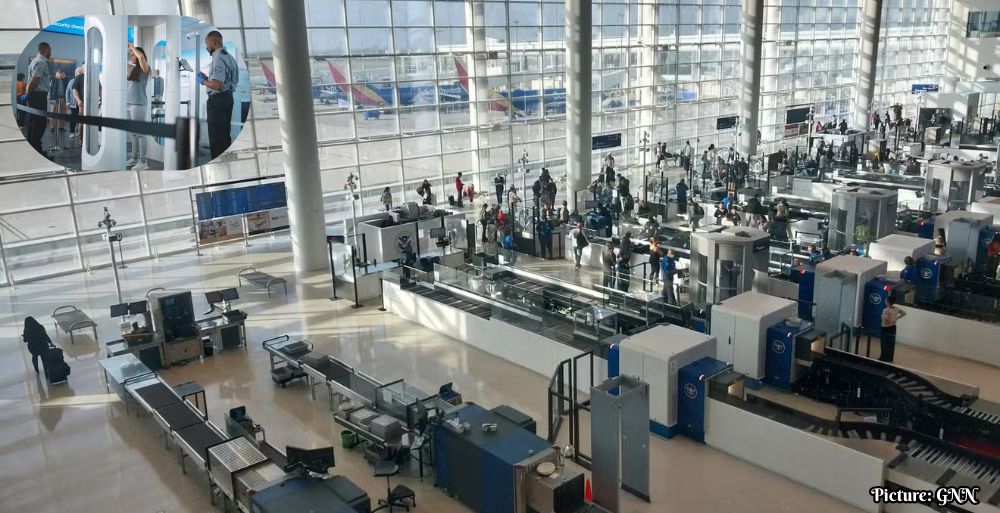
A significant investment by the Transportation Security Administration is shifting the security experience at U.S. airports, introducing advanced 3D computed tomography scanners that change how travelers pack, the measurement of carry-on bags, and identity verification procedures.
The Transportation Security Administration (TSA) is embarking on a transformative journey in airport security, driven by an investment of up to $781.2 million for the deployment of advanced screening technology across major U.S. airports. This initiative, which began rolling out in mid-2026, aims to enhance the security experience for travelers while maintaining high standards of threat detection.
Historically, airport security checkpoints have operated under a familiar routine. Passengers were required to remove laptops, liquids, and other items from their bags, often leading to congestion and delays. The traditional X-ray machines used at these checkpoints produced two-dimensional images, which necessitated the separation of items for thorough inspection.
Transition to 3D CT Scanners
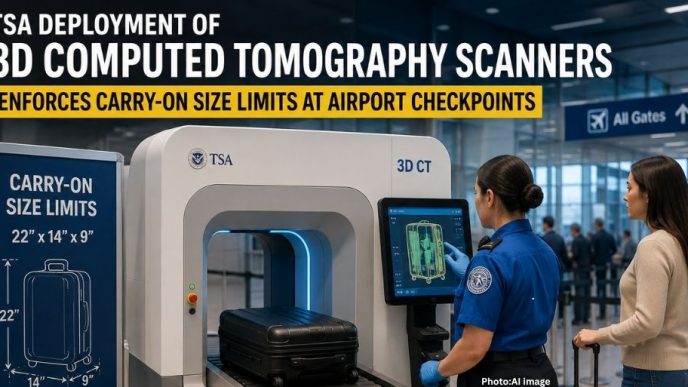
The introduction of 3D computed tomography (CT) scanners marks a significant shift in this process. These machines create detailed three-dimensional images that can be manipulated by security personnel, allowing for a more comprehensive analysis of a bag’s contents without requiring passengers to unpack their belongings. As these scanners are installed in various airports, travelers will notice fewer requirements to remove electronics and liquids from their bags during the screening process.
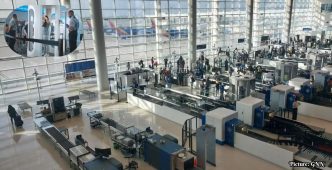
Airports like New York’s LaGuardia (LGA), Los Angeles International (LAX), and Hartsfield-Jackson Atlanta International (ATL) have begun implementing this technology, leading to a more streamlined experience for passengers. The TSA’s objective is to reduce the handling of personal items and enhance the efficiency of security screenings, a goal that has become increasingly important as air travel continues to rebound post-pandemic.
Impact on Packing and Carry-On Regulations
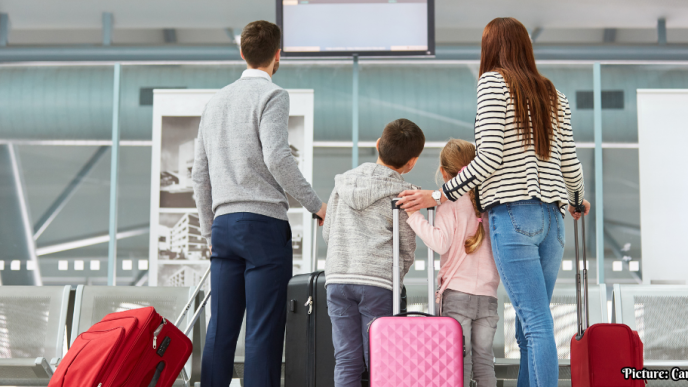
One of the most immediate effects of the new CT scanners is a change in how travelers pack their carry-on bags. Traditionally, passengers would organize their bags to facilitate quick access to items that needed to be removed at security. However, with the new scanning technology, this practice may become obsolete.
As more passengers are allowed to keep their laptops, tablets, and approved liquids inside their bags, the pressure to pack with security in mind is significantly diminished. This shift not only enhances convenience but also reduces the bottlenecks that frequently occur around the conveyor belt at busy times. However, the rollout of these scanners is not uniform across all airports, and travelers may still encounter traditional screening lanes that require adherence to older procedures.
Another significant change is the enforcement of carry-on size regulations. The CT scanners have slightly smaller entry tunnels compared to older X-ray machines, meaning that bags exceeding the official dimensions set by airlines may not fit through the scanner. This change shifts the responsibility of size enforcement from airline staff at the boarding gate to security personnel at the checkpoint, potentially resulting in stricter adherence to baggage size limits.
Challenges for Film Photographers
While many travelers will benefit from the new technology, certain groups will face challenges. Specifically, photographers using unprocessed film need to be aware that CT scanners can damage or destroy film during screening. Unlike traditional X-ray machines, which could tolerate some exposure, CT scanners produce more powerful imaging that can ruin film quality. As a result, photographers are advised to remove any film from their bags and request a manual inspection to avoid damage.
Facial Recognition Technology at Checkpoints
In addition to changes in baggage screening, the TSA is increasingly adopting facial recognition technology, known as Credential Authentication Technology 2 (CAT-2). This system, which is now present at over 350 airports, automates the identification process by comparing a passenger’s face to their ID document. This advancement is designed to expedite the identity verification process, making it faster and less reliant on manual inspections.
Despite its growing presence, participation in facial recognition checks remains voluntary for domestic air travelers. Many passengers may not realize that they can opt out of this process and request a traditional manual identity check instead. This option ensures that travelers maintain control over their identification verification while benefiting from the more streamlined processes the TSA is implementing.
Conclusion
The TSA’s investment in advanced screening technology represents a significant shift in the airport security landscape. By introducing 3D CT scanners and facial recognition systems, the agency aims to enhance the efficiency and security of the travel experience. While many of these changes are welcomed by travelers, they also come with new considerations regarding packing practices and identity verification. As this technology continues to be rolled out, the TSA’s commitment to balancing security with passenger convenience will be closely monitored by both travelers and industry stakeholders.