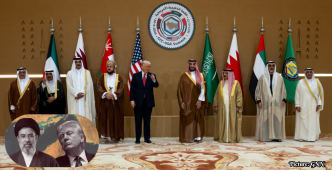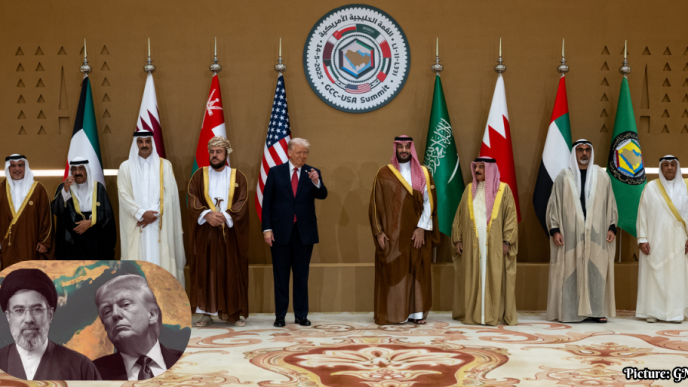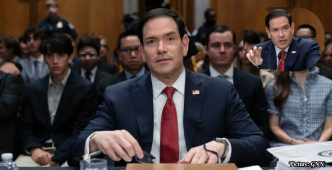
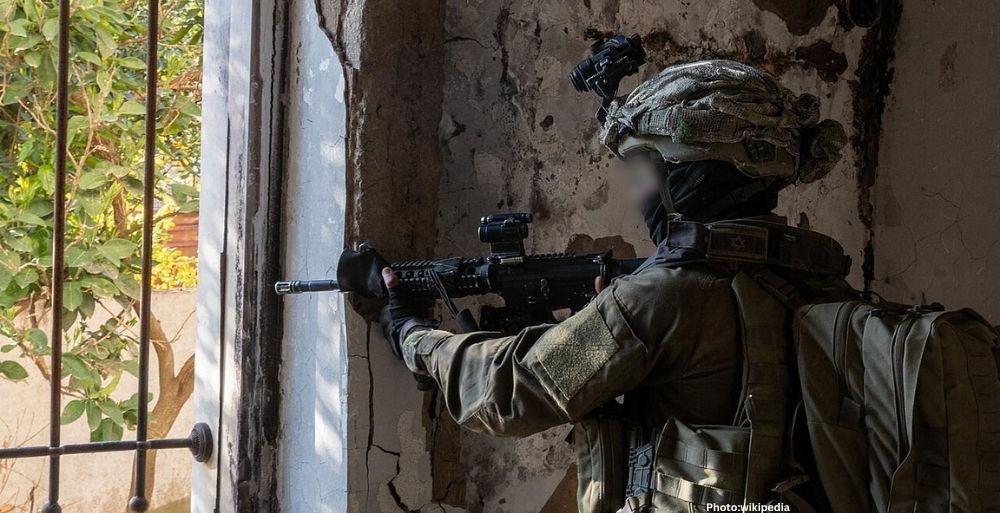
Military exchanges between the Israeli military and the Iran-backed militant group Hezbollah continued overnight in southern Lebanon, even as diplomatic delegations from both nations prepare for a fourth round of high-level negotiations in Washington, D.C. In a significant shift, Lebanese authorities confirmed that Hezbollah has agreed to a U.S.-brokered proposal for a mutual cessation of attacks, under which Israel would halt its bombardment of Beirut in exchange for a complete pause in Hezbollah rocket and drone strikes. The breakthrough follows an extraordinarily tense, expletive-laden phone call between U.S. President Donald Trump and Israeli Prime Minister Benjamin Netanyahu, with Trump demanding that Israel scale back its Lebanon offensive to preserve delicate, multi-front peace negotiations with Iran. Despite the diplomatic friction, President Trump signaled optimism that a comprehensive deal to permanently reopen the strategically vital Strait of Hormuz and secure a long-term ceasefire with Tehran remains achievable within the week.
WASHINGTON, D.C. — A high-stakes diplomatic intervention by the White House has narrowly averted a major military escalation in Beirut, reshaping the geopolitical landscape as representatives from Israel, Lebanon, and Iran converge on Washington for parallel peace talks. Overnight, the Israeli Defense Forces (IDF) and Hezbollah militants engaged in fierce artillery and rocket duels across southern Lebanon, underscoring the extreme volatility on the ground. However, the diplomatic dynamic shifted dramatically late Monday following a contentious telephone conversation between U.S. President Donald Trump and Israeli Prime Minister Benjamin Netanyahu, during which Trump forcefully demanded that Israel halt an imminent, large-scale ground and air assault on the Lebanese capital.
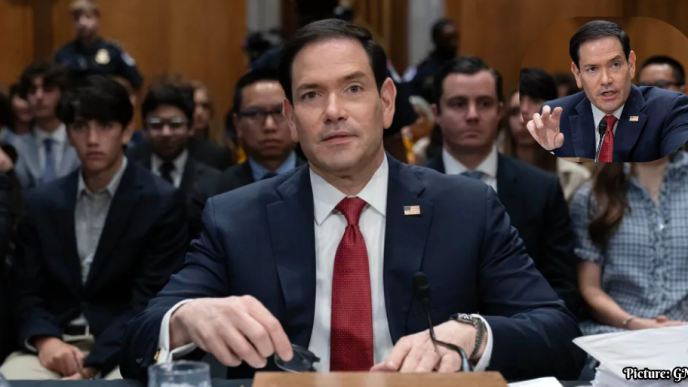
Following the call, the U.S. Embassy in Beirut, in coordination with the office of Lebanese President Joseph Aoun, announced that Hezbollah had formally accepted a U.S. diplomatic framework outlining a “mutual cessation of attacks.” Under the specific terms of the sequence negotiated by U.S. Secretary of State Marco Rubio, Israeli airstrikes on Beirut’s southern suburbs—historically known as Dahiyeh—will cease entirely. In return, Hezbollah has committed to halting all rocket, missile, and drone salvos targeting northern Israeli cities and military installations. The immediate arrangement is intended to serve as a stabilization mechanism to expand the existing, fragile regional ceasefire to encompass all sovereign Lebanese territory.
Heated Exchange in the Oval Office
The diplomatic breakthrough was preceded by severe bilateral friction between Washington and Tel Aviv. According to senior administration officials speaking on the condition of anonymity, the phone call between President Trump and Prime Minister Netanyahu escalated into an unusually raw and confrontational argument. Trump reportedly rebuked the Israeli leader, accusing him of pursuing a localized military victory at the absolute expense of broader American strategic interests in the Middle East.
Sources familiar with the exchange state that Trump expressed intense frustration that the IDF’s expanding operations in Lebanon were actively sabotaging back-channel negotiations with Tehran. The White House has prioritized a comprehensive regional settlement to permanently resolve the multi-month war with Iran, insulate global energy markets from further shocks, and protect domestic economic stability ahead of the upcoming U.S. midterm elections.
During the heated discussion, Trump warned Netanyahu that uncoordinated operations in Beirut would isolate Israel globally and sever critical lines of American diplomatic cover. “There will be no troops going to Beirut,” Trump later declared in a public statement broadcast on his Truth Social network, confirming that military units initially moving toward the Lebanese capital had been turned back. “Likewise, through highly placed representatives, I had a very good call with Hezbollah, and they agreed that all shooting will stop.”
Netanyahu subsequently acknowledged the conversation but maintained a defiant public posture, reflecting the domestic political pressures bearing down on his coalition government. Speaking to security officials in Tel Aviv, Netanyahu warned that the IDF’s restraint remained strictly conditional. “If Hezbollah does not cease attacking our cities and citizens, Israel will attack terror targets in Beirut,” Netanyahu stated, confirming that regardless of the diplomatic pause in the capital, “the IDF will continue to operate as planned in southern Lebanon.”
Deep Context: The Race to Reopen Hormuz
The primary driver behind the White House’s aggressive diplomatic posture is the catastrophic economic fallout from the closure of the Strait of Hormuz. The strategic waterway, which accommodates the transit of roughly 20 percent of the world’s petroleum liquids, was fully blocked by Iran’s Islamic Revolutionary Guard Corps (IRGC) during the initial phases of the conflict. The maritime blockade triggered an immediate 5 percent spike in global crude oil prices, threatening to induce severe inflationary pressures across Western economies.
While the United States and Iran had previously agreed to a tentative, Pakistan-mediated ceasefire on April 8—which President Trump extended indefinitely on April 21—the truce has been repeatedly compromised by secondary theater operations. Just 24 hours prior to the latest breakthrough, Iranian state-affiliated media outlet Tasnim reported that Tehran had entirely suspended dialogue with American intermediaries. The Iranian National Security Council cited Israel’s deep ground incursion south of the Litani River as a direct violation of the spirit of the peace process, threatening to permanently shut down maritime transit and activate aligned proxy fronts in the Bab al-Mandeb Strait.
The temporary suspension sent shockwaves through diplomatic channels, prompting the rapid sequence of late-night calls from the White House to Tel Aviv and Beirut. Despite the intense friction, Trump expressed confidence during an interview with ABC News that a formalized, long-term accord is within reach. “I believe a deal to reopen the Strait of Hormuz and firmly extend the ceasefire with Iran is absolutely reachable over the next week,” Trump said, noting that Iran’s final draft proposal is currently undergoing rigorous review by American national security experts.
The Military Landscape in Southern Lebanon
The diplomatic maneuvering in Washington stands in stark contrast to the brutal reality on the ground in southern Lebanon, where the military geography has shifted significantly over the past week. Seeking to maximize leverage prior to the final implementation of a comprehensive ceasefire, the Israeli military intensified its ground maneuvers within the established buffer zone south of the Litani River.
In a move carrying immense strategic and symbolic weight, Israeli armored units successfully captured Beaufort Castle—a historic mountaintop fortress overlooking the upper Jordan Valley that Israel had previously evacuated during its military withdrawal in 2000. Following the capture of the fortress, IDF ground forces pushed forward toward the Zaharani River, marking the deepest military incursion into Lebanese territory in 25 years.
According to reports verified by the United Nations, the intense fighting, heavy artillery barrages, and sustained airstrikes have claimed the lives of more than 3,000 people and displaced an estimated 1 million residents across Lebanon since the outbreak of hostilities in February. Hezbollah lawmakers, including prominent representative Hassan Fadlallah, have maintained that while the group supports a mutual cessation of attacks to safeguard civilian centers like Beirut, a permanent regional peace remains entirely contingent upon the absolute withdrawal of all Israeli troops from sovereign Lebanese soil.
The Washington Negotiations: Parallel Tracks
As the mutual cessation of attacks takes effect in Beirut, diplomatic focus shifts entirely to the fourth round of formal negotiations scheduled to take place in Washington over Wednesday and Thursday. The talks are structured along two highly complex, parallel diplomatic tracks:
- The Israel-Lebanon Track: Delegations from Jerusalem and Beirut—two nations with no formal diplomatic relations—will hold direct security and border demarcation talks facilitated by U.S. envoys at the Pentagon. The immediate goal is to formalize a permanent security architecture that replaces Hezbollah’s presence south of the Litani River with official Lebanese Armed Forces (LAF) personnel, backed by international monitors.
- The U.S.-Iran Track: Mediated continuously by Pakistani diplomats, American and Iranian officials are working to reconcile the U.S. 15-point stabilization plan with Tehran’s alternative 10-point peace proposal. The core points of contention remain exceptionally rigid: the United States is demanding an absolute halt to all uranium enrichment, strict limits on Iran’s ballistic missile production, and an ironclad guarantee of maritime freedom through the Strait of Hormuz. In exchange, the White House has signaled a willingness to lift sweeping primary and secondary economic sanctions and unfreeze tens of billions of dollars in blocked Iranian assets currently held in foreign banking repositories.
The coming days will test the resilience of this U.S.-engineered framework. While the forced pause on strikes in Beirut has successfully restored a fragile diplomatic runway, the presence of deeply entrenched armies, unresolved regional grievances, and the deep distrust between Prime Minister Netanyahu and the White House indicate that any potential comprehensive Middle Eastern settlement remains balanced on an exceptionally narrow edge.