The Indian diaspora’s political engagement and responses to U.S. immigration and trade policies were key topics at the Stanford India Conference 2026, where experts discussed the implications of silence among Indian-Americans amid rising tensions.
The Stanford India Conference 2026, held on May 10, explored the evolving dynamics of U.S.-India relations, shifting global alliances, and the political role of the Indian diaspora in the context of recent U.S. immigration and trade policies. Titled “India-U.S. at the Crossroads: Building Bridges, Forging Futures,” the conference hosted a variety of participants including students, policymakers, and political leaders.
Geopolitical Landscape
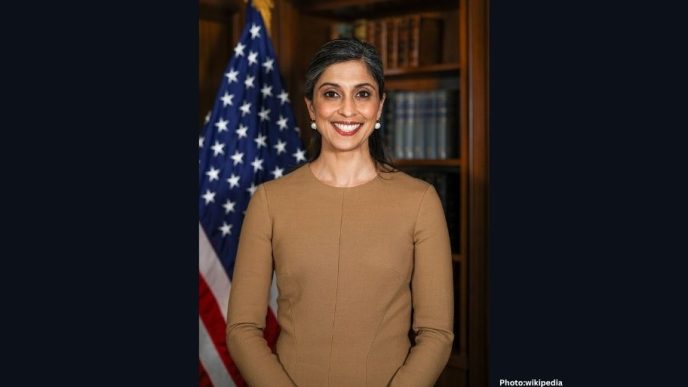
A panel discussion entitled “Strategic Convergence in a Fragmenting World: India-U.S. Geopolitics in the 21st Century” featured prominent figures such as Congress party leader Dr. Shashi Tharoor, Hoover Institution Senior Fellow Dr. Sumit Ganguly, and Motwani Jadeja Foundation founder Asha Jadeja. Jadeja, who opened the discussion, highlighted the importance of innovation ecosystems in regions like Silicon Valley, Bangalore, and Tel Aviv.
“I find great interest in three innovation hubs where there is profound entrepreneurial activity: Silicon Valley, Bangalore, and Tel Aviv,” Jadeja stated, emphasizing the potential for collaboration among these regions to reinforce democratic institutions and entrepreneurship. She argued that in the current geopolitical climate, particularly with growing tensions between the U.S. and China and between China and India, it is crucial for democracies to strengthen their alliances.
Defending Global Norms
Tharoor countered by defending the principles of an international rules-based order, warning against a regression to power politics. “If you end up in a situation where the U.S. does move away from international rules and norms, as it’s clearly doing right now, what are you left with?” he asked, cautioning that such a shift could embolden larger powers to dominate smaller nations.
Tharoor pointed to muted international reactions to military actions by the U.S. and Israel as evidence of a growing reluctance among countries to challenge powerful nations. He expressed concern that the weakening of international norms could lead to a situation where “the law of the jungle” prevails.
Economics and Demographics
Dr. Ganguly provided a more optimistic outlook on the U.S.-India relationship, noting that it is increasingly built upon durable economic and demographic ties rather than transient strategic interests. He remarked, “The U.S.-India relationship will endure long after this administration has remitted office,” pointing out that India is now the U.S.’s 10th largest trading partner, with the U.S. being India’s primary trading partner.
Ganguly also emphasized the significant role of the Indian diaspora in strengthening bilateral relations over the decades. He cited historical instances, such as the Indian diaspora’s involvement in rebuilding ties after India’s 1998 nuclear tests and supporting the 2008 U.S.-India nuclear agreement.
The Silence of the Diaspora
The panel discussion took a critical turn when Tharoor raised concerns about the Indian-American community’s perceived silence regarding the Trump administration’s policies, including tariffs and H-1B visa restrictions. “I was a bit concerned myself at the silence of the Indian diaspora when Mr. Trump suddenly went on to his 50% tariffs and made a lot of rude comments about India,” Tharoor remarked.
He recounted a conversation with a congressional representative who indicated receiving no calls from Indian-American constituents regarding these issues, despite representing a significant number of them. Tharoor suggested that a sense of fear and insecurity among Indian-Americans may be contributing to this lack of political activism.
Jadeja concurred that anxiety within the diaspora might be impacting political engagement, albeit framing it in terms of economic and social factors. “It’s an embarrassment that the diaspora stayed quiet, except for me,” she asserted, adding that many Indian-Americans fear backlash due to their economic success and their roles in sectors dependent on H-1B visas.
Diversity and Political Engagement
Ganguly acknowledged the “deafening silence” from certain segments of the Indian diaspora but noted the community’s increasing political diversity. “I would not argue that the Indian community is a monolith,” he stated, suggesting that political sentiments within the diaspora might be more varied than in the past.
Tharoor challenged the notion that diversity alone accounts for the lack of coordinated advocacy, comparing the Indian diaspora’s political engagement to that of Jewish-Americans concerning Israel. “Not every Jew votes for the same party, but when anything involving Israel comes up, there is an extraordinary level of unity rallying around Israeli positions,” he explained.
He also pointed out a growing generational divide among Indian-Americans regarding immigration policy, particularly in relation to H-1B visas. “I had one person saying to me, ‘My son is an American citizen applying for the same job as some Indian in H-1B might take away. Why would I support H-1B?’” Tharoor said, highlighting the complexity of immigrant identity and political engagement in the face of rising anti-immigrant sentiment.
In concluding remarks, Tharoor suggested that fears of backlash against immigrants may be reshaping how Indian-Americans approach political activism, stating that some may prioritize self-preservation over collective advocacy.