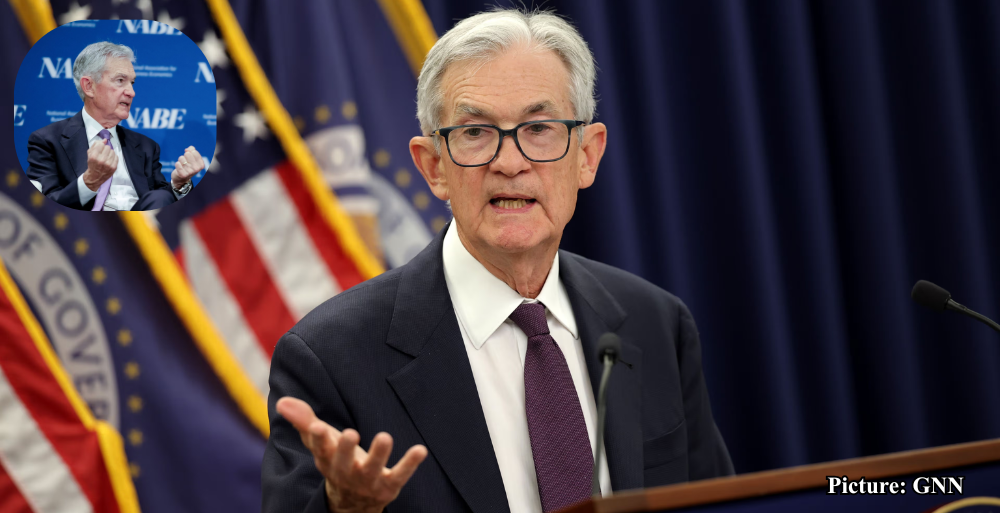
In his last Federal Open Market Committee meeting, Jerome Powell indicated a significant shift towards a more neutral monetary policy stance, suggesting potential interest rate hikes amidst rising inflation concerns.
This week marks a historic transition for the Federal Reserve as Jerome Powell concludes his term as Chair on May 15, 2023. His departure will coincide with the anticipated appointment of Kevin Warsh as the 17th Chair, a change that could bring a new perspective to the central bank’s approach to monetary policy and its implications for Wall Street.
Powell’s final Federal Open Market Committee (FOMC) meeting held on April 29, 2023, offered critical insights into the future direction of U.S. monetary policy. While the committee decided to maintain the federal funds target rate, the meeting was notable for the dissenting votes, with four members opposing the consensus—the highest number of dissents since 1992. This divergence among members underscores a growing rift regarding the future of interest rates and the broader economic landscape.
Context of the FOMC Meeting
The FOMC is responsible for guiding the nation’s monetary policy, primarily focused on maximizing employment and stabilizing prices. Over recent years, the committee has faced significant challenges, particularly from external factors such as trade tariffs and geopolitical tensions, which have contributed to rising inflation rates. Notably, between September 2024 and December 2025, the FOMC had lowered the federal funds target rate six times in response to these pressures. The current economic environment, however, signals a need for reassessment as inflationary concerns mount.
During the April meeting, Powell addressed questions from reporters, including a query from Yahoo! Finance journalist Jennifer Schonberger regarding the committee’s bias towards future rate cuts. His response indicated a significant shift in the committee’s stance: “So I think that, you know, the center is moving toward a more neutral place. And that’s sort of what markets are saying, too.” This statement, though succinct, has resonated throughout financial markets, suggesting a departure from previous expectations of imminent rate cuts and leaving the door open for potential future rate hikes.
Market Implications of Powell’s Remarks
Powell’s characterization of the Fed’s position as moving toward a “more neutral place” carries substantial implications for investors and financial markets. This statement implies that the FOMC may be open to the possibility of future interest rate increases, particularly in light of rising inflationary pressures. The shift from a previously dovish stance—focused on stimulating economic growth through lower interest rates—towards a more neutral or potentially hawkish bias reflects changing economic realities.
The ramifications of this shift are profound for Wall Street, especially for major stock indexes such as the Dow Jones Industrial Average, S&P 500, and Nasdaq Composite, which have been closely monitoring Federal Reserve policy for cues that could influence market performance. Analysts suggest that Powell’s remarks may lead to increased volatility in the stock market as investors recalibrate their expectations regarding interest rates and inflation.
Dissenting Voices Within the FOMC
The dissenting votes during the April FOMC meeting highlight growing concerns among committee members regarding the appropriate response to evolving economic conditions. One of the dissenters, Stephen Miran, has been vocal in advocating for a reduction in the federal funds target rate, reflecting a broader debate within the FOMC about the balance between supporting economic growth and controlling inflation. This division illustrates the complexity of the current economic environment, where members are grappling with competing priorities.
While Powell’s comments suggest a consensus is forming around a more neutral stance, the presence of dissent indicates that not all members are aligned on the best path forward. This divergence may lead to further discussions within the committee as members assess the impact of inflation and other economic signals on their policy decisions. The dynamics of the FOMC are crucial as they navigate these challenges, with each member’s perspective contributing to the overall strategy moving forward.
The Legacy of Jerome Powell and Future Challenges
As Powell prepares to step down, his legacy will be shaped by how the Federal Reserve navigates the complex economic landscape ahead. Incoming chair Kevin Warsh will need to respond to the challenges posed by rising prices and the potential for economic slowdown. The shifts in policy and the underlying tensions within the FOMC will be pivotal in determining the Fed’s effectiveness in managing inflation while supporting economic growth.
Market participants will closely monitor future FOMC meetings and communications for indications of how the committee intends to balance these competing priorities. The transition to a more neutral policy stance could signal a broader reevaluation of the Fed’s approach to monetary policy, as it seeks to adapt to changing economic conditions and investor expectations. The central bank’s ability to navigate these challenges will be critical not only for the U.S. economy but also for global financial markets, which are deeply interconnected. Investors will be looking for clarity in the Fed’s communication as they adjust their strategies in response to evolving economic indicators.