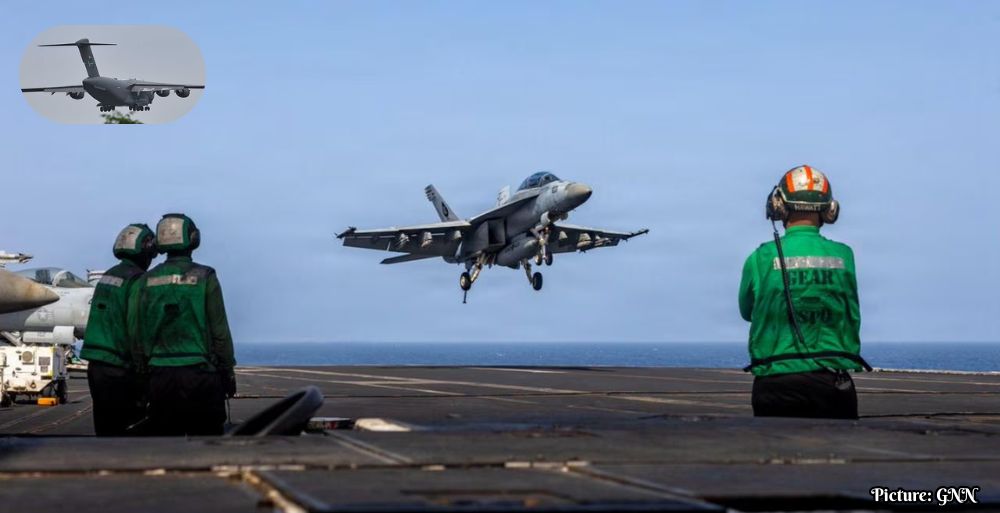
The U.S. military launched airstrikes against Iranian military sites in response to accusations from President Trump that Tehran violated a ceasefire, escalating tensions in the crucial Strait of Hormuz amid ongoing diplomatic efforts for a permanent peace deal.
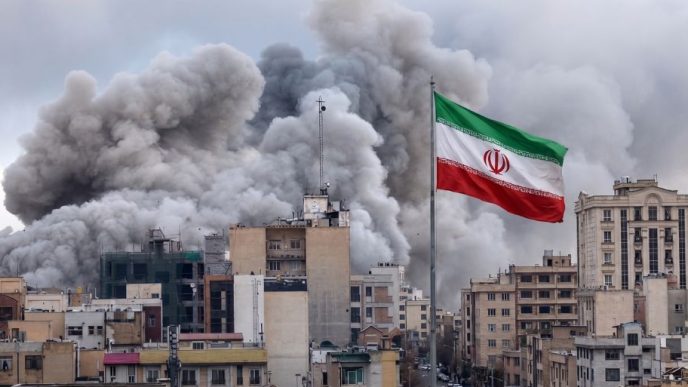
The United States military targeted Iranian missile and drone facilities on Friday, escalating the already tense situation in the Strait of Hormuz following assertions from President Donald Trump that Iran had breached a ceasefire agreement. U.S. Central Command confirmed that the airstrikes focused on missile and drone storage locations as well as coastal radar installations.
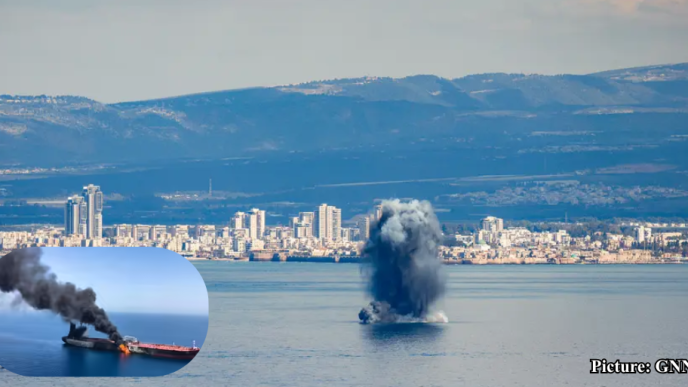
This military response was triggered by an incident on Thursday, where an Iranian-launched one-way attack drone struck the Singapore-flagged cargo ship Ever Lovely while it was navigating through the Strait of Hormuz, a critical maritime route responsible for approximately 20% of the world’s oil supply. Fortunately, the vessel sustained only minimal damage and was able to continue its journey.
Details of the Incident and Military Response
In a statement published on the social media platform X, U.S. Central Command characterized the Iranian actions as “unwarranted aggression against commercial shipping,” asserting that such actions represented a blatant violation of the ceasefire. The command emphasized that Iran’s aggressive behavior undermined freedom of navigation in this vital international trade corridor, which is essential for global commerce.
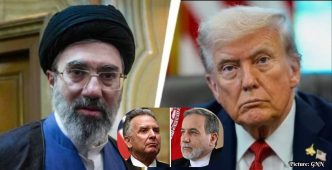
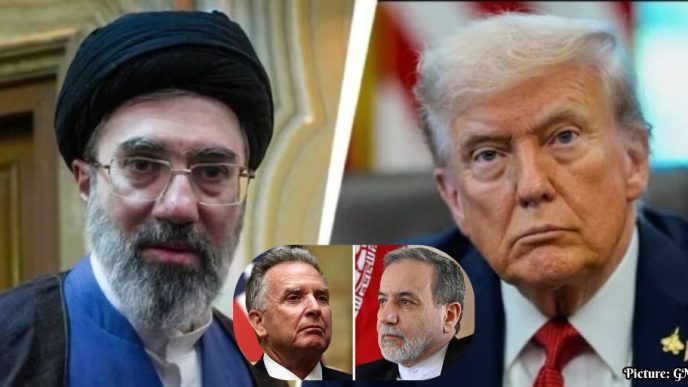
The military engagement comes in the wake of a memorandum of understanding signed over a week ago between President Trump and Iranian President Masoud Pezeshkian, aimed at establishing a permanent peace agreement to put an end to ongoing hostilities. Vice President JD Vance had recently traveled to Switzerland for discussions with Iranian officials regarding this potential peace arrangement.
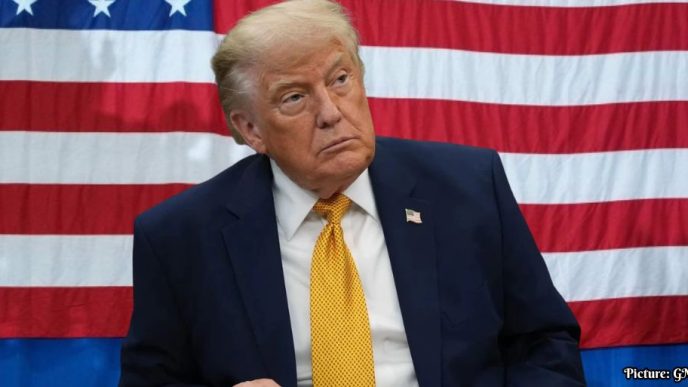
President Trump noted that U.S. forces had managed to intercept three out of four Iranian drones targeting shipping in the Strait of Hormuz, with the fourth drone being the one that struck the Ever Lovely. In a post on Truth Social, Trump condemned Iran’s actions as a “foolish violation of our Ceasefire Agreement,” underscoring the seriousness of the situation and the potential repercussions for Iranian aggression.
Presidential Statements and International Reactions
Prior to the announcement of the retaliatory airstrikes, President Trump was asked by reporters during a press conference about possible consequences for Iran following the drone attack. His terse response, “You’ll find out,” indicated a resolute stance on responding to Iranian provocations, suggesting that further military action could be forthcoming if necessary.
International reactions to the airstrikes and the ongoing conflict have been mixed. Analysts have expressed concern that this military action may jeopardize the recent diplomatic momentum aimed at reducing hostilities between the U.S. and Iran. The strikes come amid a backdrop of heightened regional tensions, with both nations historically experiencing fluctuating relations characterized by cycles of confrontation and diplomatic negotiations.
Historical Context and Broader Implications
The Strait of Hormuz has long been a focal point of geopolitical tension, with its strategic significance underscored by the high volume of oil that passes through its waters. The recent U.S. strikes not only pose risks to shipping security but also complicate ongoing diplomatic initiatives aimed at stabilizing relations between the two nations. The memorandum of understanding, which had been perceived as a potential breakthrough in U.S.-Iran relations, now faces significant uncertainty in light of this military escalation.
The history of U.S.-Iran relations has been fraught with conflict and negotiation, particularly since the Iranian Revolution of 1979. This adversarial relationship has seen numerous flashpoints, including military engagements, economic sanctions, and diplomatic standoffs, all of which have shaped the geopolitical landscape of the Middle East. The recent attempts to negotiate a peace deal were viewed as a critical step towards ameliorating tensions, yet the military response raises questions about the reliability and longevity of such agreements.
As the situation continues to develop, analysts are closely monitoring the implications of the U.S. military response for regional security and international shipping routes. The potential for further escalation remains a concern, especially as both nations navigate the complex dynamics of their historical animosities alongside contemporary geopolitical challenges.
In conclusion, the U.S. airstrikes against Iran represent a pivotal moment in the ongoing tensions between the two nations. As diplomatic efforts strive to reconcile differences, the realities of military confrontations continue to loom, leaving the international community to watch closely for developments. The strategic importance of the Strait of Hormuz in global trade and energy supply underscores the weight of these events, highlighting the potential for far-reaching consequences in the region and beyond.