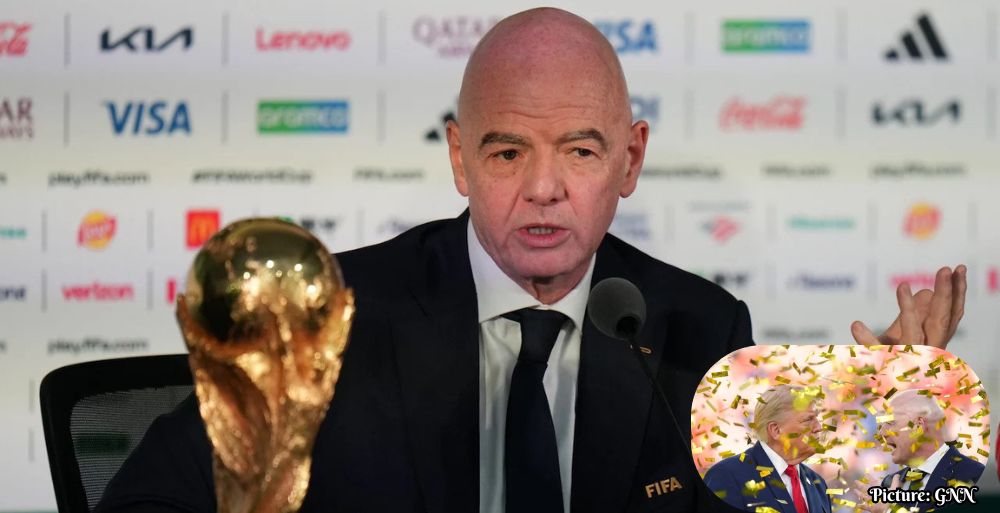
FIFA President Gianni Infantino’s initiative to launch a 211-nation Under-15 World Cup, inspired by the structure of baseball’s Little League and featuring opening ceremonies at Walt Disney World, has been shelved as FIFA prioritizes preparations for the upcoming 2026 World Cup.
FIFA President Gianni Infantino had embarked on an ambitious plan to establish a global Under-15 World Cup, involving all 211 FIFA member nations. Modeled after baseball’s Little League, the proposal included grand opening ceremonies at Walt Disney World and was designed to promote international youth competition. However, the initiative has reportedly been abandoned as FIFA shifts its focus toward the 2026 World Cup, which will be co-hosted by the United States, Canada, and Mexico.
Details of the Proposed Tournament
Over the past year, Infantino had engaged in discussions with private investors to bring this youth tournament to fruition. The detailed proposal was led by Juan Carlos Rodriguez, the former commissioner of the Mexican Football Federation, who sought to commercialize the event with support from private U.S. capital. Notably, Eldridge Industries, chaired by Todd Boehly, co-owner of Chelsea FC, played a significant role in backing the venture. This collaboration underscores the increasing intersection of sports and business, as financial interests continue to shape the landscape of international football.
The proposed tournament aimed to capitalize on the commercial appeal of hosting a large-scale youth event in a family-friendly environment like Disney World. Initial discussions included potential partnerships with ESPN to identify suitable venues, with the ESPN Wide World of Sports Complex in Orlando, Florida, being a prime candidate. This vision extended beyond merely establishing a tournament; it envisioned creating an immersive experience that would attract significant media attention and sponsorship dollars.
Geopolitical Considerations
A particularly contentious aspect of the proposed tournament was the inclusion of an opening match between Israel and Palestine, intended as a symbolic gesture of unity through sport. However, this idea quickly became embroiled in the complexities of the geopolitical landscape. Following a tense FIFA Congress held in Vancouver, where representatives from both nations were unable to engage in a handshake, this concept was ultimately removed from the tournament’s framework. This decision reflects the ongoing conflict and illustrates the delicate nature of international relations, raising questions about the efficacy of sports as a tool for fostering dialogue and reconciliation.
Implications of the Decision
The shelving of the Under-15 World Cup proposal comes at a time of increased scrutiny regarding FIFA’s management of international fixtures and the commercialization of youth sports. Critics have expressed concern about the strain placed on young athletes due to fixture congestion and the prioritization of profit over player welfare. By putting this ambitious project on hold, FIFA may have sidestepped further criticism as it prepares for the upcoming World Cup, which is expected to be one of the largest in history. The 2026 event is projected to attract unprecedented global attention, placing additional pressure on FIFA to effectively manage logistics and promote inclusivity.
As FIFA continues to navigate the complexities of global football, Infantino’s broader vision remains focused on expanding competitions and securing lucrative broadcasting rights, particularly in the lucrative North American market. However, the organization faces persistent challenges in finding a balance between revenue growth and the responsibilities it holds toward young players. The abandonment of the Under-15 World Cup proposal may provide FIFA with an opportunity to reassess its approach to youth competitions and consider how best to support the development of young athletes in a sustainable and responsible manner.
Future of Youth Competitions
The Under-15 World Cup concept represented an innovative attempt to promote youth football on a global scale, emphasizing the importance of fostering international competition among younger players. However, the intersection of geopolitical realities and the commercial landscape of international sports ultimately led to its shelving. As FIFA moves forward, the organization must remain vigilant in ensuring that youth competitions are not only viable but also respectful of the broader contexts in which they operate.
Furthermore, the evolving nature of international football necessitates that FIFA continues to adapt its strategies, prioritizing the welfare and development of young players. This includes finding ways to ensure that the spirit of the sport remains intact amid the pressures of commercialization and international politics. The commitment to nurturing young talent is crucial, as these players represent the future of the sport.
In conclusion, while the proposed Under-15 World Cup showcased a forward-thinking approach to youth football, the challenges it faced illustrate the complexities inherent in international sports. As FIFA prepares for the 2026 World Cup and beyond, it must strive to balance commercial interests with the duty to cultivate the next generation of athletes, ensuring that the game remains inclusive and accessible for all.