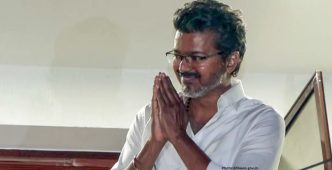
Tamilaga Vettri Kazhagam (TVK) chief Vijay is positioned to lead the government in Tamil Nadu after securing the backing of 120 MLAs, following the support of Viduthalai Chiruthaigal Katchi (VCK) and the Indian Union Muslim League (IUML).
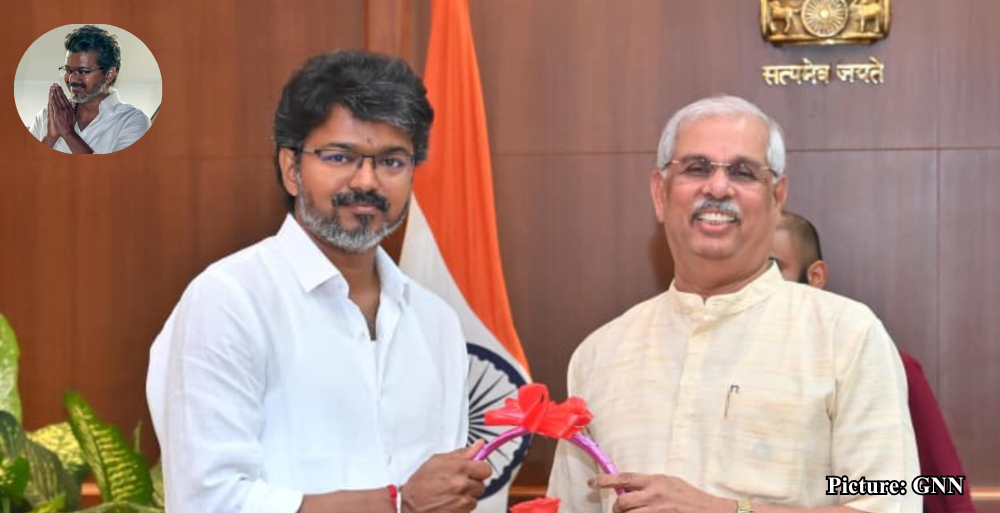
Tamil Nadu’s political landscape is undergoing a significant transformation as Tamilaga Vettri Kazhagam (TVK) chief Vijay has formally approached Governor Arlekar to stake his claim to form the government. This marks Vijay’s fourth meeting with the Governor since the VCK publicly announced its support for the TVK, enabling Vijay’s party to exceed the crucial majority threshold in the state assembly.
As it stands, Vijay’s coalition now possesses a total of 120 MLAs, effectively solidifying their position within the Tamil Nadu Assembly. A detailed breakdown of the supporting factions is as follows:
- TVK: 107 MLAs (noting a reduction of one, as Vijay contested two seats)
- Congress: 5 MLAs
- Communist Party of India (CPI): 2 MLAs
- Communist Party of India (Marxist) [CPM]: 2 MLAs
- VCK: 2 MLAs
- Indian Union Muslim League (IUML): 2 MLAs
The support from the VCK and IUML has been pivotal for Vijay, indicating a strategic coalition-building effort in a state characterized by complex political alliances. The implications of this new government formation could be significant, potentially impacting policy direction and governance in Tamil Nadu.
Political Reactions
Former Chief Minister M.K. Stalin, leader of the Dravida Munnetra Kazhagam (DMK), expressed his readiness to support the formation of the new government while emphasizing the DMK’s role as a constructive opposition. Stalin stated, “We will not obstruct the formation of a new government, and the DMK would function as a constructive opposition party.” This statement reflects a level of political pragmatism as the DMK navigates the new political landscape while aiming to retain its influence.
However, the relationship between the DMK and Congress has reportedly deteriorated following Congress’s decision to end its decades-long alliance with the DMK. This significant rupture has contributed to rising tensions within the broader INDIA bloc, a coalition that encompasses several opposition parties. In a post shared on social media platform X, Stalin criticized Congress for its abrupt departure from their alliance, alleging that Congress MLAs failed to acknowledge their past collaboration with the DMK. He remarked, “The Congress MLAs who contested and won on behalf of the alliance did not come to Anna Arivalayam to express their thanks.”
DMK spokesperson Saravanan Anadurai further articulated the party’s sentiments, accusing Congress of betraying the trust of the Tamil Nadu electorate. He expressed, “The Congress party backstabbed the people of Tamil Nadu,” reflecting a growing divide that could have significant ramifications for future electoral strategies and voter alignments in the state.
Historical Context and Future Implications
The political environment in Tamil Nadu has historically been characterized by shifting alliances and the emergence of new parties, particularly in response to changing voter preferences and demographic shifts. The formation of the TVK-led government comes at a time when voters are increasingly seeking alternatives to the long-dominant political forces, such as the DMK and AIADMK.
The upcoming government formation raises questions about the stability and longevity of this new coalition, especially given the historical volatility of political alliances in Tamil Nadu. The electorate’s response will be closely observed, particularly in light of the criticisms exchanged between the DMK and Congress.
In this evolving political climate, stakeholders are likely to analyze how the TVK’s governance will address pressing issues within the state, including economic development, social equity, and regional autonomy. The actions taken by this new government will not only influence local governance but may also reshape the broader dynamics of Indian politics as parties navigate the complexities of coalition governance.
Implications for the INDIA Bloc
The fracture between the DMK and Congress poses a significant challenge to the opposition coalition known as the INDIA bloc, which aims to present a united front against the ruling Bharatiya Janata Party (BJP) at both state and national levels. The discord may weaken the coalition’s effectiveness, particularly in terms of collaborative campaigning and policy alignment. Analysts suggest that without a cohesive strategy, the INDIA bloc risks losing ground to the BJP, which continues to consolidate its power across various states.
As the TVK prepares to assume leadership, the implications for policy and governance in Tamil Nadu are substantial. The new government will need to navigate a range of issues from economic recovery post-COVID-19 to addressing social disparities that have persisted in the state. Additionally, the political maneuvering within the assembly will require careful negotiation and coalition management, particularly as the opposition prepares to respond to the new administration.
In conclusion, the formation of a new government under the TVK reflects ongoing shifts in Tamil Nadu’s political landscape. The coming weeks will be crucial as Vijay and his coalition work to solidify their governance approach while managing the expectations of their constituents and the challenges posed by the opposition.