Canada’s recent report categorizes Khalistani extremists as a significant security threat, aligning with India’s longstanding apprehensions regarding separatist activities tied to this movement.
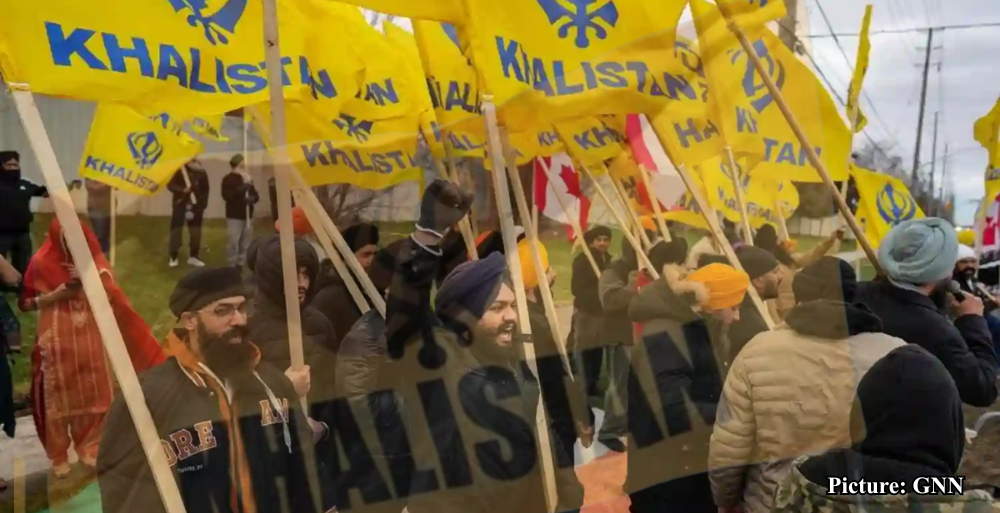
The Canadian government has released a report that characterizes Khalistani extremists as a notable security threat within its borders. This report, which has garnered significant attention, reinforces India’s longstanding concerns regarding the activities of this separatist movement, which advocates for the creation of an independent Sikh state known as Khalistan.
This assessment comes amid ongoing tensions between Canada and India, particularly following the assassination of Hardeep Singh Nijjar, a prominent Sikh leader and pro-Khalistan activist, on Canadian soil. Nijjar was shot dead in June 2023, an incident that has amplified the scrutiny of Khalistani groups operating in Canada. The Canadian authorities have indicated that these groups are not merely peaceful activists but pose a risk to public safety and national security.
Context of Khalistani Movement
The Khalistani movement emerged in the 1980s in India, primarily driven by demands for an independent Sikh state. The movement gained notoriety following a violent campaign that included the assassination of prominent political figures and attacks on Indian government institutions. The Indian government has consistently labeled the Khalistani movement as a terrorist organization, with significant crackdowns occurring during the 1980s and 1990s.
In recent years, the movement has found a new base of support among the diaspora, particularly in Canada, the United Kingdom, and the United States. Proponents argue that their cause is rooted in historical grievances, including the 1984 anti-Sikh riots, which resulted in the deaths of thousands of Sikhs. However, the Indian government and many critics argue that the movement has devolved into a platform for extremism and violence.
Canada’s Response to Extremism
According to the Canadian report, Khalistani extremists are involved in fundraising for their cause, often through legitimate businesses and community events, which has raised alarms among Canadian law enforcement and intelligence agencies. The report highlights the role of social media in galvanizing support for the movement, allowing extremists to spread their ideology and recruit new followers.
The Canadian Security Intelligence Service (CSIS) has been increasingly vocal about the threats posed by these groups. In a public statement, CSIS noted that while Canada is committed to protecting freedom of expression, it is also obligated to counteract acts of violence and extremism. The balance between these two imperatives has become a contentious issue in Canadian politics, particularly in relation to the Sikh community, which is one of the largest outside India.
International Implications
This development has wider implications for Canada-India relations. Following the assassination of Nijjar, the Indian government has accused Canada of harboring terrorists and has called for a more robust response to Khalistani activities. Canadian Prime Minister Justin Trudeau has faced criticism from various quarters for what some perceive as a lack of action against these groups, leading to a potential diplomatic rift.
In response to the report, Indian officials have expressed satisfaction that Canada’s findings align with their own assessments. Indian Minister of External Affairs S. Jaishankar stated that “it is important for countries to recognize the threat posed by such extremist elements and to take appropriate action.” This sentiment underscores the ongoing tension between the two nations and the complexities involved in addressing issues of national security while also respecting civil liberties.
Community Reactions
The report has elicited mixed reactions from within the Sikh community in Canada. Some community leaders have expressed concern about being unfairly targeted due to the actions of a few extremists. They argue that the majority of the Sikh community in Canada seeks peaceful advocacy for their rights and recognition of historical injustices rather than engaging in violent extremism.
On the other hand, there is a segment of the community that supports the report’s findings, advocating for a stricter stance on individuals who promote violence under the guise of political activism. This divide illustrates the challenge of navigating the complexities of identity, politics, and security in a multicultural society.
As the situation develops, both Canadian and Indian officials will need to address the underlying tensions and work towards a resolution that balances national security concerns with the rights of individuals to express their political beliefs. The ongoing discourse surrounding the Khalistani movement and its implications for bilateral relations and community dynamics in Canada remains a critical area of focus.